
Ever Feel Like You’re Being Watched?
Ever Feel Like You’re Being Watched?
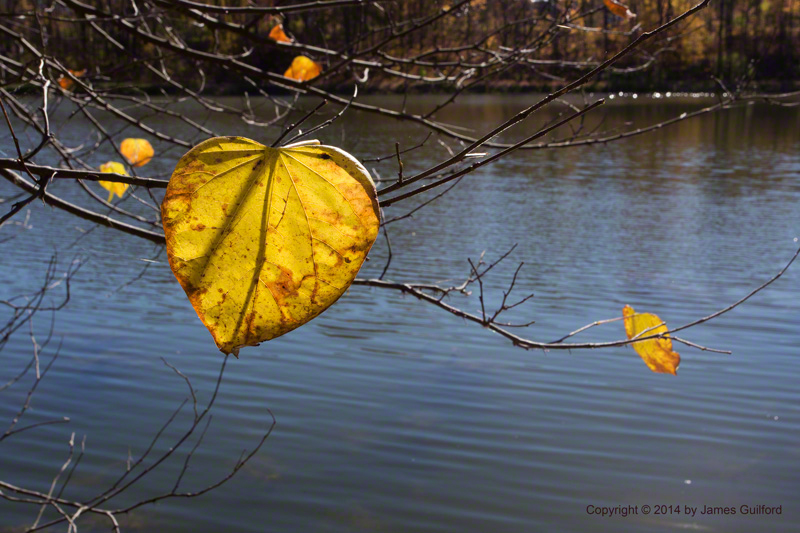
The Last Holdouts
The others have gone, given up their grip. Time to let go for the season is over. Others will follow but first must come winter. Departures witnessed by the last holdouts.
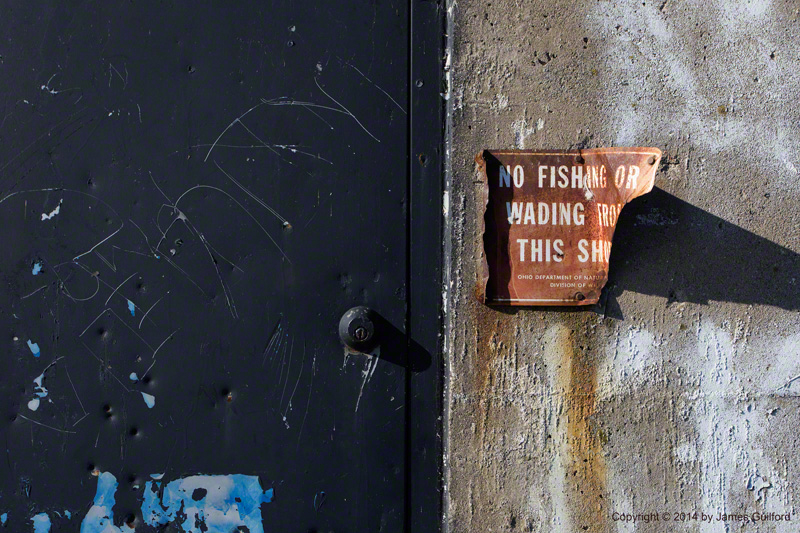
No Fishing or Wading
Visiting Deer Creek Reservoir in the Eastern area of Ohio, I came across a water level monitoring crib. The structure was heavily built, made of reinforced concrete, secured with a steel door, and accessed via a steel walkway suspended above the reservoir waters. The concrete was stained with time and rust. The deeply-colored door had been scratched and even shot a few times. A sign warning visitors not to wade or swim from the shore below was faded, rusted, and bent. I’d been drawn to the structure by its alien appearance, projecting straight up from the water’s surface. Ultimately, the door and sign captured my interest. Prints available: http://www.guilfordphoto.com/p813419571/e2a75370a
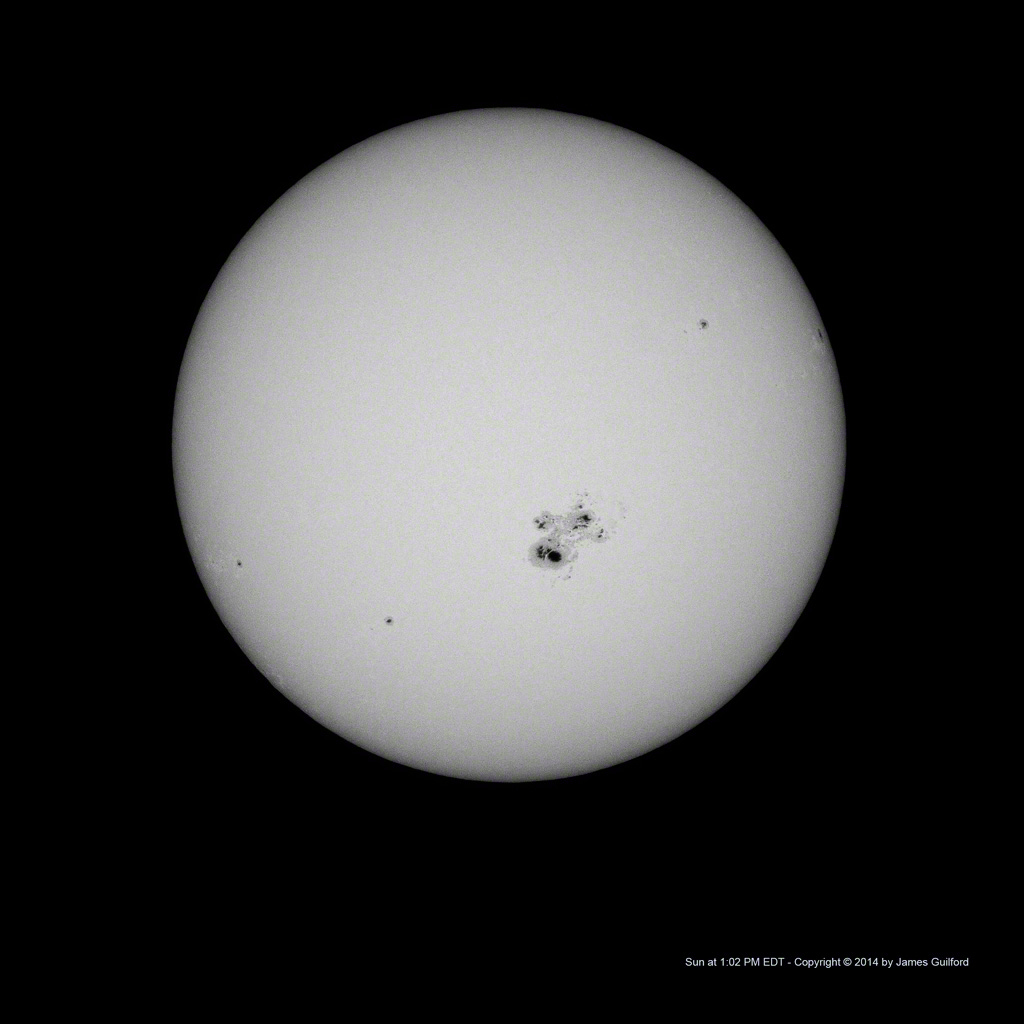
Pre-eclipse Test Image – Note the Huge Sunspot Group – 1:02 PM
Due to the positions of Sun, Moon, and Earth, lunar and solar eclipses tend to be paired up. So it was that while we had a total lunar eclipse about two weeks ago, we enjoyed a partial solar eclipse this evening. As partial eclipses go, this one promised to be a good one. From our vantage point in Northeastern Ohio, we were to expect about 50 percent coverage of Sun’s bright face by Moon, a late-day event ending with sunset. After much deliberation, owing to the very low elevation of the eclipse over the western horizon, I decided upon a fishing pier on the south shore of Lake Erie. If we were lucky we would see a beautiful, crescent Sun sinking colorfully into the distance, reflecting off of the lake waters. That was the image in my mind, anyway.

Crowd Watching Partial Solar Eclipse from Fishing Pier. Nobody Swimming or Fishing.
The pier became packed with eclipse watchers and I was happy I’d arrived early and staked out a corner! Yesterday was cloudy and I could not shoot a test image of Sun without Moon but did get the opportunity today. The image was very good and one of the best I’ve managed of the Sun. The solar disk was particularly striking because a massive sunspot cluster was visible … really massive, spanning nearly the distance from Earth to Moon (~ 250,000 miles) across the Sun! Very photogenic.
As I mentioned, the eclipse was taking place late in the day, beginning at 5:42 PM EDT local time and in progress at sunset, about 6:35 PM — low to the horizon and in the messiest part of Earth’s atmosphere. The evening’s photos showed the lunar limb nipping off bit after bit of the Sun until the bright disk looked like a cookie with a large bite missing; a raisin cookie, I think, due to the sunspots!

Streaks of Lake Clouds Stream Across Sun’s Face – 6:04 PM
It wasn’t long, however, before we began to see streaks of cloud crossing that bright, chipped disk and before we knew it, the eclipse sank into distant clouds. There was no colorful sinking, no beautiful reflections, only a dark lake and fading cloud-obscured sunset.
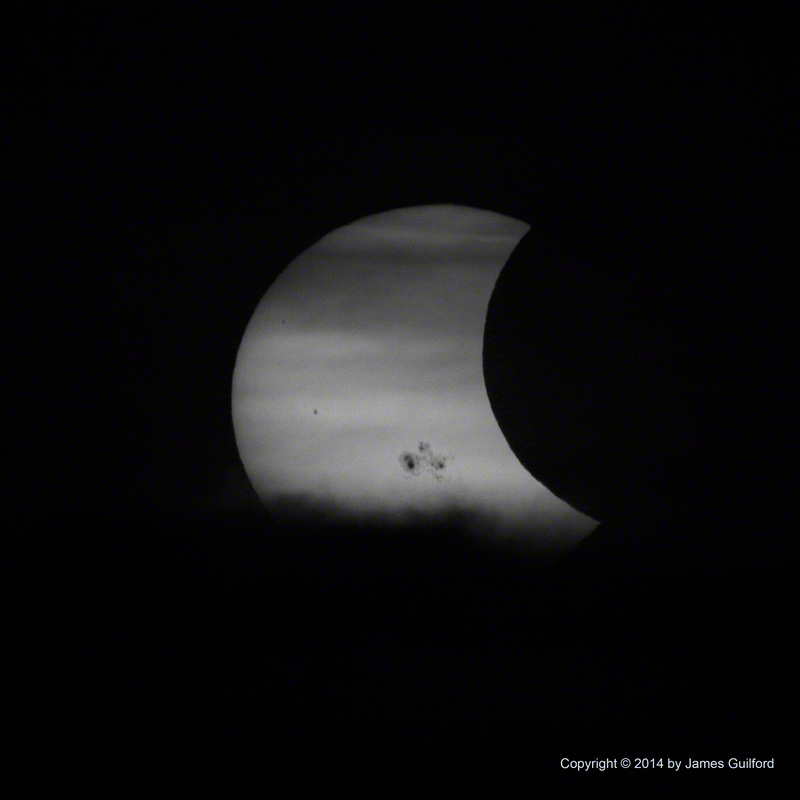
Eclipse Eclipsed by Lake Clouds – 6:16 PM
Even with the sad ending, the crowd was excited and pleased to see what had transpired. Someone asked if they could review my images using the tiny LCD panel in the back of my camera. I was happy to oblige and soon drew a small crowd of departing spectators who thought the pictures looked great! (Some folks had arrived too late to see any of the eclipse.)
Later, processing the pictures on my computer, I could see that the eclipse images were nowhere near as good as I had hoped and didn’t compare well with the earlier tests. Why? Remember how I mentioned the low-t0-horizon position of the eclipse? The murk? The thick, wind-churned atmosphere robbed my images of their expected clarity. Am I disappointed? Yes, a little. Still, it was a fine little eclipse and I was delighted to have seen it!

It’s not literally true but the thought counts: “The best camera is the one you have with you.” I was walking the campus of Hiram College recently when I spotted an engaging scene; it was an autumn leaf-strewn stair leading to a white door set in a building’s dark stone wall. I had no camera but the one built into my Apple iPad Mini. It may not be my best camera but I’m glad I had one with me.
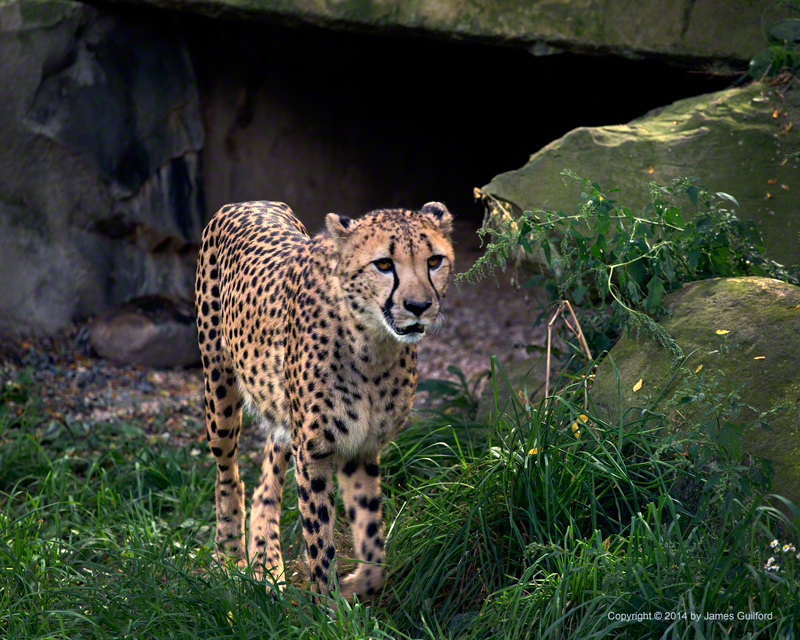
Beware! The Cheetah is on the prowl!
A recent visit to the Cleveland Metroparks Zoo gave us some unusual photo opportunities. The day was partly cloudy and cool and, because we arrived early, the park was lightly-attended. A surprising variety of animals from warmer climates were allowed outdoors and into the cool air. Big cats, Lorikeets, and elephants were enjoying the fresh air. Cooler weather also seemed to make the Cheetah pair friskier than they would be on a warm summer day. The beautiful, long-legged African speedsters were chasing each other around their large enclosure when we arrived. They broke off the chase and one of them performed a beautiful leap into a tree where the cat stood and watched the people watching him. We have seen the Cheetahs tracking human visitors (especially children) from their lair during previous visits and the animal stationed in the tree did just that. The animals gave us plenty of poses and my resulting images generated more “pluses” on Google+ than any of mine have enjoyed before! Pluses are signs of approval from other Google+ users who have viewed an image, similar to “likes” on Facebook. As we left the zoo in the early afternoon, new visitors were streaming in; a fine day for a visit.

Watch your step – You’re being watched!

Full Moon – Pre-Eclipse Test
I really ought to know better but the early signs were positive! I rented a Sigma 150-500mm telephoto zoom lens to try out before making a possible purchase. That model lens has been marked down in price, presumably because Sigma is introducing a 150-600mm lens in the near future. At just under $1,000 the rental lens features APO lens elements and optical image stabilization — quite a bargain, if it works well! So, my pre-purchase trial was to include a nature shoot and, contingent upon a pre-event test, photos of the October 8 total lunar eclipse!
I did some test shots of the Full Moon the night of October 7 and they looked quite good. There was, on close inspection, a light gray “halo” around a portion of the lunar disk but that mostly disappeared in processing. Despite the very bright Moon, there was no color fringing and that’s a good sign of optical quality. The image was acceptably sharp and contrasty. It looked like I’d be set for the next morning’s eclipse!
I rose from bed at 4:45 AM the morning of the eclipse, about a half-hour before the Moon was to enter the central portion of Earth’s shadow, the umbra. The penumbral phase of the eclipse sees the Full Moon dim, imperceptibly to most casual observers, and uninteresting to me. Walking in the moonlight to my car, I noticed the subdued light and by the time I reached my observation point I could see a chunk of the Moon falling into deep shadow — it had begun!
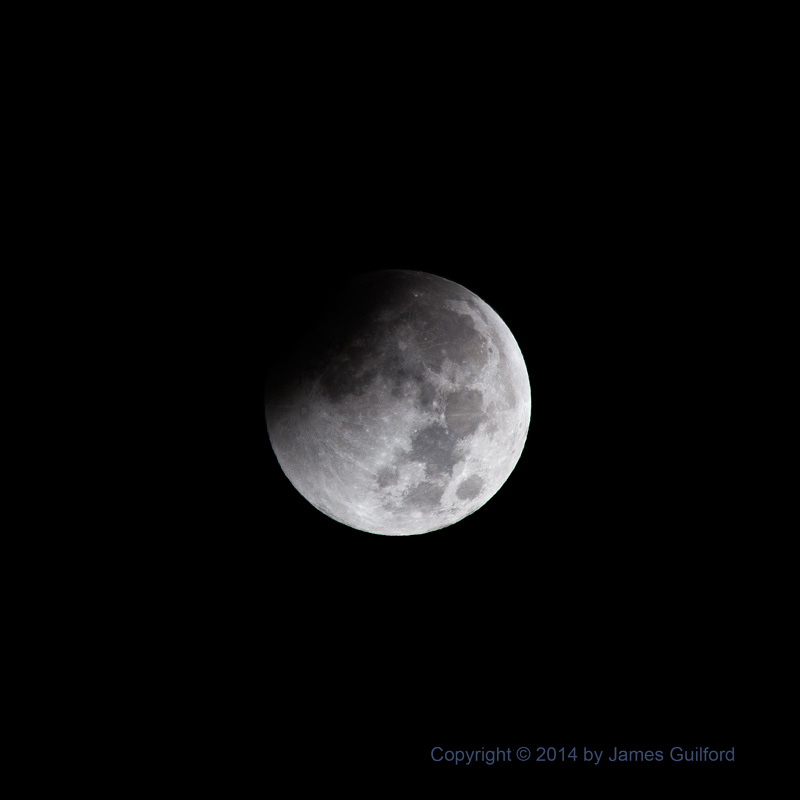
Eclipse Begins – Earth’s Shadow on the Moon – Good Quality
I quickly set up the camera and rented lens on my tripod, focused on the still-bright Moon, and began a long series of photographs, adjusting exposure as the eclipse progressed. Earth’s shadow, with its soft leading edge, crawled across the lunar surface. I shot image after image, checking exposures in the camera’s LCD panel. It looked like I had some excellent shots.
Totality in a lunar eclipse sees the Moon diminished to a dim ruddy coppery-red orb, requiring longish exposure and/or high ISO numbers to record. I could tell I had images but, critically, I could not tell just how good they were. I opted for shorter exposure times and higher ISOs which accounts for the “grainy” appearance of the images; I should have used a slightly lower ISO setting.

Total Lunar Eclipse – October 8, 2014 – Only Fair Quality
As totality continued and the sky began to show signs of pre-dawn twilight, I moved to a secondary location. I wanted to show the Moon as part of a landscape with city lights, trees, homes, something in the foreground or under the still-reddish eclipsed Luna. I switched lenses to my favorite, the Canon 70-200mm f/4 zoom telephoto — best glass I have ever owned. I shot the scenes until the Moon dipped into the morning mists of the western horizon and was washed out by approaching sunrise.
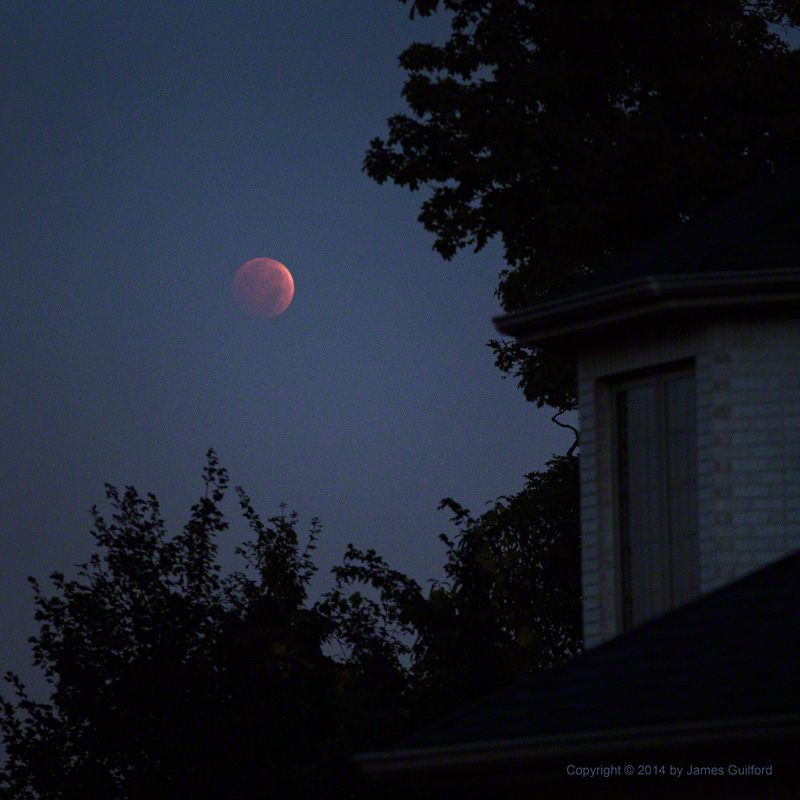
Total Lunar Eclipse – While Neighbors Sleep – Canon 70-200mm Zoom
The eclipse itself was a great experience and something I haven’t seen one since 2008. Despite the chill air, light breeze, and cold-aching fingers, I was enthralled. The Sigma photos were another matter. Later, as I examined the images on my computer, I was very disappointed. The shots of the partially-obscured Moon were barely acceptable and images of the eclipsed Moon were a mess … kind of pretty and interesting, but a mess. I’m not sure the exact cause of the soft focus but it was the lens that was at fault.
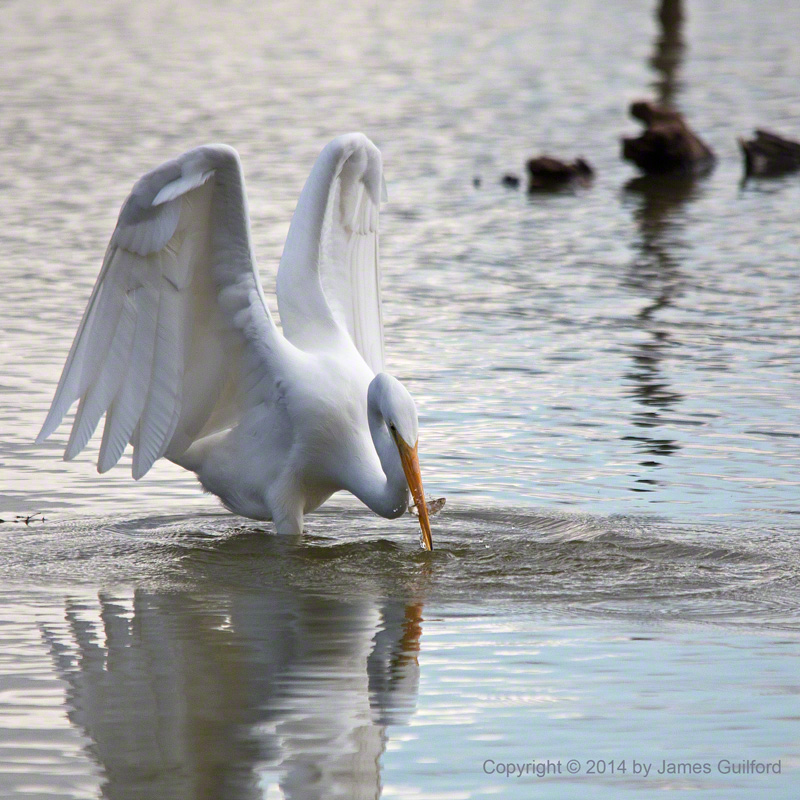
Got It! Great Egret Catches Small Fish
That afternoon the wildlife shoot went well and the Sigma produced very good (though not excellent) images. Possibly the best shot of the afternoon was a Great Egret catching a small fish at the Sandy Ridge Reservation of Lorain County Metro Parks. The zoom lens extends when reaching its 500mm extent and, unfortunately, the mechanism is too “loose,” sliding outward when the camera is pointed downward. When being carried, the zoom lock did not work. When zoomed from one focal length to another, the lens did not appear to hold focus. The zoom slipping may have been the cause of loss of focus and my lunar imaging woes. I wondered what corners may have been cut to keep the massive Sigma optic price so low … I think I discovered some of them!
I won’t be purchasing that lens.

Hard Times. Rise Above. The scene on a gloomy day in Delphos, Ohio.

Royal $3.50
Oberlin, Ohio is a wonderful place to visit. The city stands in the midst of flat farm country and boasts the excellent liberal arts institution, Oberlin College. As might be expected, the college exerts wide-ranging influences on the town bringing enriched local culture, influences from youth, business, and architectural contributions. Oberlin has a long history with the college but, of course, has its own past. During our late-afternoon visit today I shot mostly architectural details, some made more graphic by the clear, blue sky gracing our day. These two images don’t take much advantage of the deep blue sky overhead but are among my favorites of the day. By the way, you can find and purchase a print of Royal $3.50 image and many others at my portfolio site. Click Here to purchase a print of Royal $3.50.

Angles 8723

Flies! I hate Flies!
Continuing our tour of zoos around Ohio, we visited the Columbus Zoo and Aquarium. Among the large exhibits at the zoo is a habitat for Polar Bears featuring a large “rocky” dry area and a very large pool. A great feature of the pool is an area below the water level from which visitors may observe the bears swimming through a huge and extremely thick acrylic window. The day was warm and the bears were being pestered by flies, one even snarling as the insects buzzed around its snout. Swimming apparently cooled the polar bears while providing relief from the flies. One bear repeatedly demonstrated its skills at the “backstroke!”

Watching the Bear Swim
 PhotonStopper