
but the hushed
wingbeats
of
the multitude
overhead.
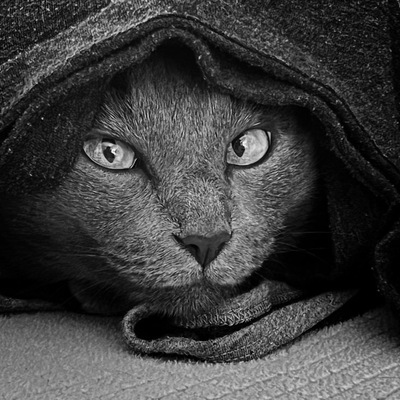
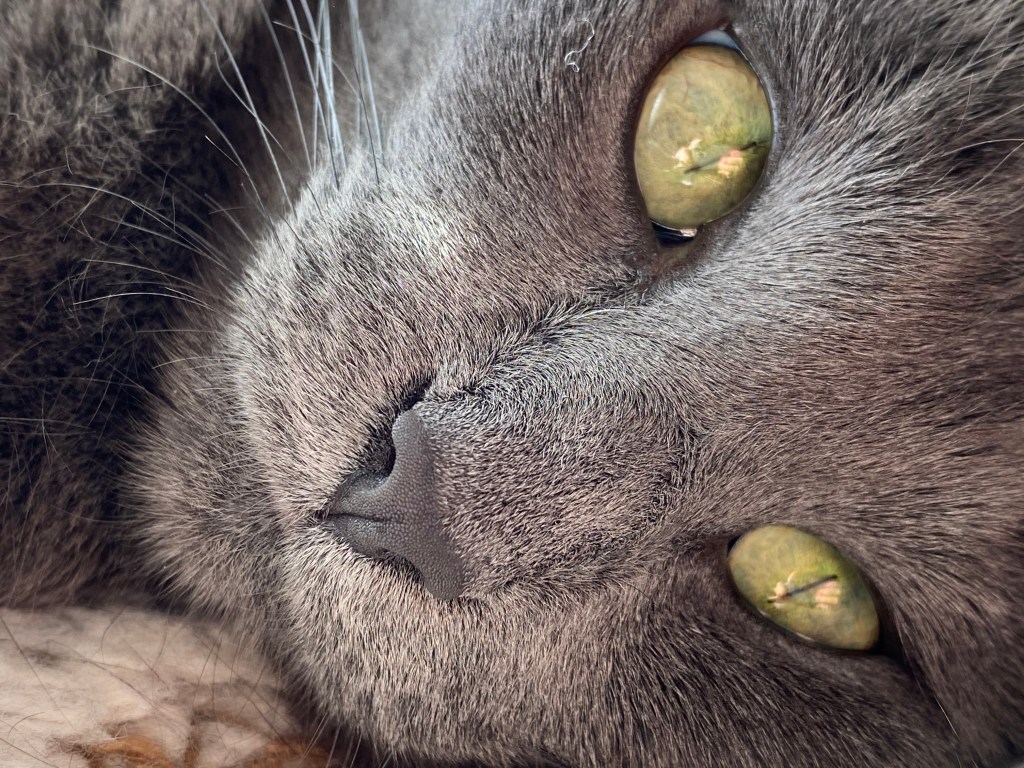
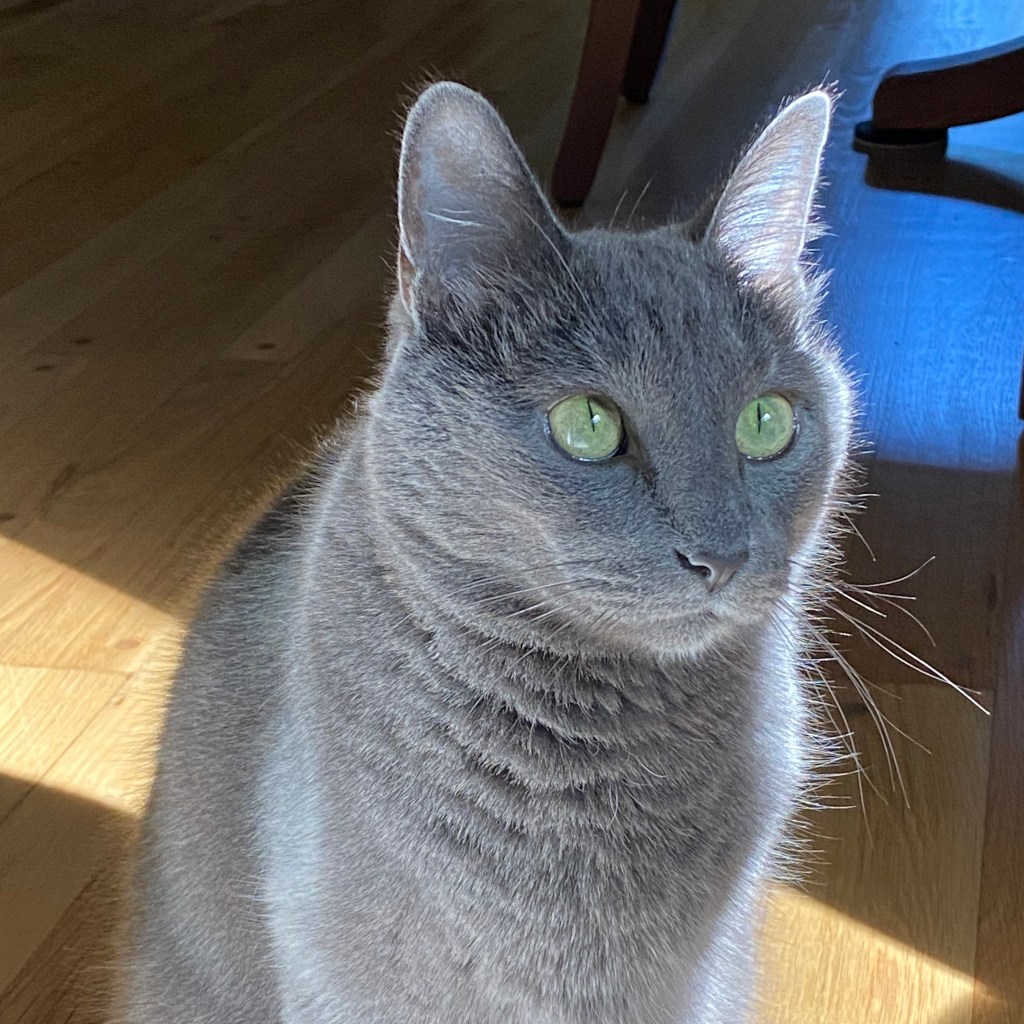
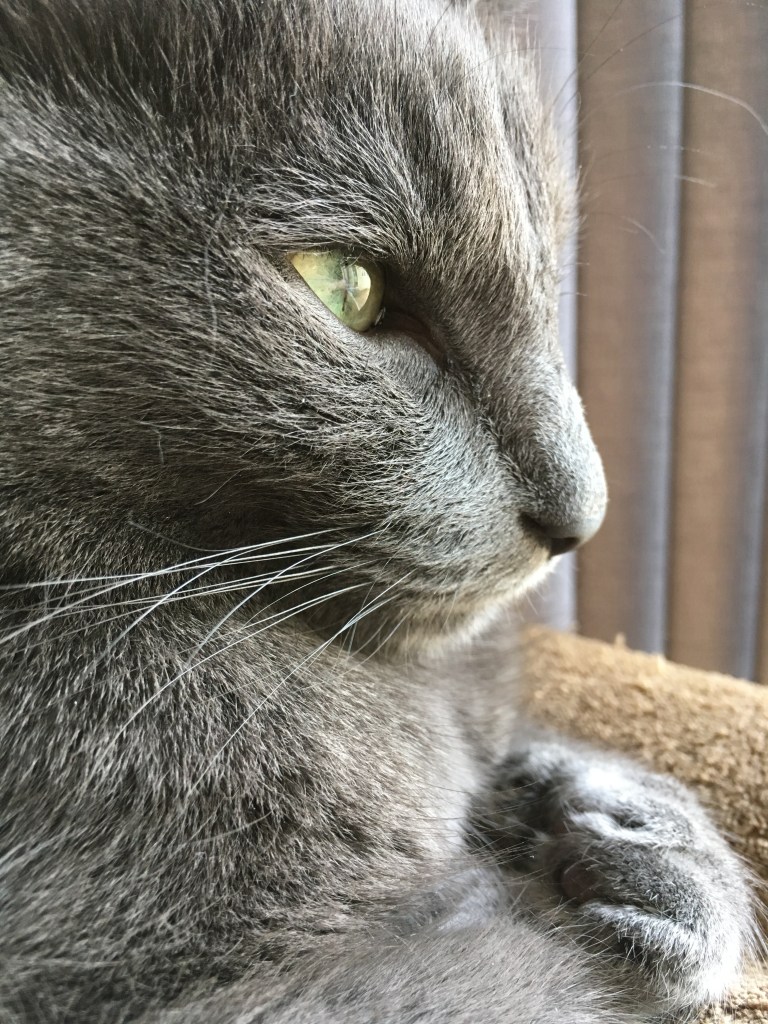
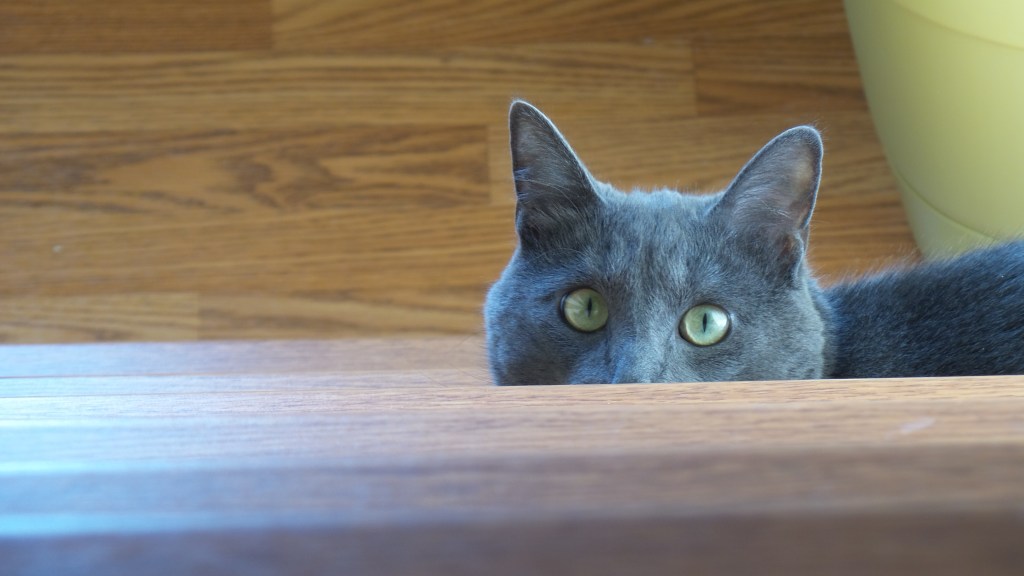
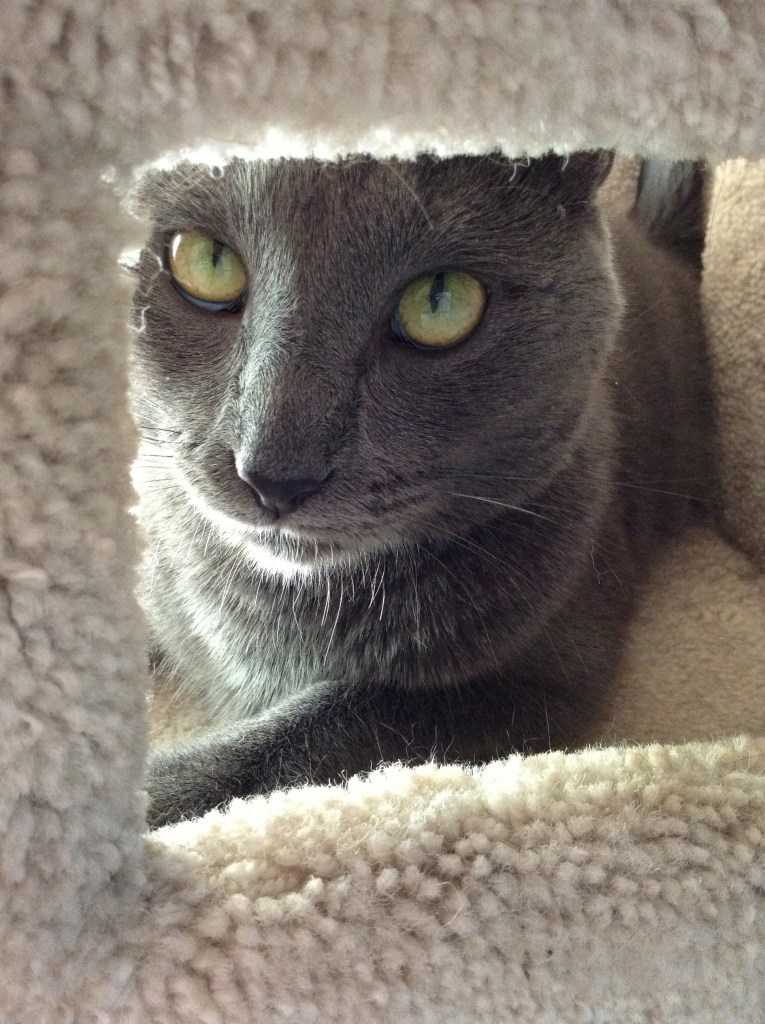
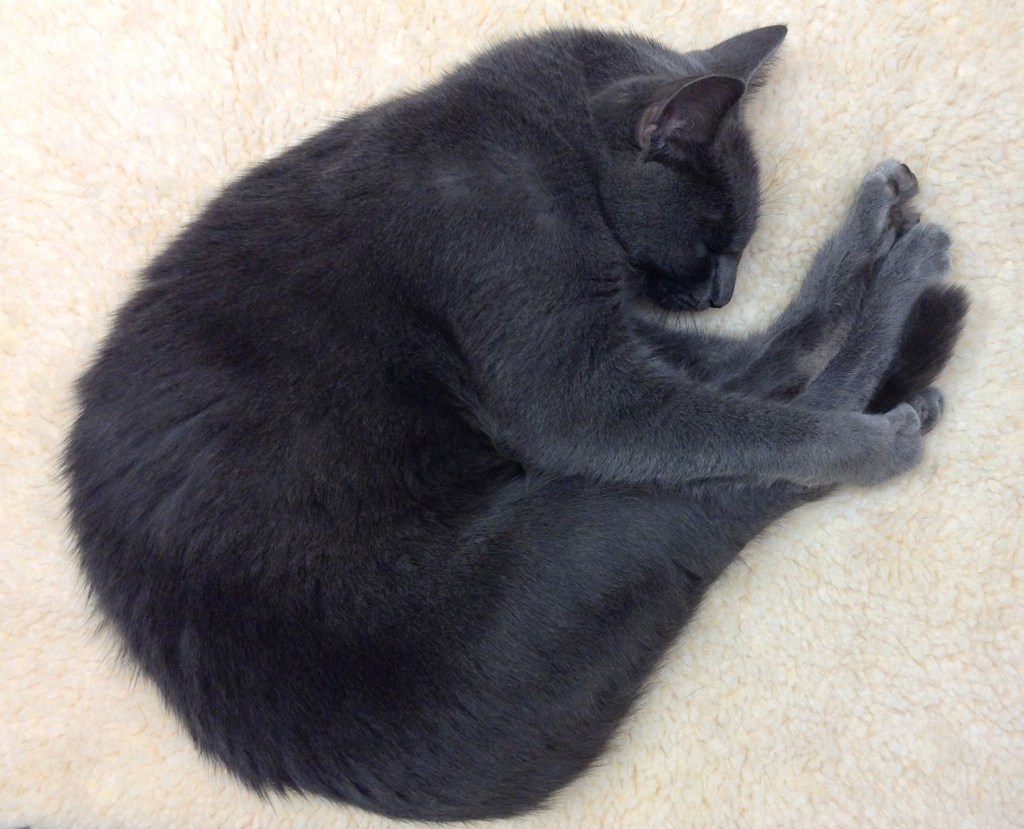
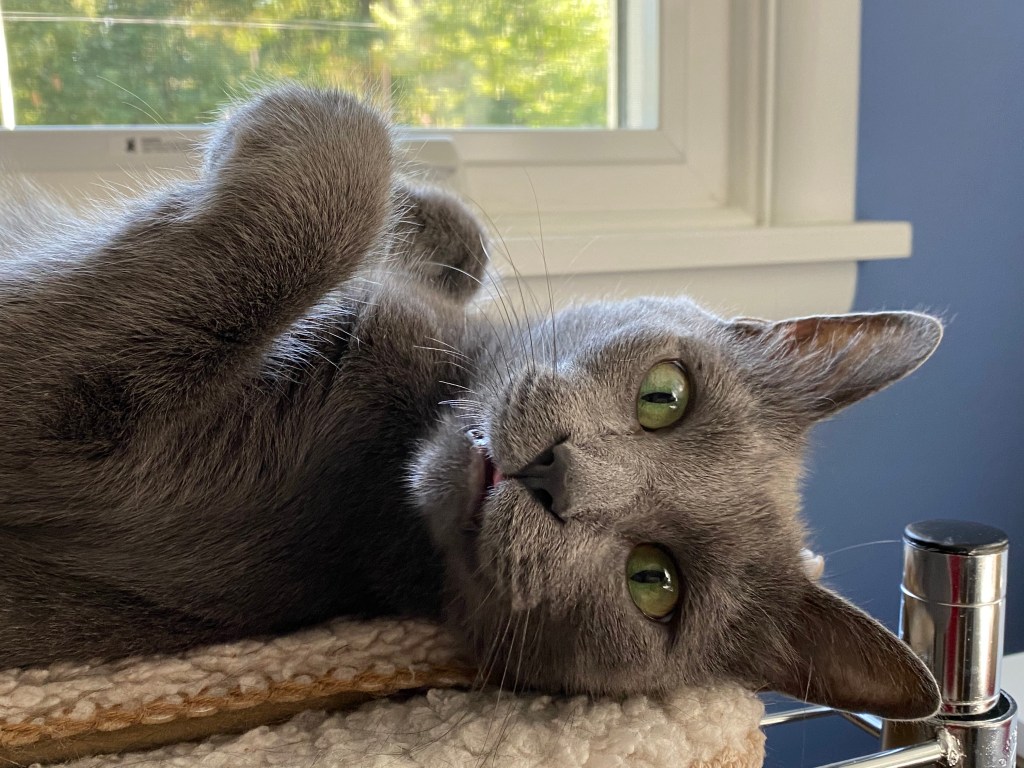
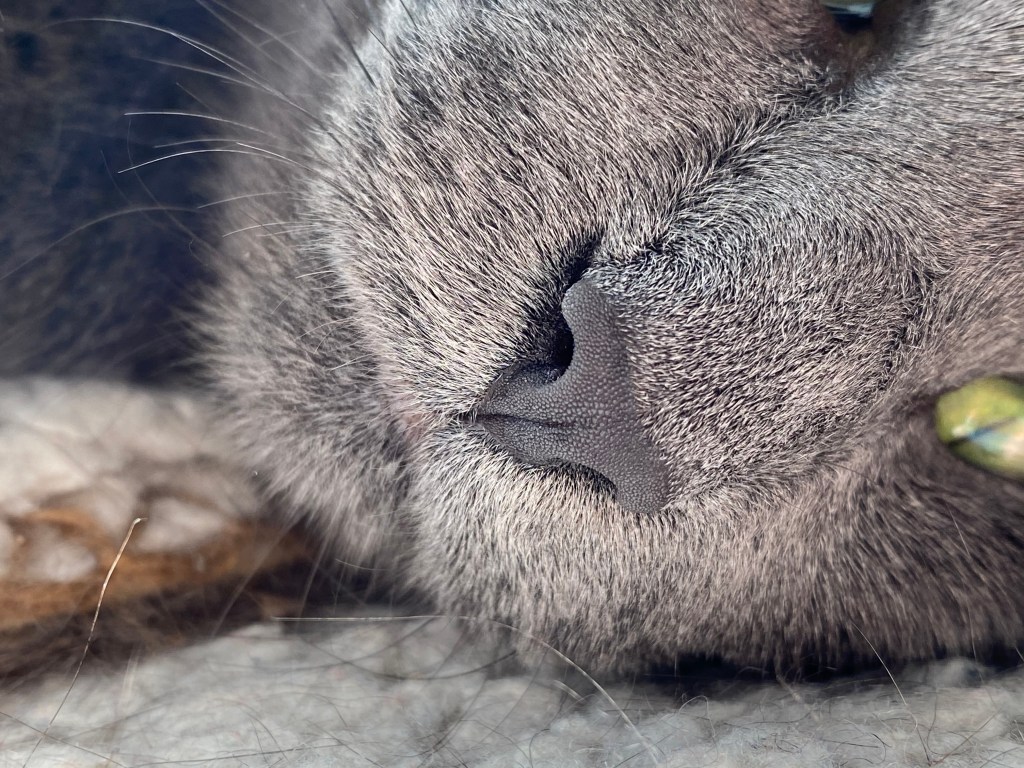
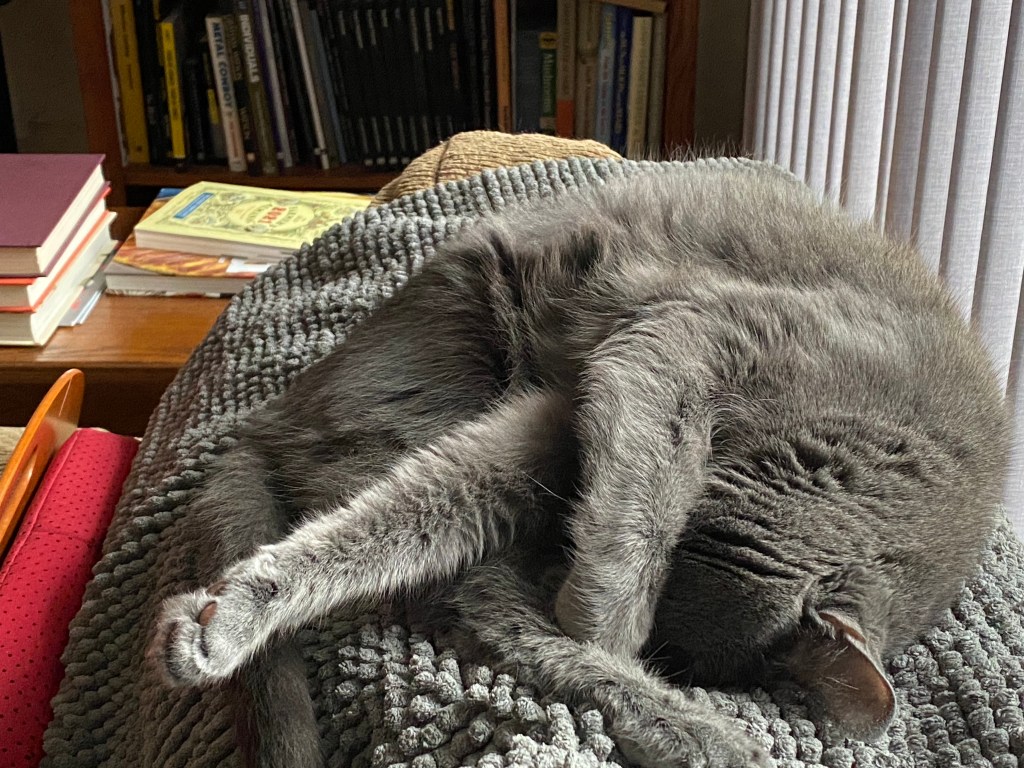
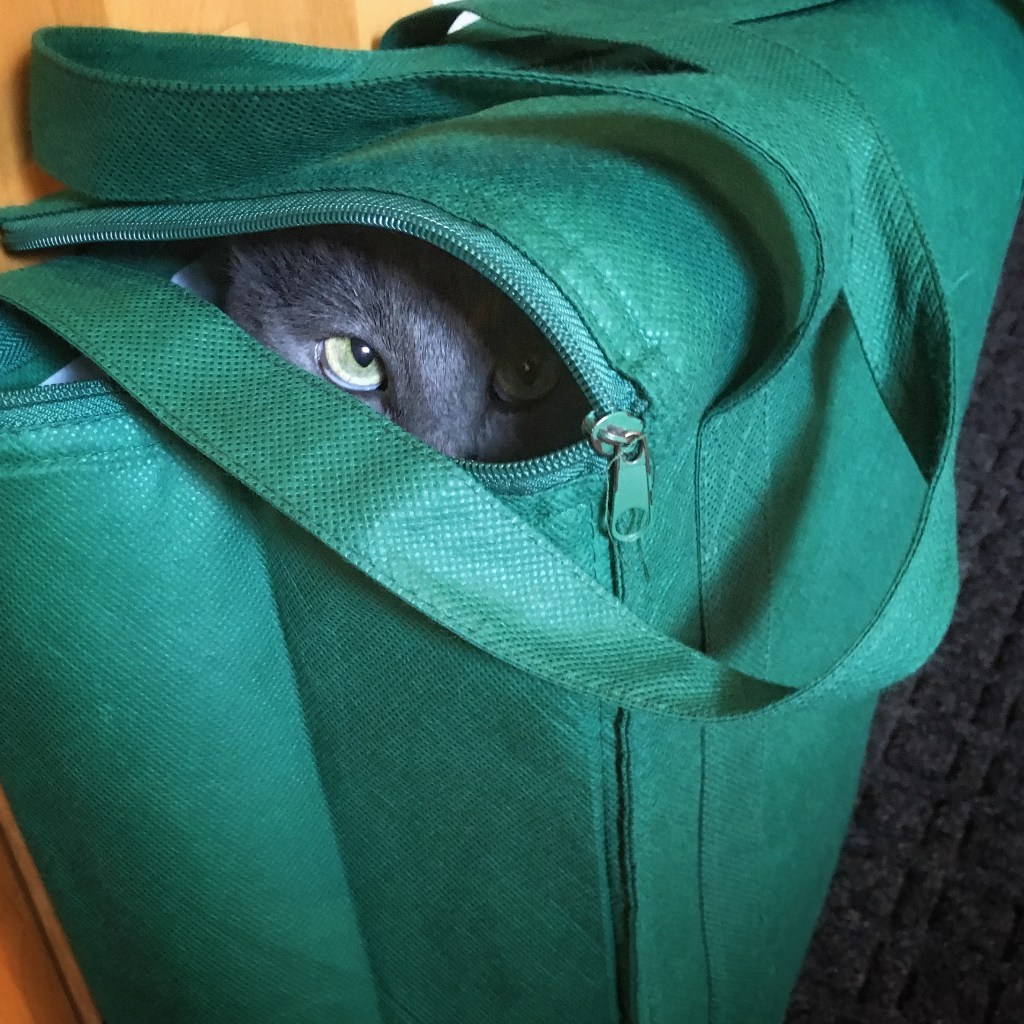
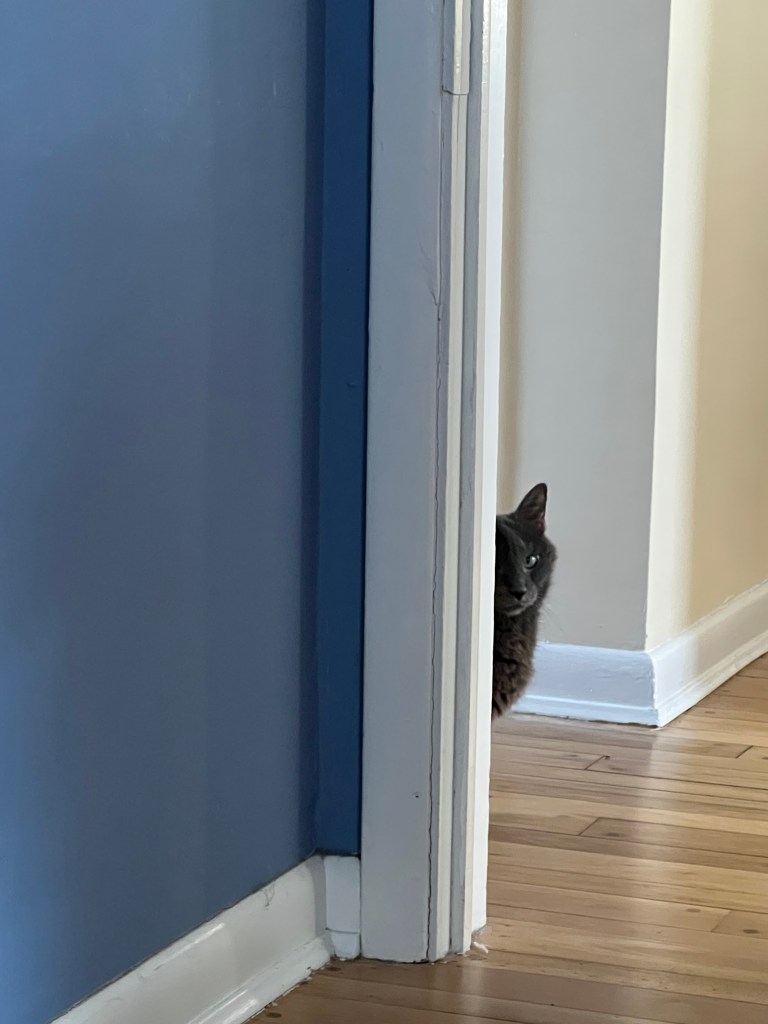
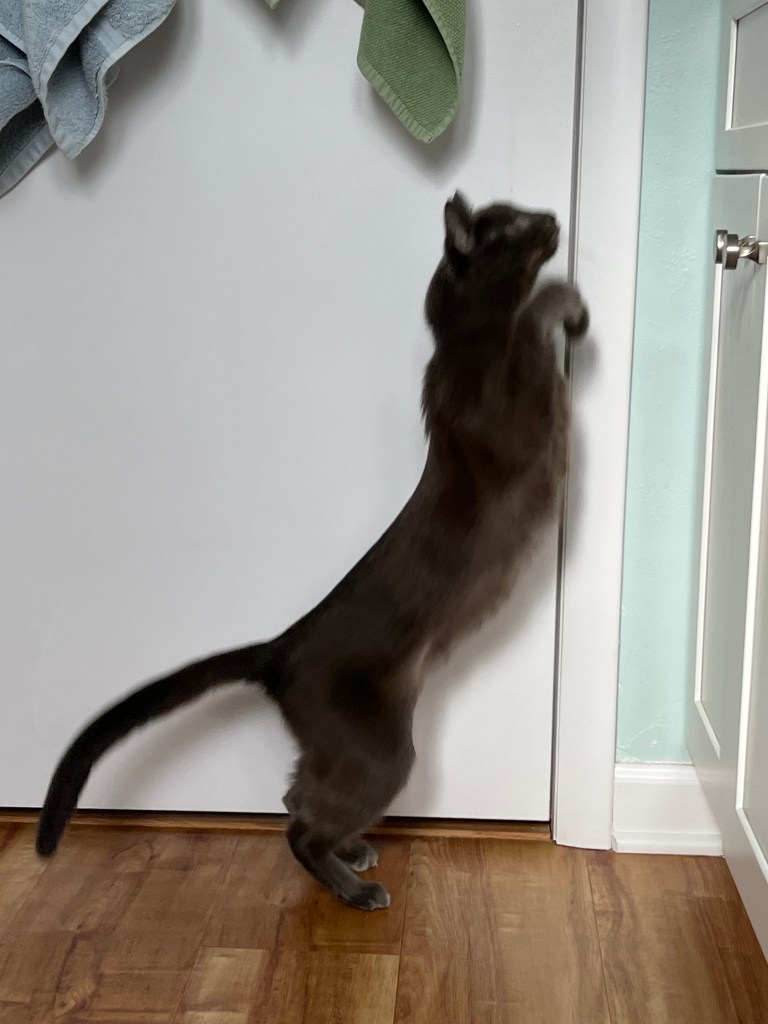
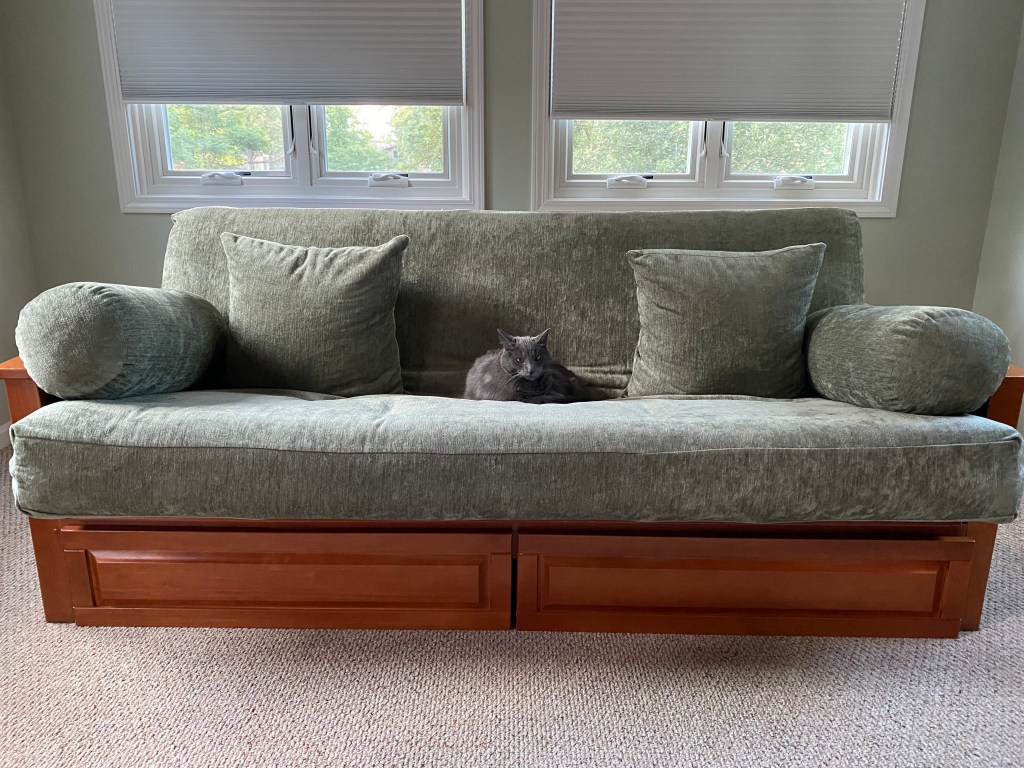
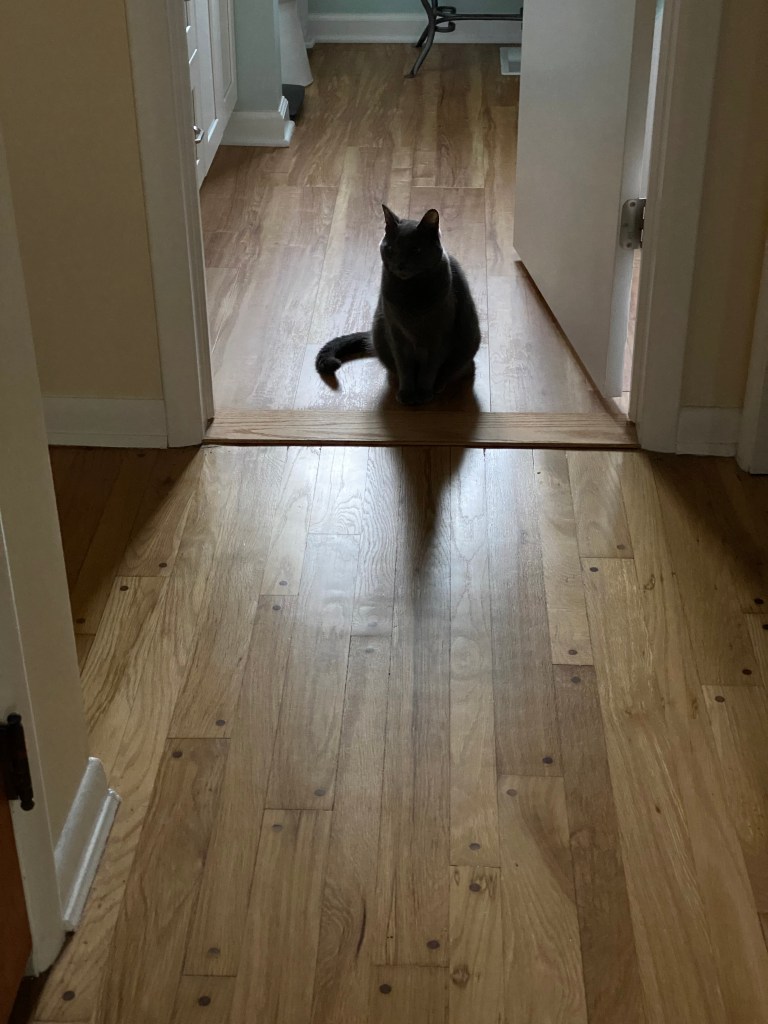
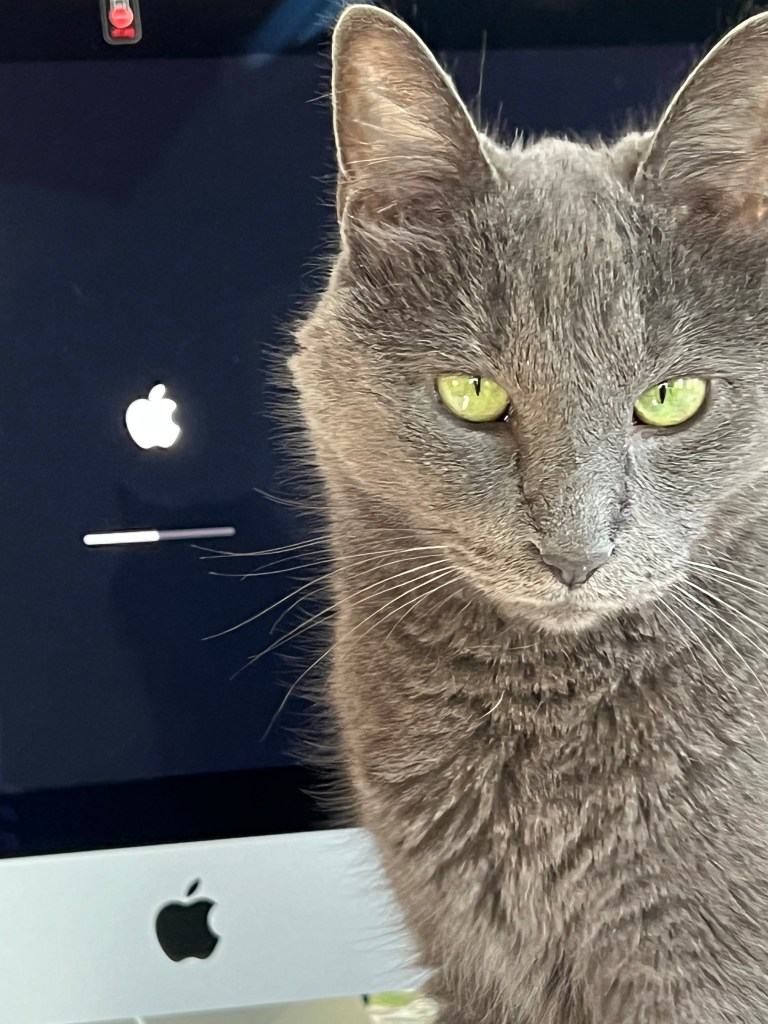
On August 26, 2013 we found Annie, or rather, she found us, as we took a walk in a public park. She emerged from the woods and came over to greet us as if we were long lost friends. She was gaunt, but in otherwise very good health. We left her in the park that first evening — she seemed to want it that way — but returned the next day with a pet carrier. Once again she appeared but this time we placed her in the carrier and took her away. Checking with local shelters and the animal warden for reports of lost cats, we sought to leave her with an agency for adoption. The shelters were full and, in the mean time, we fell in love. She joined our household. Through a house move, happy times and sad, Annie was with us. In the end, she developed small cell lymphoma and, while medicine helped comfortably extend her life, the disease finally reached her kidneys and, on June 3, 2025, we felt we had to say goodbye. Months later I still think about her daily and miss her warm, quiet presence. Thanks to camera phones we have many more photos of this feline companion than of all others that shared our lives before her. Here is a random selection of some pictures of dear Annie:





















For some time now, as weather permits, I do a little daytime astronomy as in viewing and photographing our neighborhood star: The Sun. Of course I practice vision safety; observations and imaging employ a range of filters and equipment that protect both eyes and cameras from blinding, concentrated sunlight. Equipment ranges from simple white light solar filters, to a Herschel wedge prism-type device, and a more recent addition, a dedicated hydrogen-alpha (Ha) telescope.
White light allows viewing Sun as if we could stare directly at it without the resulting blindness. The Herschel wedge does much the same thing but with, perhaps, a bit more contrast and detail. Both of those white light views allow us to see a layer of the solar atmosphere called the photosphere. In the photosphere the most apparent details are sunspots, standing black against a white background. With enough resolution we can also see granulation — enormous convective bubbles of searing solar plasma.
One layer above the photosphere — yes, above — is the chromosphere. Shining in the wavelength of hydrogen-alpha, the chromosphere is not visible to us without light filters that exclude all light but Ha. A wholly different view of our Sun is available in that wavelength. Swirling seas of plasma form curves and hash as they are moved by magnetic fields, long filaments float over those seas, as fountains of glowing gas arc from the solar disk contrasted against the blackness of space. On closer examination, the solar limb appears rough, a bit like a fine-toothed saw blade, as innumerable spicules, jets of glowing gas, are seen in contrast. Yes, sunspots are visible but are no longer the primary interest.
After many tries and failures at processing images to best show the chromosphere complete with prominences, I finally learned what some other imagers were using to process their images: Solar Toolbox — a package of programming scripts used with the PixInsight imaging application. I still have much to learn about Toolbox but it has already been enormously helpful to me in the challenging world of solar imaging! Thus, the image above is from very good data recorded about seven months ago, now reprocessed using Toolbox.
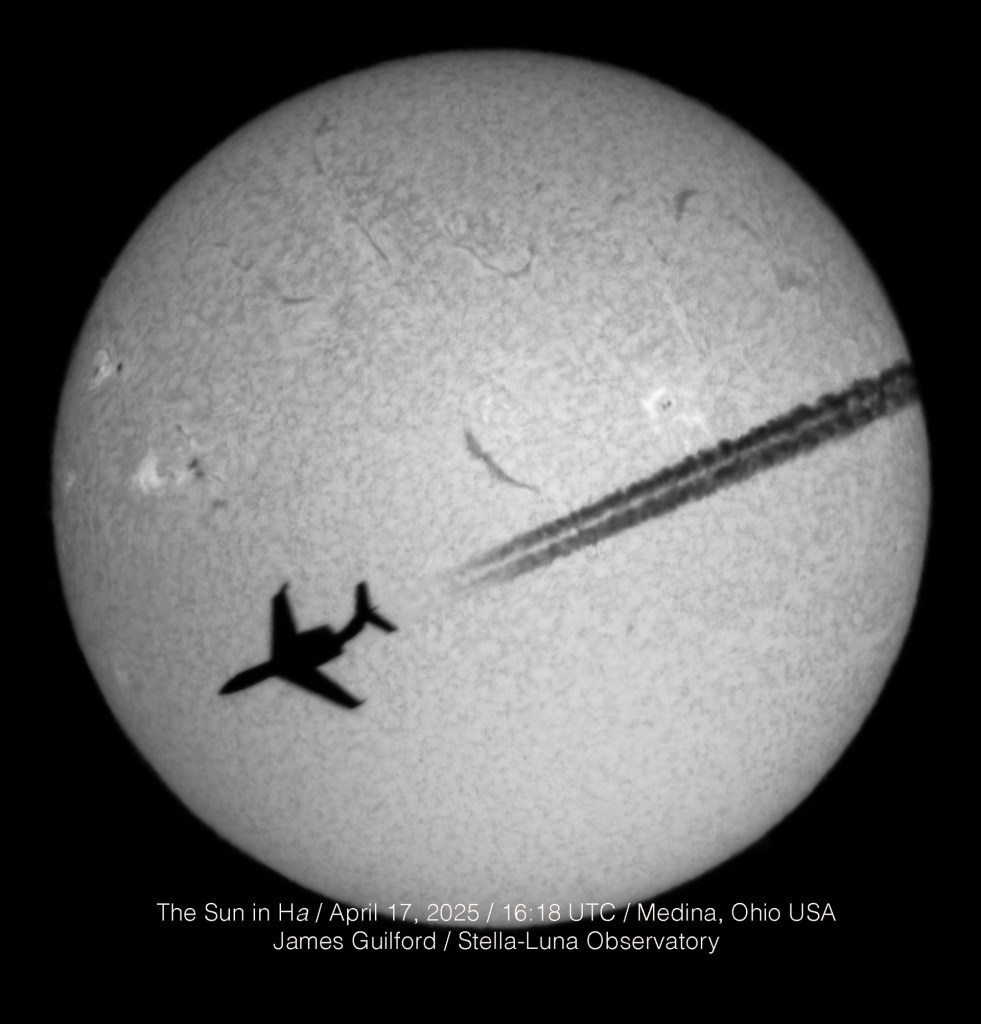
I had just finished setting up for some solar astronomy and tapped the button to begin a video sequence when something flashed across the computer screen. A jet appeared for less than a second, contrails briefly persisting, silhouetted against the roiling solar disk! I’ve only seen this twice while observing Sun, this being the second time, and I only captured this image by shear luck. The first time I witnessed a solar “photo-bombing” was under similar circumstances. Previously, I had completed setup, was refining focus, and just about to begin recording exposures. I missed imaging that encounter by about the same interval as I succeeded this time!

Winter has been very cold, lately, with enduring snow cover. In these conditions we enjoy helping out the local birds. In the last couple of years we’ve seen a growing year ’round presence of Eastern Bluebirds both at our feeders and around the property. Today four to five of the little beauties showed up at the tray feeder — by coloration, all boys — enjoying the spread. As they busily picked away at the seeds the view was often blue bird butts. Sill in all, a welcome break from February’s shades of gray.

Early January and heavy snow was falling. Local birds were flocking to our bird feeders. Suddenly, the small birds disappeared. The local Cooper’s Hawk had showed up for lunch and our smaller feathered friends did not want to be lunch. Snow and blowing snow came and went as the raptor sat, observing from a tree branch. Sometimes the hawk could be seen clearly, sometimes snow completely hid it. The hawk watched for a while but, seeing no potential prey, flew off to hunt elsewhere.
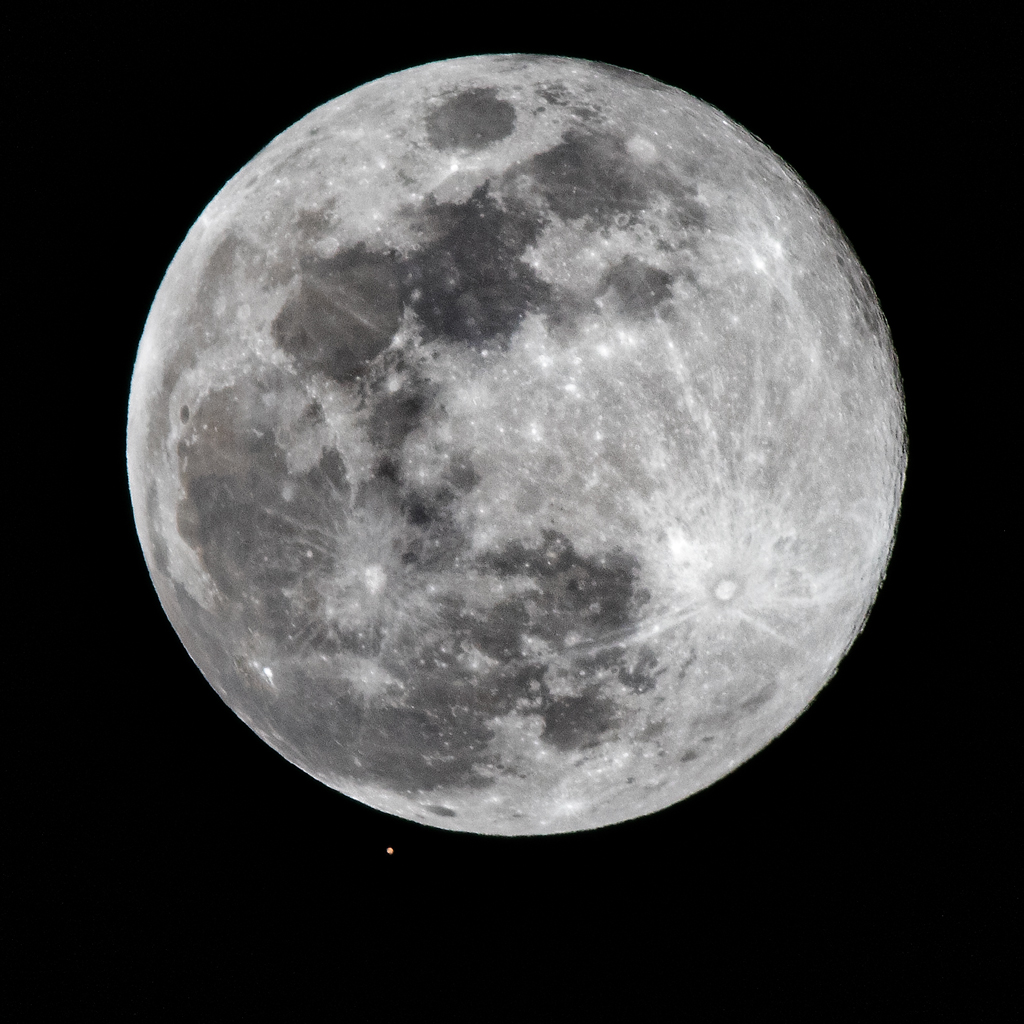
Passing clouds threatened to obscure the 2025 lunar occultation of Mars but thanks to gaps between those clouds, there was enough clearing for observation. Shortly after Mars vanished, so did those inter-cloud gaps. With Moon now cloud-covered, I did not return to the 13℉ night to watch for Mars to emerge.


When wilt Thou save the people?
O God of mercy, when?
Not kings and lords, but nations,
Not thrones and crowns, but men!
Flowers of Thy heart, O God, are they;
Let them not pass, like weeds, away;
Their heritage a sunless day:
O God, save the people!
Shall crime bring crime forever,
Strength aiding still the strong?
Is it Thy will, O Father,
That man shall toil for wrong?
"No," say Thy mountains; "No," Thy skies;
Man’s clouded sun shall brightly rise,
And songs ascend, instead of sighs:
O God, save the people!
When wilt Thou save the people?
O God of mercy, when?
The people, Lord, the people,
Not thrones and crowns, but men!
God save the people; Thine they are,
Thy children, as Thine angels fair:
From vice, oppression, and despair,
O God, save the people!
-- Ebenezer Elliott, 1850
I sang this song when I performed in "Godspell" now these many years ago. A musical by Stephen Schwartz, the show featured several songs with lyrics borrowed from old hymns. This one (ca. 1850) seems especially appropriate right now.
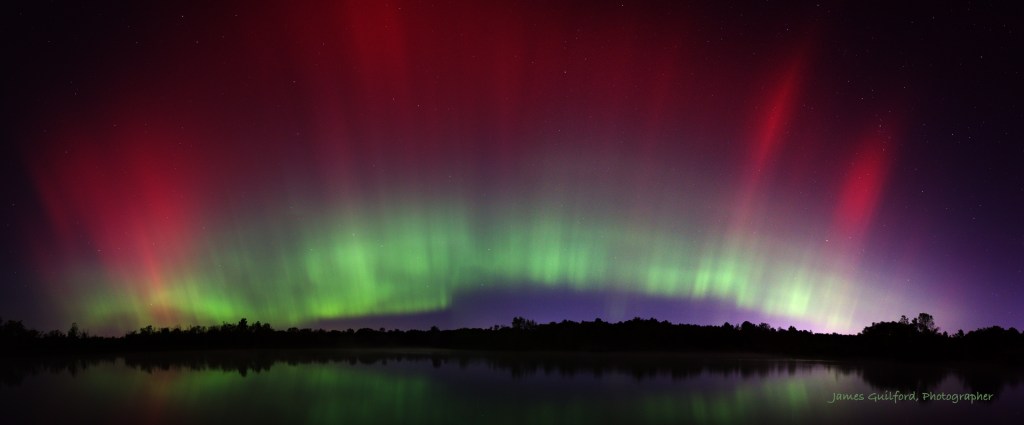
It began on Tuesday, October 8, when a sunspot called AR3848 flared explosively over the course of several hours. The detonation hurled a large and powerful coronal mass ejection (CME) Earthward from Sun. On Thursday, October 10 the magnetically-charged solar plasma hit Earth’s geomagnetic field and fireworks erupted. According to SpaceWeather.com the aurora borealis was seen as far south as Puerto Rico!
I headed out to a remote county park location, where I have permission to be after dark, and was fortunate enough to be ready when a significant surge in activity occurred — around 10 PM EDT. That peak was amazing with colors, shapes, and movement visible across the entire northern horizon. It was particularly cool to see pillars appearing and disappearing in real time. Light from the aurora reflected upon the still waters of the park’s lake. Adding to the quiet, magical mood, were occasional calls in the darkness from perched birds, as if asking “who’s there?”. A wood duck, out on the lake, piped a note that echoed its solitude.

The auroral surge went on for probably a bit more than half an hour, challenging me to select a spot to photograph. First one area would glow, then one at the other end of the bow-shaped display, pillars of light would appear like searchlights, then fade away. A thrill to witness as light, movement, and delicate colors were visible to the unaided eye. The camera picked up more than my poor eyes could see but I say without reservation this was the grandest aurora I’ve witnessed.

All evening there seemed to be more intense activity over the western end of the aurora; that was verified by relatives in northwest Ohio whose photos showed a sky full of color directly overhead.

While I was at the lake I heard others coming and going from the park, pretty much the entire time I was there. A young couple eventually ventured away from the parking lot and encountered me at my spot around 11:30, seeking what I had found — a dark spot near the water. Their arrival had been delayed by a camera gone bad, and they had gone home to pick up another. Things petered out not long after the peak and, checking NOAA resources, it looked like the auroral ring was retreating back north. The couple had missed the best of the night and I, with frozen fingers and toes, I headed home.
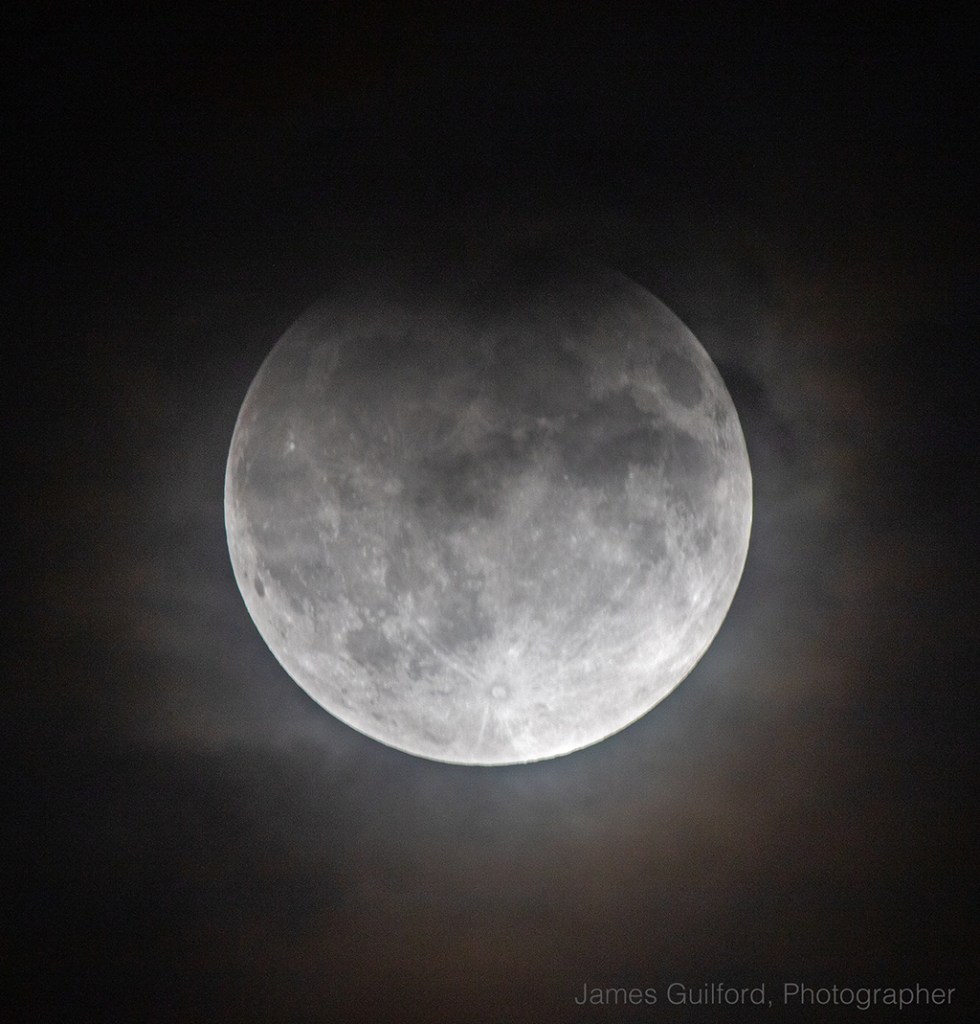
Tuesday, September 17 brought the opportunity to see a partial lunar eclipse without staying up all night. That’s the sort I call a prime-time event. The skies were partly to mostly cloudy through the evening but, as the time for maximum eclipse approached, breaks were appearing in the cloud cover. I set up my camera and tripod and, with about 15 minutes’ lead time, headed out to the patio. I made a few test shots using the Canon EOS 7D Mk. 2 camera, and then a few more to keep. One shot was made at 10:44 PM EDT simply to record maximum. My favorite images, and by-eye views for that matter, were of Moon as thin clouds passed across and near the glowing orb, lending color and mystery to the scene.

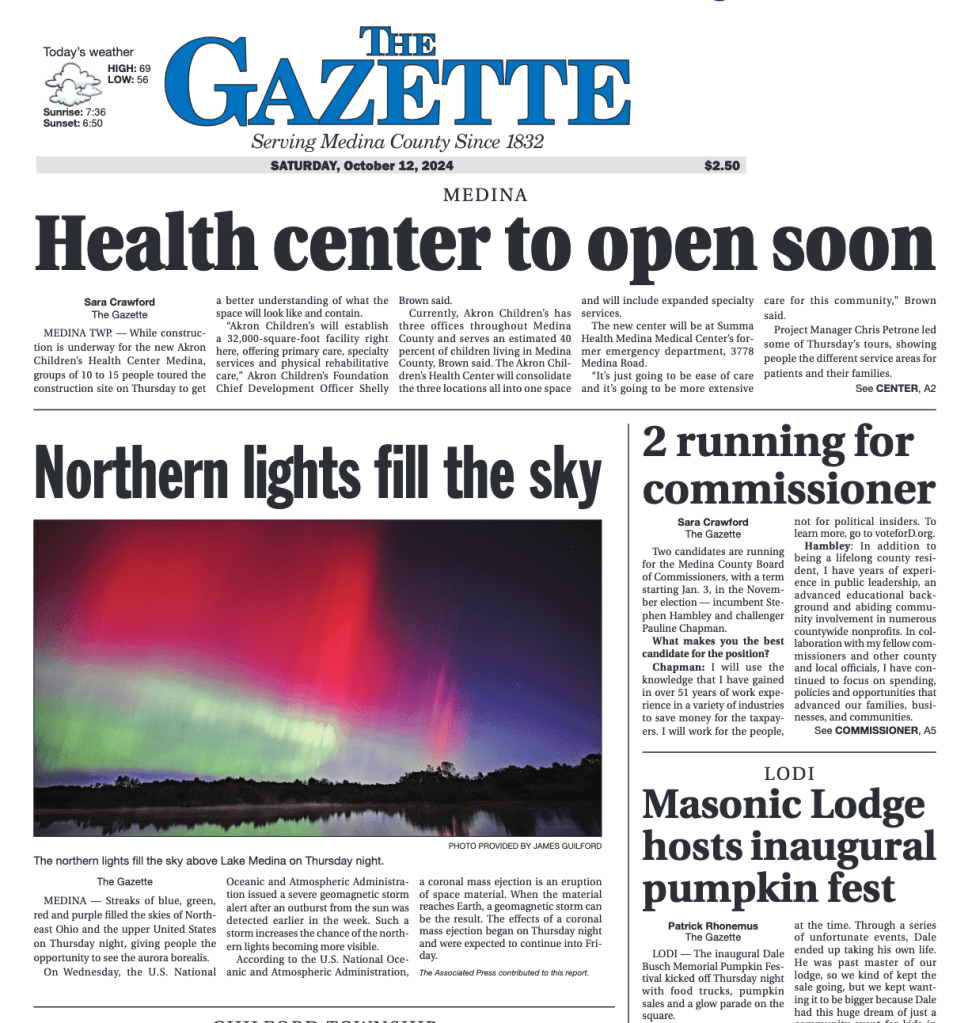
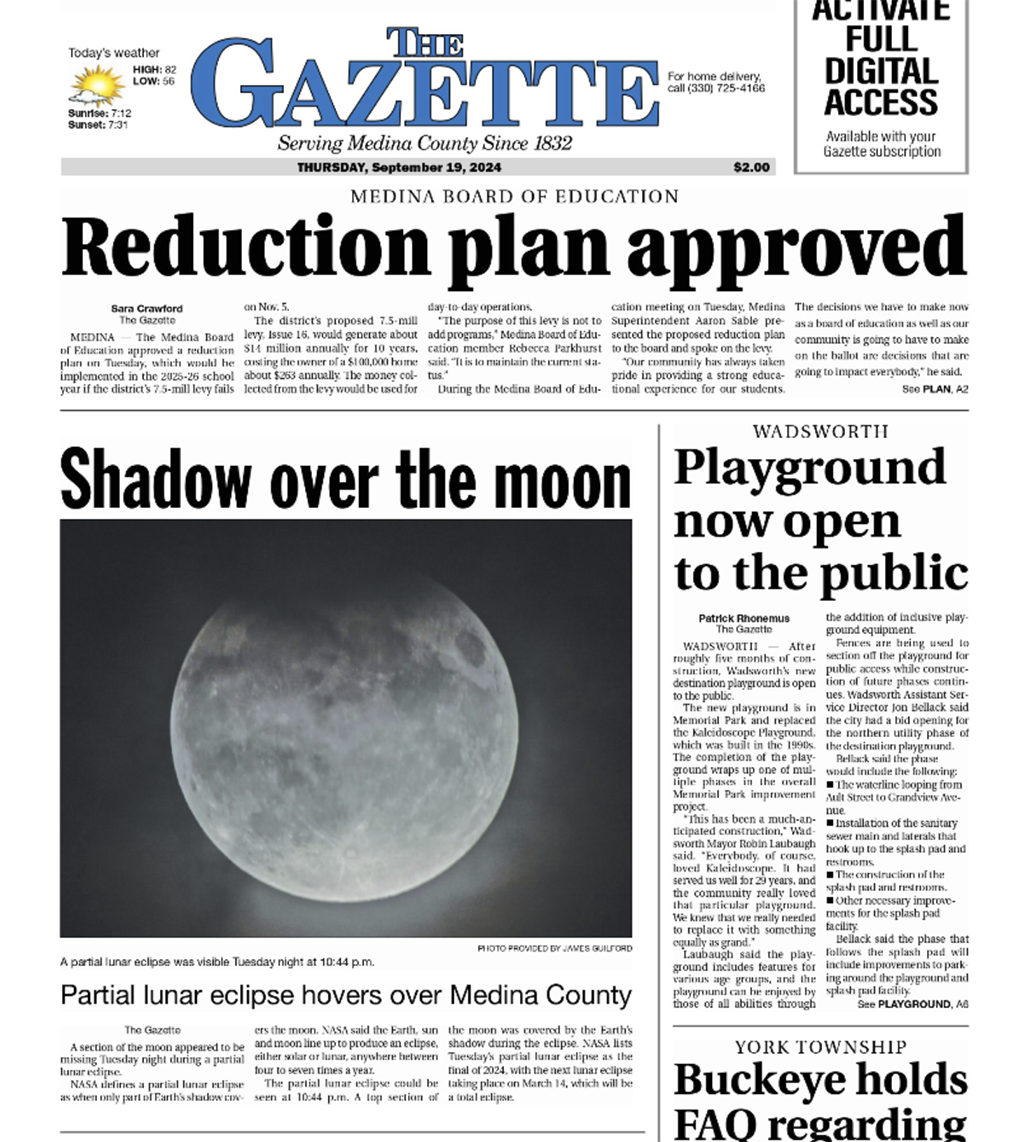
That same night I made a copy of my “maximum eclipse” digital image and sent it off to the local newspaper. Too late for the next day’s edition, my photo showed up today (Thursday), not only on Page 1 but at three columns, huge! The paper’s rendering of the image lost a bit in the translation but still represented what was seen.
 PhotonStopper