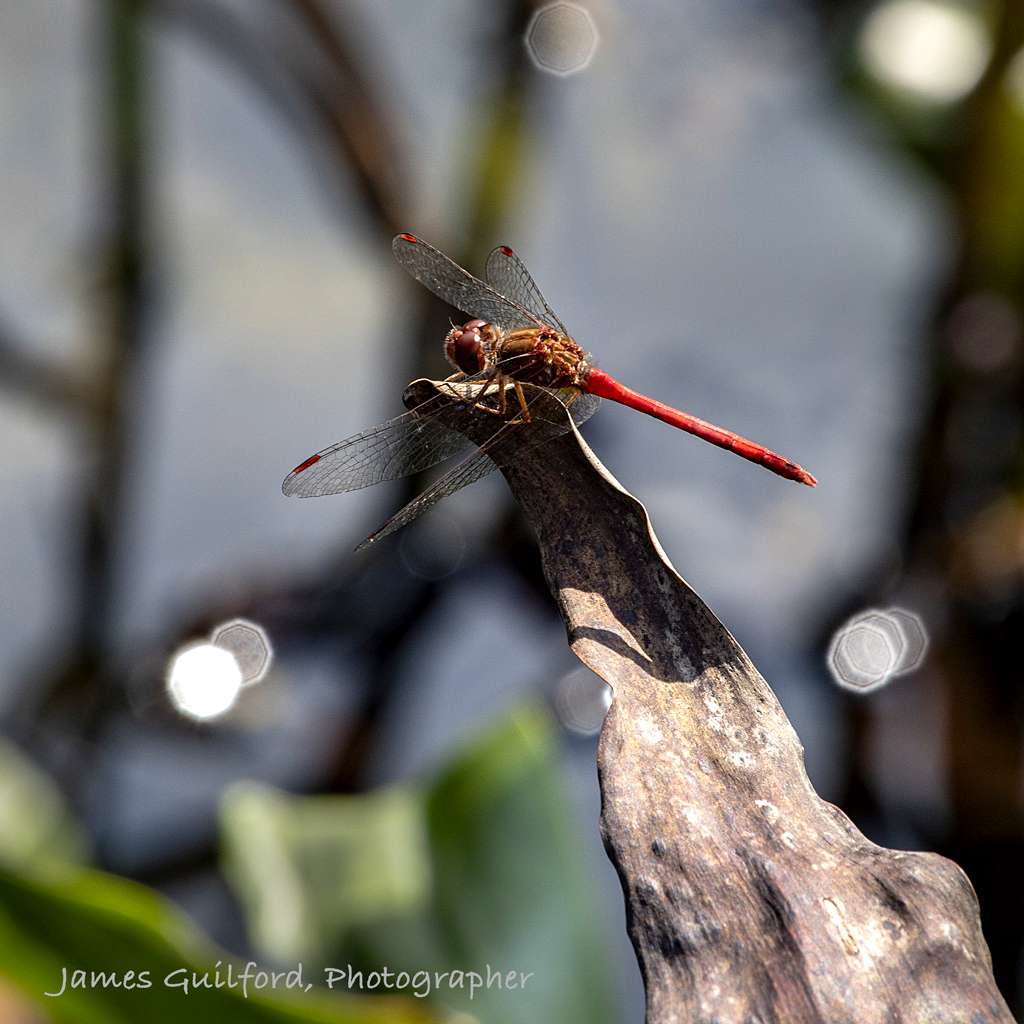
A male Halloween Pennant (I believe) perches on the broken tip of a twig along the edge of a small pond, the sun glimmering in the cells of his gossamer wings. July 7, 2022. Photo by James Guilford.
I haven’t been “dragon hunting” in some time so today’s mission was to shoot a few. One I bagged today — a male Halloween Pennant (?) — at the Medina County Park District’s Letha House Park West. I saw and photographed several varieties and missed a couple. It looks like it will be a fine Dragonfly Summer.
The Landing Pad. An Eastern Pondhawk rests upon a dead lily pad that has changed color to shades of yellow and rust red. Photographed July 7, 2020 at Letha House Park West, Medina County Park District. Photo by James Guilford.
I stayed up late, anticipating the arrival of a powerful storm system the night of June 13. The MCS (mesoscale convective system) tracked to the south of its predicted path, leaving me at the northern end of storm activity. I thought I was out of luck but saw some lightning and decided to try for some photos. My persistence and resulting sleep deprivation was rewarded. I witnessed several impressive displays of “anvil crawler” lightning — cloud-to-cloud discharges along the cloud base — but missed a couple. At midnight, however, this amazing crawler filled my visual field and the view from the camera. The strong horizontal bolts steal the show but look closer. Even in this reduced-resolution web version of the photo, streaks of lightning reach up and down across the bottom of the storm cloud. I remember seeing the motion of the light, almost like an advertising sign, luminescence racing along those fine lines. The MCS blasted across our region, downing trees and utility poles along its path. Here, the storm passed dropping only a little rain with virtually no wind, allowing me to make this capture (a single exposure). The local newspaper surprised me by using the image — full-frame, in color — huge on their front page! It’s hard for newspapers to hold the finest details in print but the e-version looks pretty good.
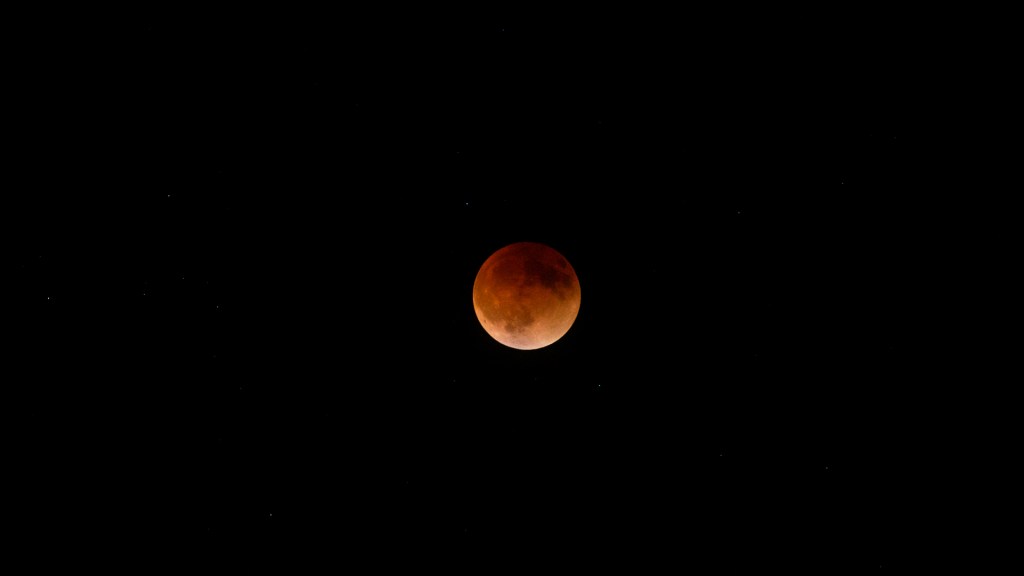
Total Lunar Eclipse of May 15 – 16, 2022, at 12:30 a.m., EDT. Some viewers may be able to see several white spots in the dark space around Moon — stars within the constellation Libra — better visible in the original photograph. Photo by James Guilford
It looked like a great opportunity to see and photograph a total eclipse of the Moon! Too often, it seems, lunar eclipses have been either just starting or in progress at moonset or sunrise, either curtailing what might be seen. The May 15 – 16 lunar eclipse was an exception.
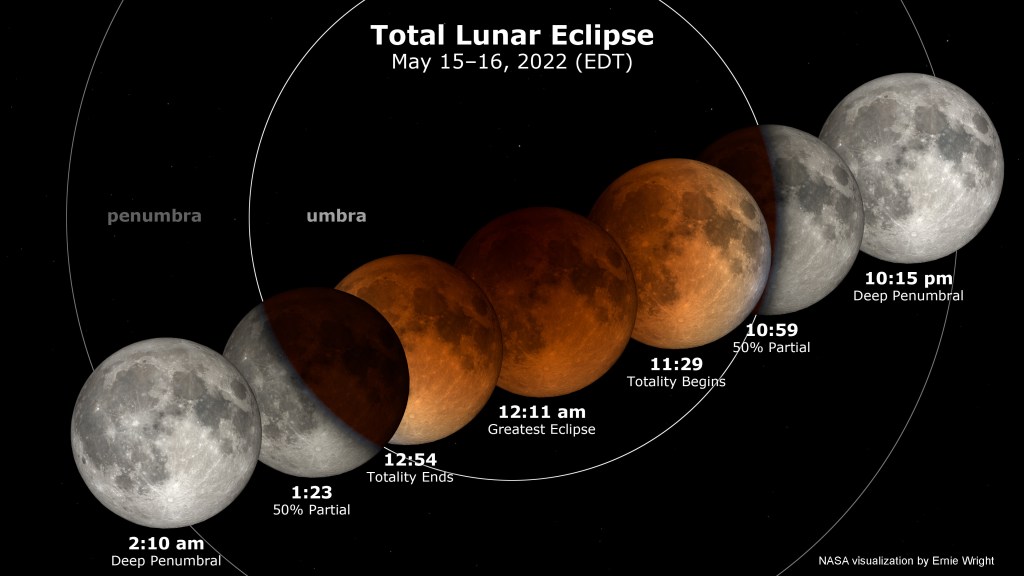
The entire eclipse sequence might be visible from my location with its peak — totality — at about midnight; not too late or too early a time for those who need sleep. Of course the big “IF” was IF the weather would allow viewing.
Lunar Eclipse Sequence. Credit: NASA
Early in the evening things looked good but forecasters called for an influx of cloud cover and, of course, just as the partial phase of the event began, clouds began to gather.
At first, the brilliant partially-eclipsed orb was easily photographed through thin overcast. The thin veil of clouds gave a mystical feel to the event. As the clouds thickened, however, the view worsened. At times, though the camera could pick it out, Moon was visible only as a smudge in the cloudy night sky.
Early in the partial eclipse period, Moon has a flat, indistinct appearance due to being in the subtle penumbral eclipse. Earth’s deep shadow crawls across the lunar disk from lower left to upper right. Photo by James Guilford.
Late in the partial eclipse, I could make out a trace of copper-red in the darkened portion of the lunar disk though that did not register with the camera.
Thickening clouds threatened to ruin the view and succeeded much of the time! Photo by James Guilford.
Just as totality was reached, Moon was covered with clouds thick enough to block the view entirely. Disappointment set in but the clouds had some streaks where a star or two could be seen.
A fingernail-thin sliver of the formerly full Moon remained marking the final portion of the partial eclipse phase. Faint red coloration was visible to the eye but, at this exposure, the camera did not record it. Photo by James Guilford.
So while I missed the precise moment of peak eclipse at 12:11 a.m., EDT, I waited to see if the moving clouds would allow a peek at the still-red Moon. It happened!
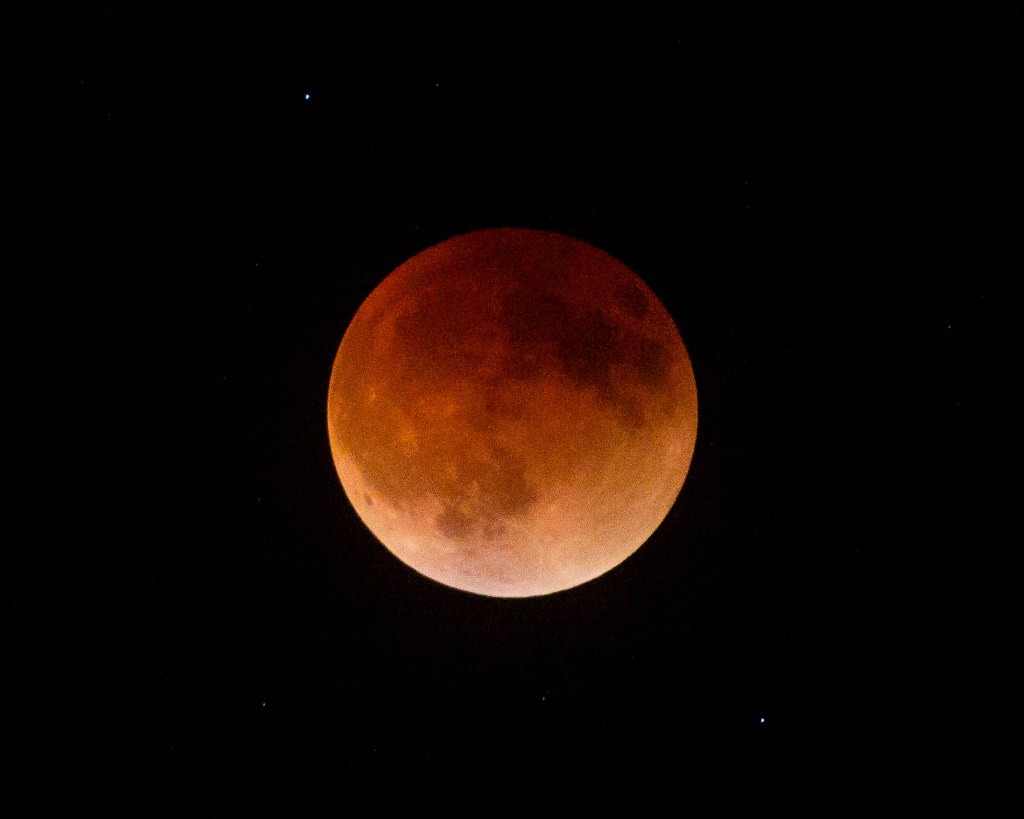
Deep red and copper tones mark totality. No direct light from Sun reaches Moon during this period leaving only light scattered and filtered through Earth’s atmosphere — coloration from all of Earth’s sunrises and sunsets — to make Moon visible. The two bright dots in the blackness are stars in constellation Libra. Total Lunar Eclipse of May 15 – 16, 2022, at 12:31 a.m. EDT. Camera Info: Canon EOS 5D Mk. 4, 400mm lens, ISO 8000, f/5.6, 1/4-second. Photo by James Guilford.
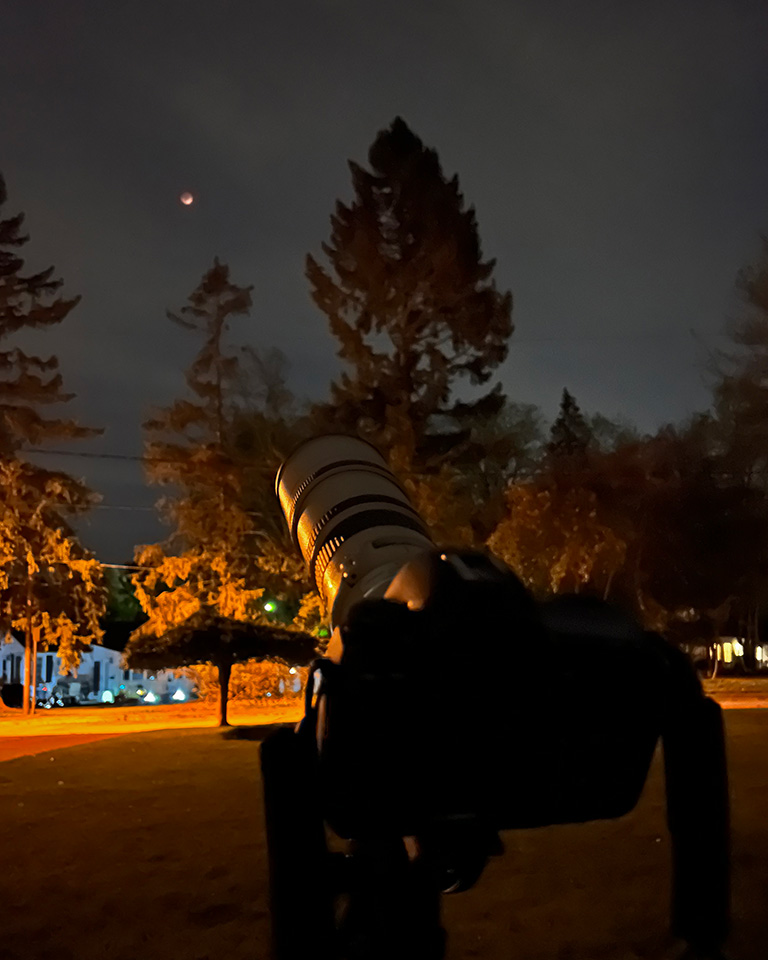
There, in a narrow slot between masses of cloud, appeared the beautiful eclipse I’d waited for in the damp chill. I got busy with my camera, stood and wondered at the sight my eyes enjoyed, took a picture of my camera setup, and after only a few wonderful minutes, heavy overcast set in — the red Moon disappeared.
Camera rig aimed at lunar eclipse. iPhone photo by James Guilford
With no visible openings in the cloud deck approaching, I packed up my gear and went indoors happy to have been able to enjoy the natural wonder.
As a postscript, I submitted an image of totality to the local newspaper and it didn’t show up there. Okay, maybe not something they wanted. A couple of days later, too late to I checked my email spam folder and, to my dismay, the newspaper editor wrote that he wanted to use the photo but at higher resolution.
An Autumn Meadowhawk (Sympetrum vicinum), AKA Yellow-legged Meadowhawk, observes its world from a dried aquatic plant leaf in the wetlands of the Alderfer-Chatfield Wildlife Sanctuary.
We’ve not been out much on nature hikes this year. We did, however, pay a brief visit to a local park Saturday, and spotted a few dragonflies. This is one of many Autumn Meadowhawks we observed that afternoon at the Medina County Park District’s Alderfer-Chatfield Wildlife Sanctuary. These red beauties are usually the last dragonfly seen each year with a flight season that begins in July and which can extend to mid-November.
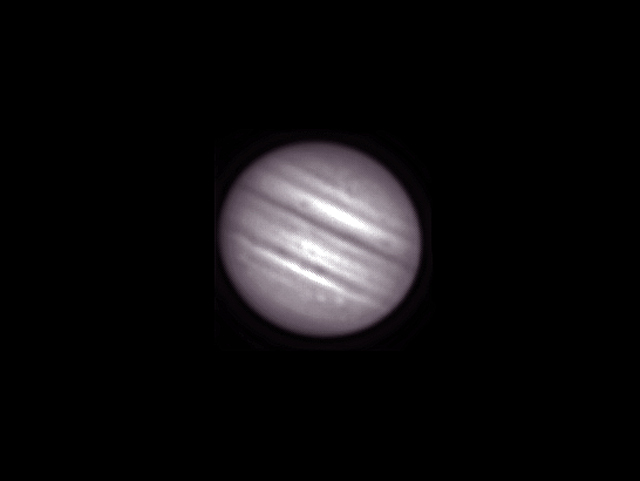
Planet Jupiter from a September 10 astrophotography effort. Several cloud bands and atmospheric disruptions, as well as the planet’s oblate spheroid shape can be seen despite the overall softness of the picture. From a stack of monochrome images, color added during editing.
Okay, I know this is ugly — a not-very-good image of planet Jupiter. I know, and yet I’m posting this because this humble effort is the best I’ve done thus far in my beginning planetary imaging efforts. I made a stack of images around 11:11 p.m., Friday, Sept. 10. Conditions were difficult with breezes, and high altitude haze and I found achieving good focus was hard. Maybe an electric micro focus would help? A longer native focal length telescope would also help by producing a bigger image on the camera’s sensor!
On the “up” side, even this crude attempt shows several of the planet’s cloud belts, even hints at major atmospheric disruptions; that makes me happy, or at least happier. Lost in processing were nearby Galilean Moons Io and Europa which would have appeared just to the right of Jupiter’s disk. My previous planetary effort was Mars one year ago! Between the sky conditions (rarely good, it seems), and my nighttime motivation, I sadly don’t get much practice.
To produce the image I used my Vixen 8-inch Cassegrain 1,800mm FL telescope (love the scope but need more focal length), ZWI ASI178MC planetary camera, Lynkeos Stacker processing software which is a native MacOS application. I shut down a bit after midnight Friday night and hoped for clear skies Saturday night — I wanted to try again and try a a piggybacked shot using my DSLR and telephoto lens, getting Jupiter and his family of moons. Alas, no. Clouds and smoke from western U.S. fires plus continued breezes played havoc with the sky. So I tore down the rig and stowed everything hoping good conditions come soon.
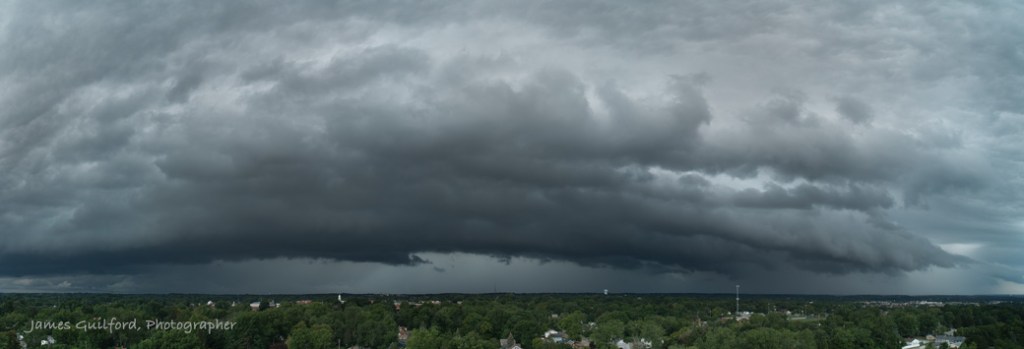
Storm Arrival. A complex shelf cloud developed along the leading edge of a mesoscale convective system (MCS) as it rolled over the city of Medina, Ohio in the middle of the day. Torrential rains followed.
I was able to record the approach of a massive mesoscale convective system (MCS) with its shelf cloud early in the afternoon of August 25 — this panorama I assembled shows most of it. I posted a panning video I shot of the storm and it was discovered by a producer at Accuweather. The cable weather channel requested permission to use the “footage” on-air but I denied the request … I feared their use of my drone video, myself not yet a certified professional drone pilot, would violate FAA regulations. I was later told by a flight instructor that I could have granted permission, even sold the video to a willing buyer, since it was created for recreation and not on assignment or with the intent of commercial use. I still sigh thinking about that one. Mebbie next time!
By the way, I have a lot of experience with this type of weather phenomenon and was even checking radar as the storm approached so I knew when to land to avoid rain and strong winds.
One reason I purchased a drone aircraft was to be able to view sunrises, sunsets, and weather phenomena from home by rising above the trees that surround us. The experiments have been successful, this being the latest effort.
The Sun, showing several sunspots/active regions. This image was made at 3:43 PM EDT/7:43 PM UTC on September 10, 2021 using my Vixen Cassegrain reflecting telescope with safe solar filter, and Canon EOS 6D Mark 2 DSLR camera body.
After a long period of quiet during our Sun’s fairly predictable 11-year activity cycle, things have been happening. What was a bright, clear disk has become speckled with sunspots of late. The increased activity brings with it the chance of Earth-directed coronal mass ejections, or CMEs, which result in solar storms when they collide with our home planet’s magnetic field. Auroras, or “northern lights” for us, are one potential result of solar storms. The less pleasant effects can include disruption of radio communications and satellite operation, all the way to electrical grid failures at the extreme!
Several recent CMEs have missed Earth but one is headed in our direction as this blog entry is being written. According to SpaceWeather.com, “{A} CME is on the way following an explosion in the magnetic canopy of sunspot AR2864 on Sept. 8th. NOAA analysts believe Earth could experience a glancing blow or near miss late on Sept. 11th.” Those favored with clear skies and a good view to the north may want to be on the lookout for aurora, but the odds aren’t favorable … this time!
Here are two photos of Sun I shot at 3:43 PM EDT (7:43 PM UTC). The first image shows the full solar disk. Notice not only the dark sunspots but also the lighter-colored “splotches” of additional active solar regions, most visible near the edges of the disk.
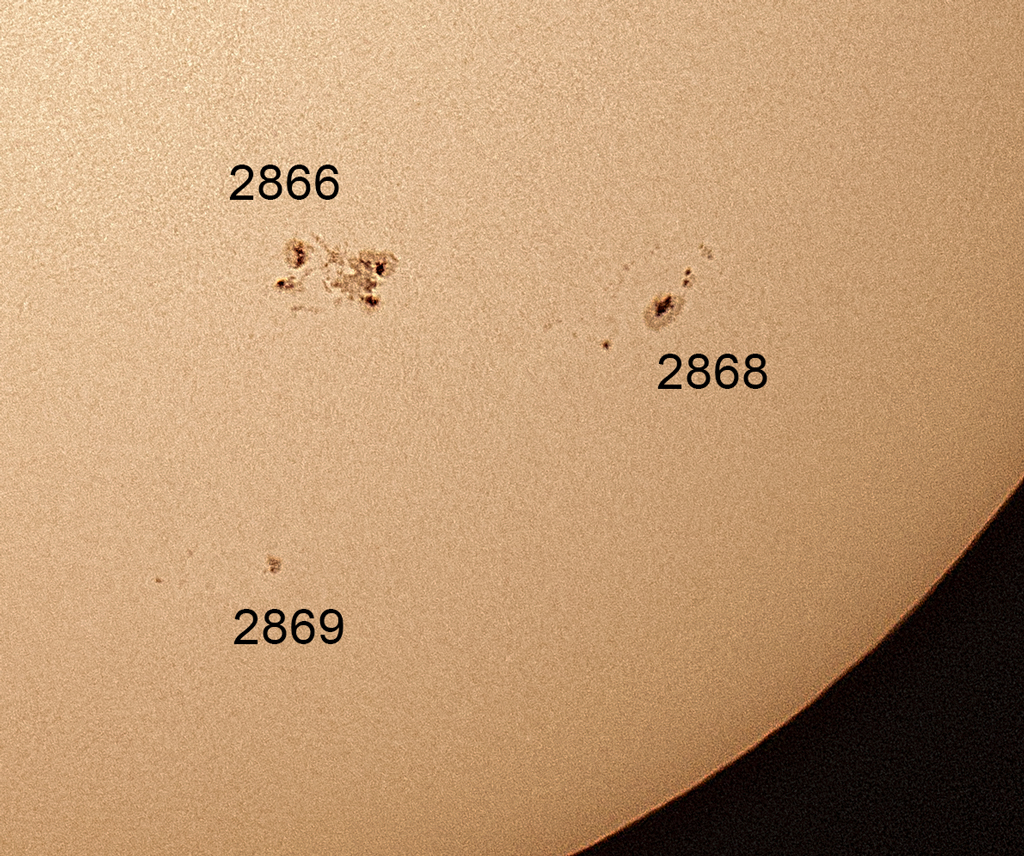
The second image is cropped to show the major concentration of the day’s sunspots with their official numerical designations. Both images have been color tinted.
The Sun is waking up and putting on a wonderful show!
A tightly-cropped portion of the day’s full-disk image shows three sunspot groups: AR 2866, AR 2868, and AR 2869. Sunspots only appear to be dark because they are significantly “cooler” than the surrounding solar atmosphere; they are actually quite hot. Sun’s shining photosphere has a temperature of 5,800 degrees Kelvin while sunspots have temperatures of around 3,800ºK (6,380℉). Nearly all of the dark features seen here are larger than planet Earth.









 PhotonStopper