
After days of negative weather forecasts, and spring’s reputation for cloudy skies, the clouds thinned Monday, April 8, leaving a milky film across most of the sky. We did, after all of the worry, get to see a very beautiful eclipse. Because the sun is so active right now, the dark disk of moon hiding sun was ringed with easily-seen prominences or “proms”, and surrounded by a fairly round corona.
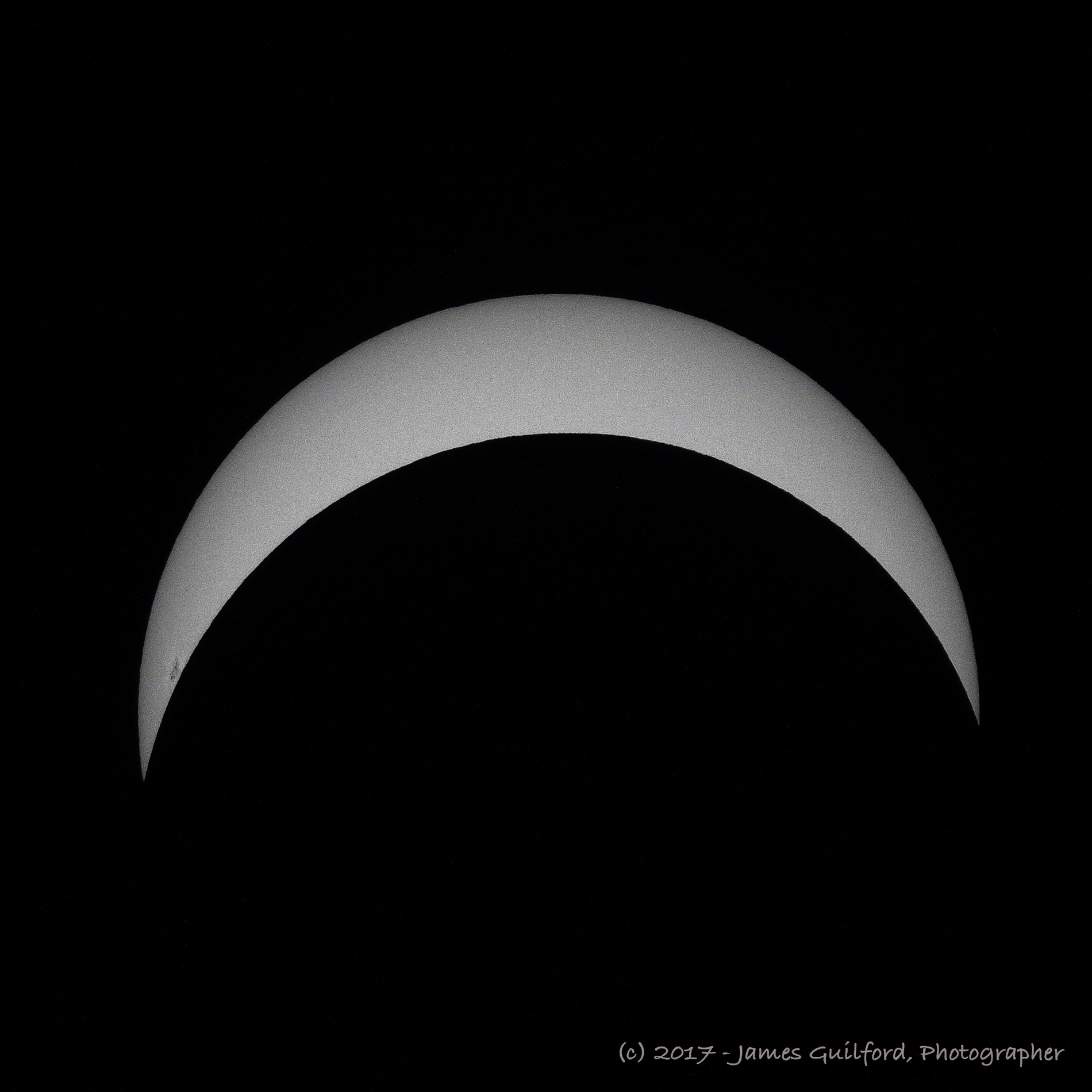
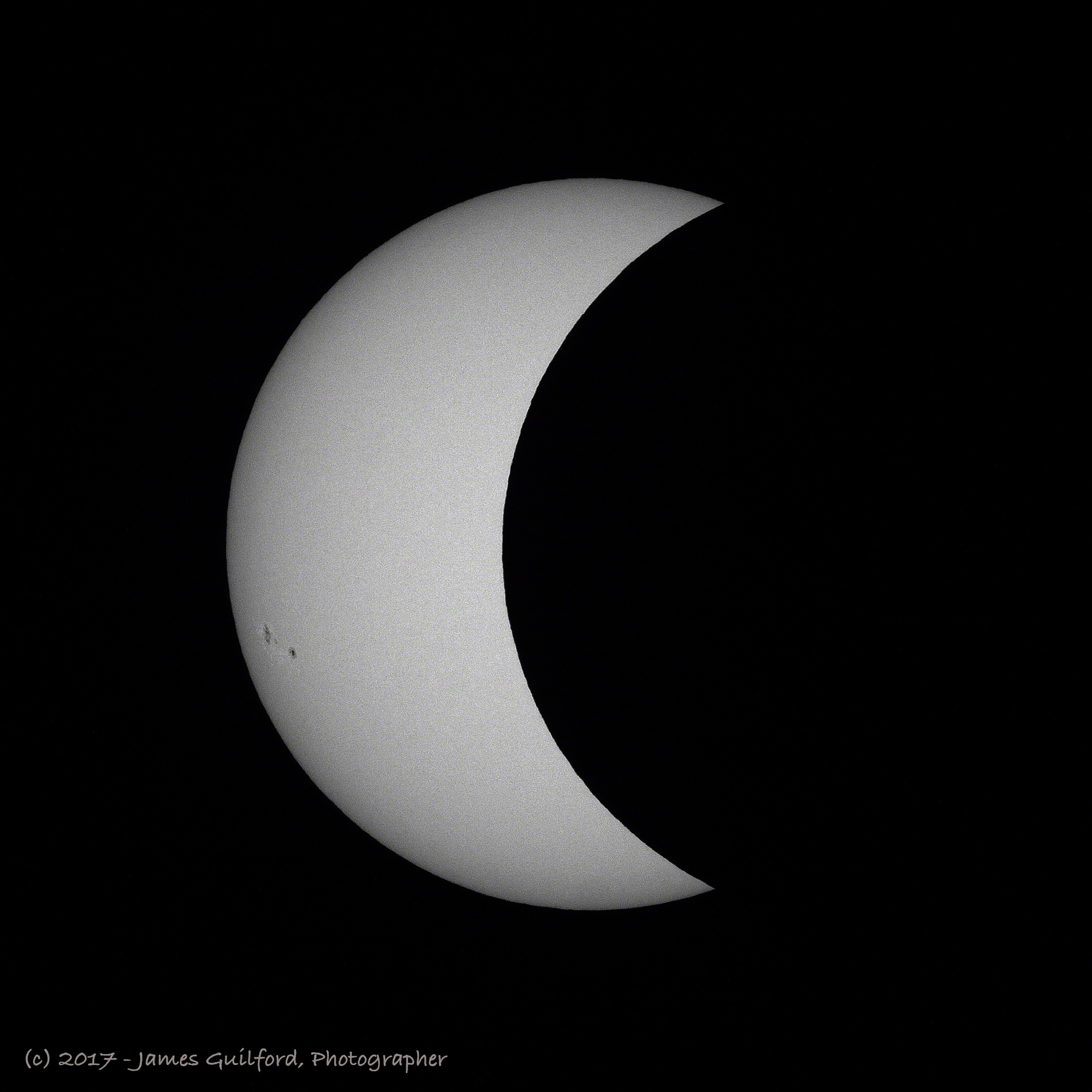
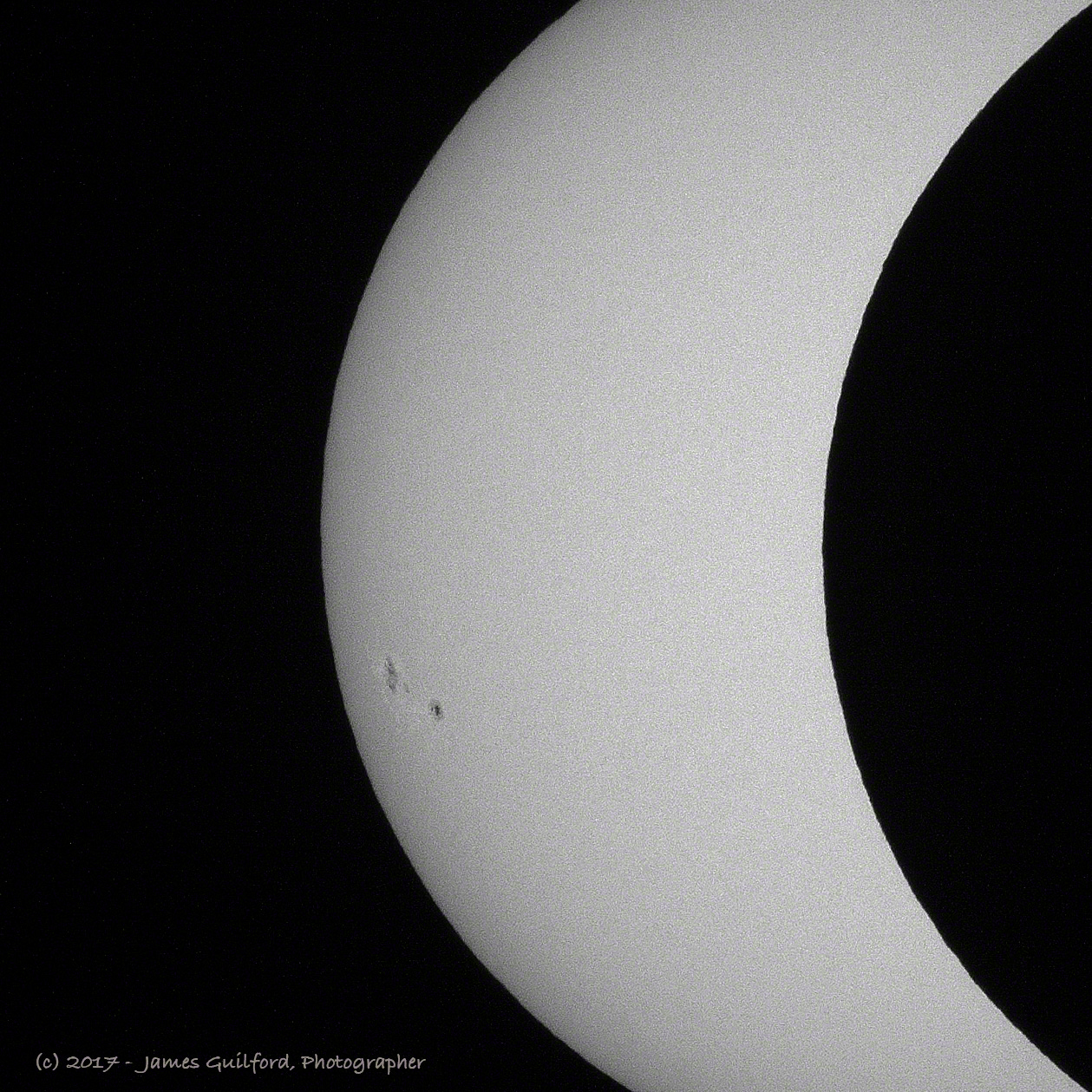
I’d set up two telescopes in the driveway as I was concerned views from a backyard setup might suffer due to trees. I’d also hoped visitors might drop in to take a look. Only two neighbors visited, one during totality, but it was very nice to visit with them. Overall, since the eclipse was visible from people’s own backyards, we believe many, maybe most, simply stayed home and enjoyed the show; streets were quiet and, from what we could tell, crowds small.

While I had hoped and planned for a sky clear enough to enjoy an expansive view of the solar corona, the aforementioned thin cloud cover successfully masked the delicate outer corona leaving only the brilliant inner level accessible. At first I was disappointed but was consoled by my images of prominences — something I did not expect to record in such detail — and that was rewarding indeed!
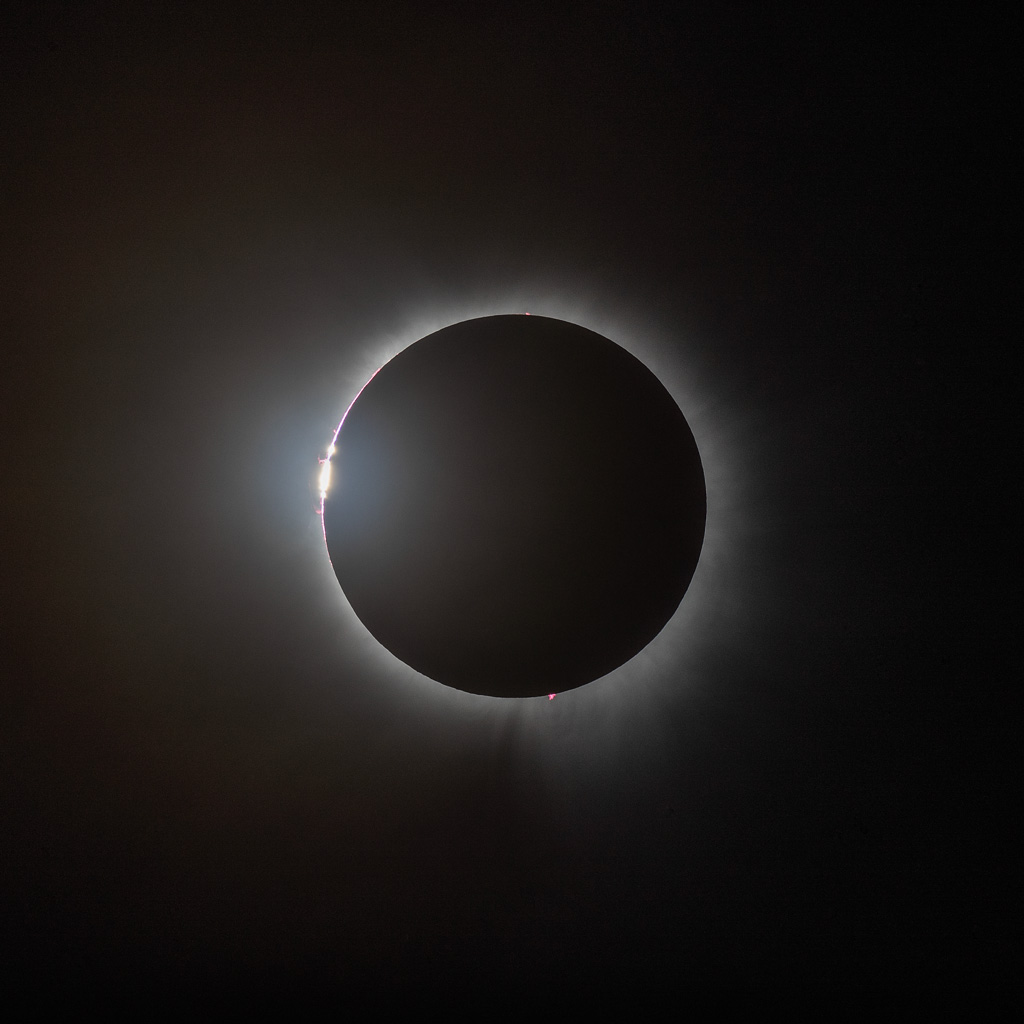
As totality’s appointed hour neared, sunlight faded and took on an eerie quality seen, really, only during solar eclipses. Darkness began to set in and the breeze, as expected, turned cool. The world became quieter. A robin began singing its evening melody. When the last bit of sun winked out behind Moon, cheers rose from people gathered at a nearby public event. I removed the solar filters from my cameras and let them shoot photographs of totality. I looked at the eclipse, a bright light flared from the six o’clock position of the dark circle — a huge prominence that caused my visiting neighbor to ask about. Around three-quarters of the surrounding horizon was glowing in sunset color while the area under the ongoing eclipse was dark. One camera continued its slow count of shutter clicks. And then the world began its return to daylight. Quickly covering lenses I was gratified that I was able to, after days and weeks of concern and doubt, see the complete eclipse event.

It’s here that I confess that, in spite of my attempts to test and set up the cameras in advance of totality, I failed. My Canon EOS 6D Mk. 2 did not work as expected. I shot a few single images with it but ended up relying on the Canon 5D Mk. 4 for nearly everything. Even the 5D was not without issues as it did not automatically bracket exposures as I believed I set it — I’ll chalk that up to “operator error”. At least it “failed” with an excellent shutter speed to image the inner corona and those proms I’d wanted to catch!

Looking back on the day I can appreciate how lucky we were here at our Northeast Ohio home. Monday morning’s sky was covered in thick cloud and the forecast called for from 40 to 60 percent cloud cover. The sky later cleared to beautiful blue and, though a high thin cloud deck moved in, we saw and photographed a glorious natural phenomenon. This was only my second total solar eclipse, the first experienced in 1970, and it is quite likely my last since I’m not much of a “chaser”. Though I regretted my failings with my photographic plans, the results I did achieve delight me. It was indeed a day of luck and beauty.




 PhotonStopper