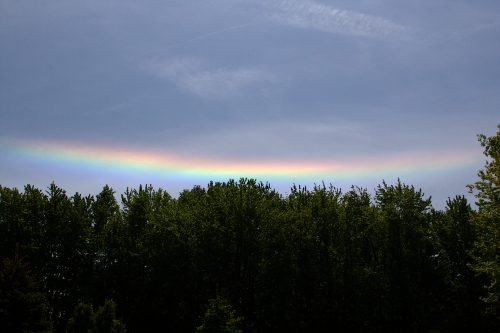
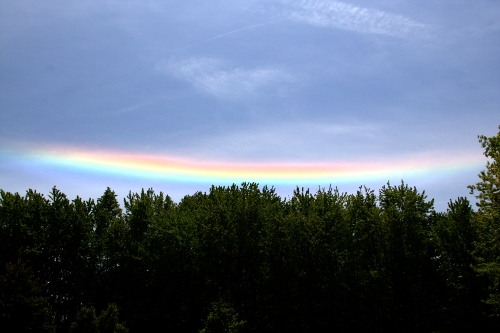
The skies began clearing this evening after a day of dull, gray clouds and occasional light rain. As I was driving this evening the sun began shining brightly from behind me and ahead, against a backdrop of dark cloud, a rainbow began to appear. As the sun grew brighter, so did the long, colorful arc — a full bow across the eastern sky. Of course there was little opportunity for a clear view of the spectacle so, at my first opportunity, I pulled into a parking lot, whipped out my Canon PowerShot G11, and made a few exposures of the brightest part of the rainbow. The colors were unbelievably intense and the full spectrum of visible color could be seen — most unusual! Traces of concentric bows could also be spotted but the bright bands completely dominated the scene. As I watched the colors began fading from the northern section of the rainbow, intensifying in the southern part — behind wires, trees, and buildings; the show was over for me. I’m glad I stopped as soon as I could. I’m a sucker for ordinary miracles.
sun
All posts tagged sun
Vacation Day #4 and I spent some time this morning experimenting with solar photography. On June 5, the transit of Venus will take place and since the next one after that won’t happen for another 115 years, I thought I should try for this year’s! I discovered to my dismay that the very expensive, modern-design, Herschel Wedge won’t work for photography with my “big” telescope — the six-inch, 1,219mm Meade LXD75. Rats! I’m going to make quick queries to see what I can do to resolve the issue if I’m to use the wedge any time soon … and June 5 is soon! I could not crank the camera “in” close enough to achieve focus with the wedge in place. So with the telescope still set up in the mid-morning sunshine, I removed the wedge and covered the telescope’s objective lens with the very inexpensive AstroZap filter made using Baader AstroSolar film. I connected my trusty (and light-weight) Canon Digital Rebel XT to the scope’s eyepiece holder and made several bracketed exposures. Later I discovered the results were very good though not quite as good as shots made with my Canon EOS 50D and Canon 400mm telephoto. The difference in quality may be attributed to seeing conditions –the images were made days apart– but either setup will do just fine for recording the historic celestial event. Now all we need is clear skies on that day!
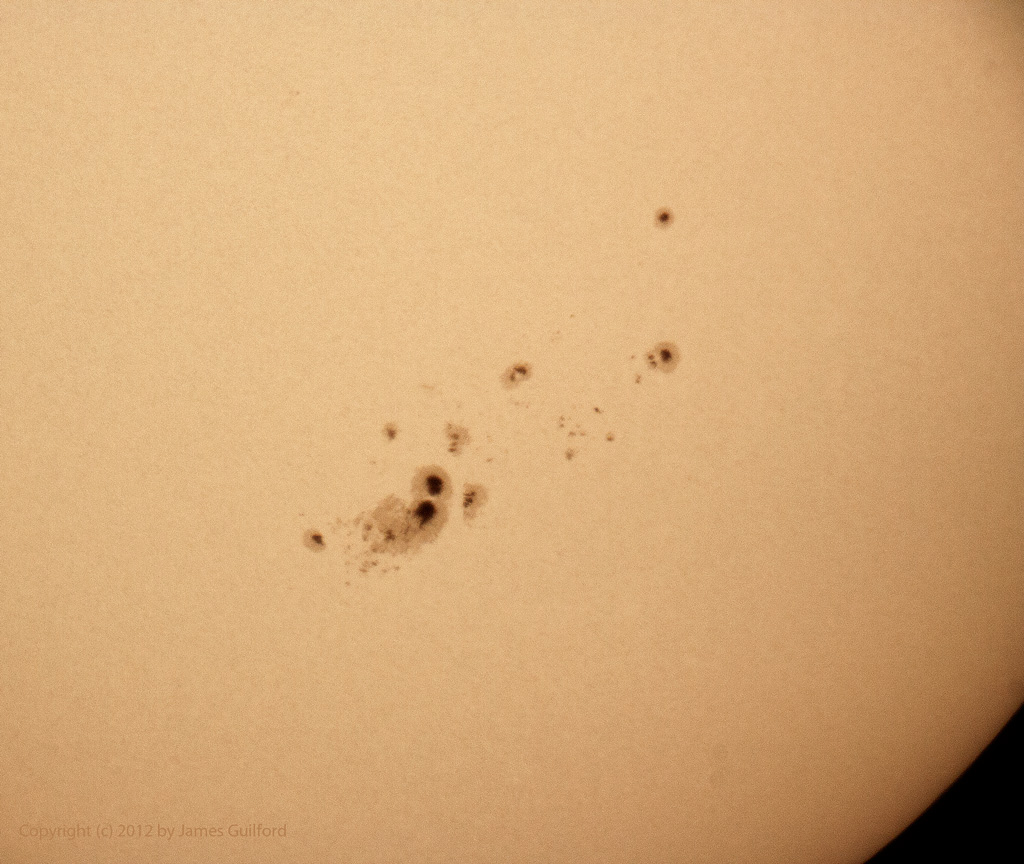
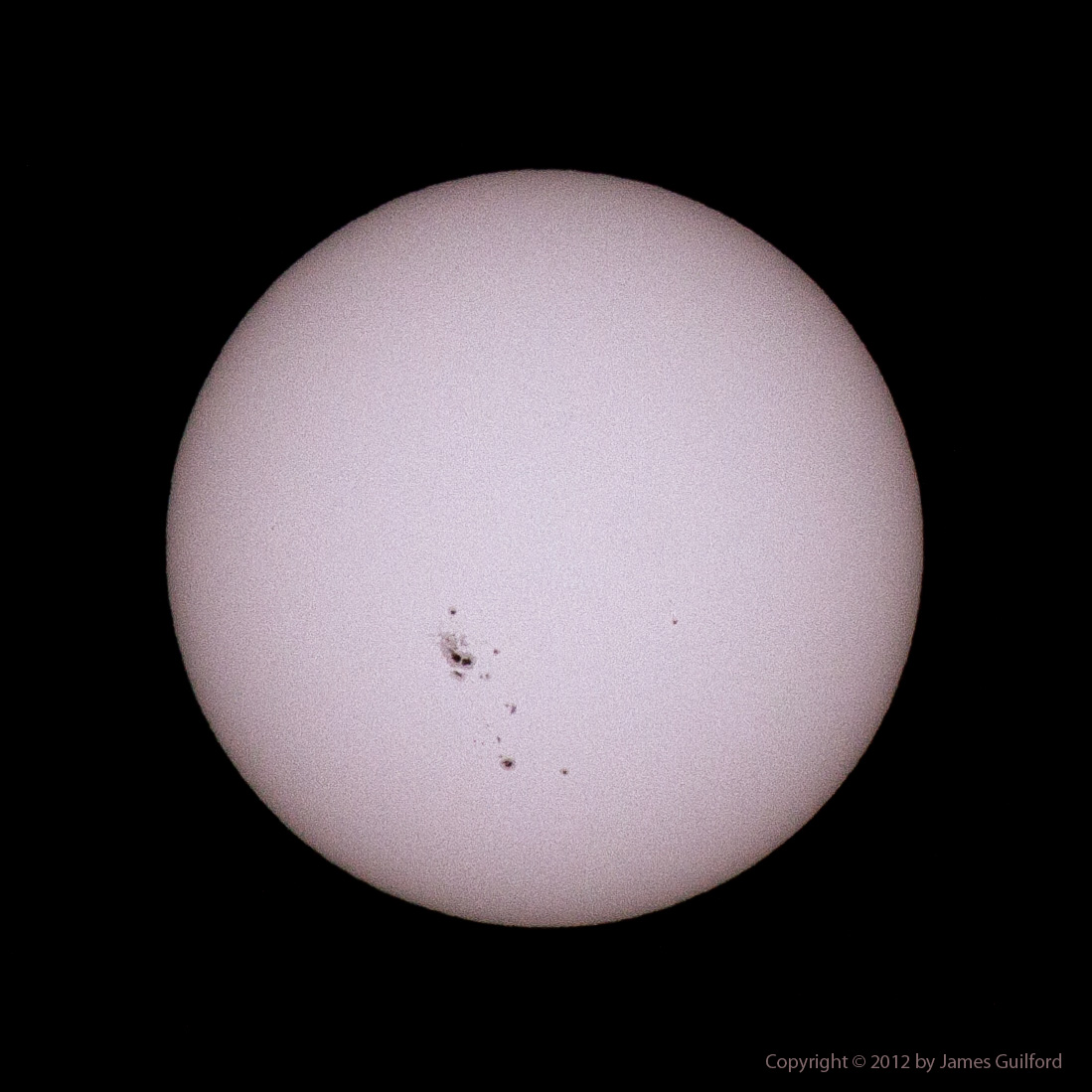
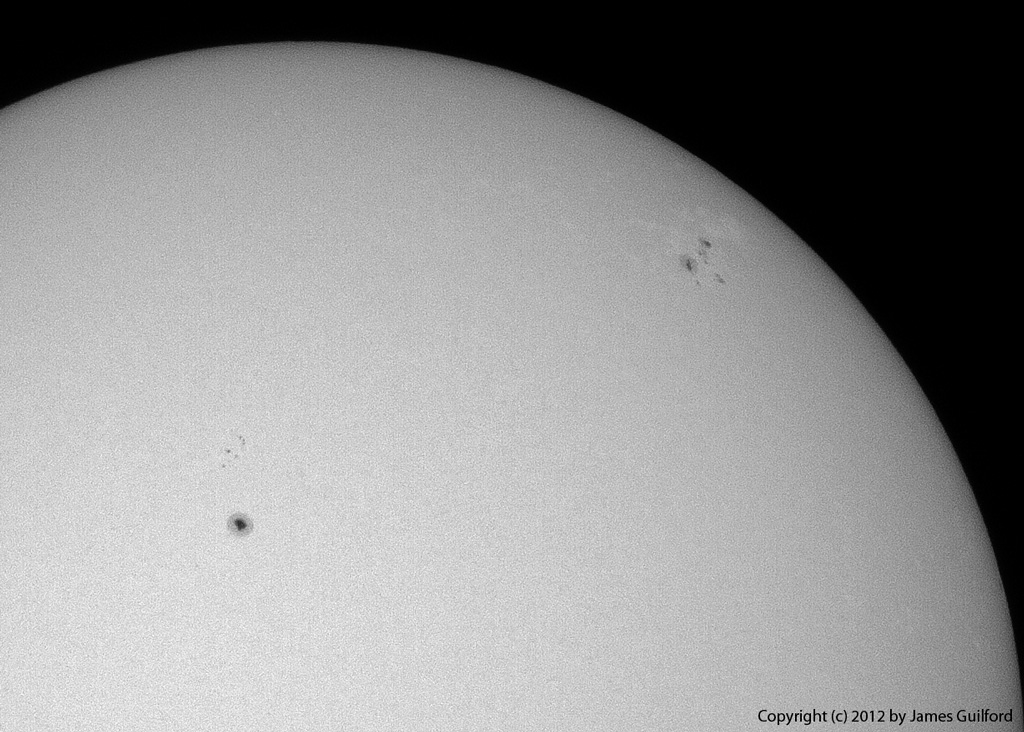
Sunday, May 13 dawned reasonably clear and so, with cloudy skies anticipated, a few rushed photographic observations were made of our Sun. I had to fit that in before visiting Mom for Mother’s Day! Active Region1476 (a huge sunspot group) continued to dominate the solar disk though it had been joined by several smaller but notable sunspots blemishing old Sol’s face. Also visible in this photo are granulation and other disturbances — the chromospheric network — in the solar atmosphere. Notes on the photo, the best image I’ve done of the Sun so far: Canon EOS 50D, ISO 400, f/8, 1/1,250 sec., 400mm Canon telephoto, AstroZap white light film solar filter, May 13, 2012 at 9:15 AM. The sky was reasonably clear though this image was captured through a thin cloud, the remains of an aircraft’s vapor trail.
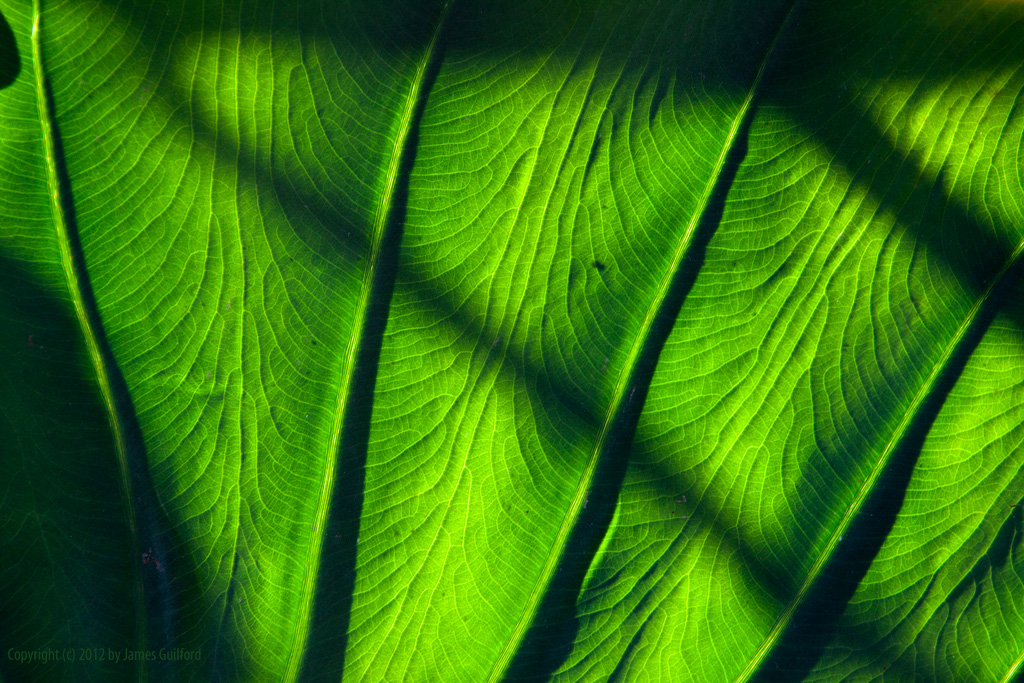
We decided to check out the recently-opened, still-under-development Miller Nature Preserve in Avon, Ohio. Though inside city limits, the preserve consists of 78 acres of wooded land, now set aside as a natural green space. Congratulations to Avon and Lorain County for giving yourselves this great gift! Sitting at the edge of the wooded expanse is a lovely nature center with a 5,000 square-foot conservatory. We had a very relaxing time walking amongst the tropical plants, enjoying their shapes and colors in the late-afternoon February sun. We’ll return this summer to explore trails on the property. Until then, we were very impressed by the great indoors.

Visitors enjoy white light (big telescope) and hydrogen-alpha (small scope) views of Earth's Sun. Photo by Kevin Kelley, WestLife.
I spent a fun couple of hours, August 10, sharing views of the Sun through my telescopes at the Westlake Porter Public Library. It was a sort of sidewalk astronomy event, part of “Science Week” there, and drew 53 participants. Lots of passing clouds got in the way, shoved along by steady winds, and people were surprisingly patient waiting for the Sun to return. When we had clear skies we were rewarded with very good viewing of a beautiful loop-shaped solar prominence through the 35mm Lunt Ha scope; careful viewers with moments of better seeing spied several more! Seeing wasn’t quite good enough to reliably find the two small sunspot groups present, nor was it good enough to see granulation patters that afternoon using the 90mm Meade telescope with white light filter. I did see granulation that morning during testing at home. Sadly, a very large sunspot group, visible only days earlier, was just over the Sun’s limb this day. Procrastination in these things isn’t good but it was well worth the morning’s last-minute effort of fabricating a sturdy piggyback mount to mate the Ha with my trusty old Meade 390. It took just two trips to the hardware store for less than $10 worth of parts to create an excellent mount! A newspaper reporter asked me what organizations I represented and it turns out there were three: Cuyahoga Astronomical Association, Stephens Memorial Observatory (Hiram College), and the library! And I wore three name tags.
Addendum: An interesting photo was posted to the Palomar Skies blog… yes, the historic and world-famous Palomar Observatory! See: Palomar Flies its Colors! It turns out the technical name for this phenomenon is "circumhorizon arc." More on this may be found at: Atmospheric Optics.
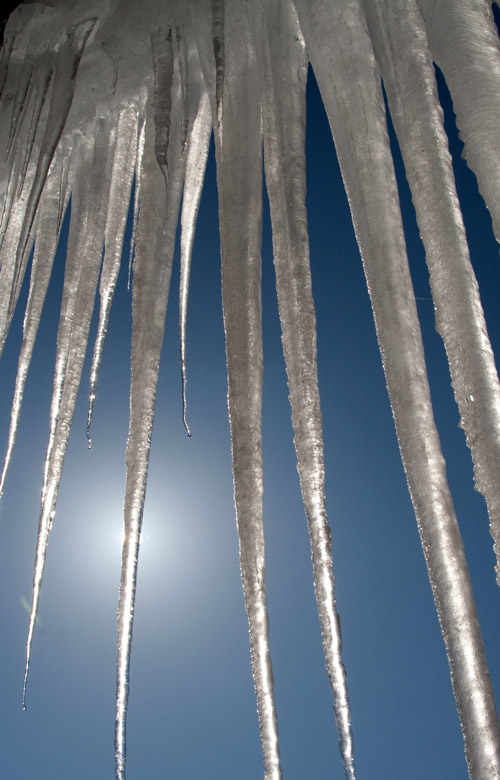
It wasn't in the forecast. Today was supposed to be partly-sunny at best. Instead we awoke to clear skies that, as the day progressed, stayed with us becoming deep blue. The temperature climbed to nearly 40 degrees (F) making the icicles sweat, shrink, and sometimes lose their grip entirely. Now the forecast has shifted… they're saying today will be partly-cloudy, tomorrow mostly-cloudy with a chance of snow. I've got a scheduled open night at the observatory tomorrow night. What will the weather be like? Maybe like today, or maybe some other sort of surprise!