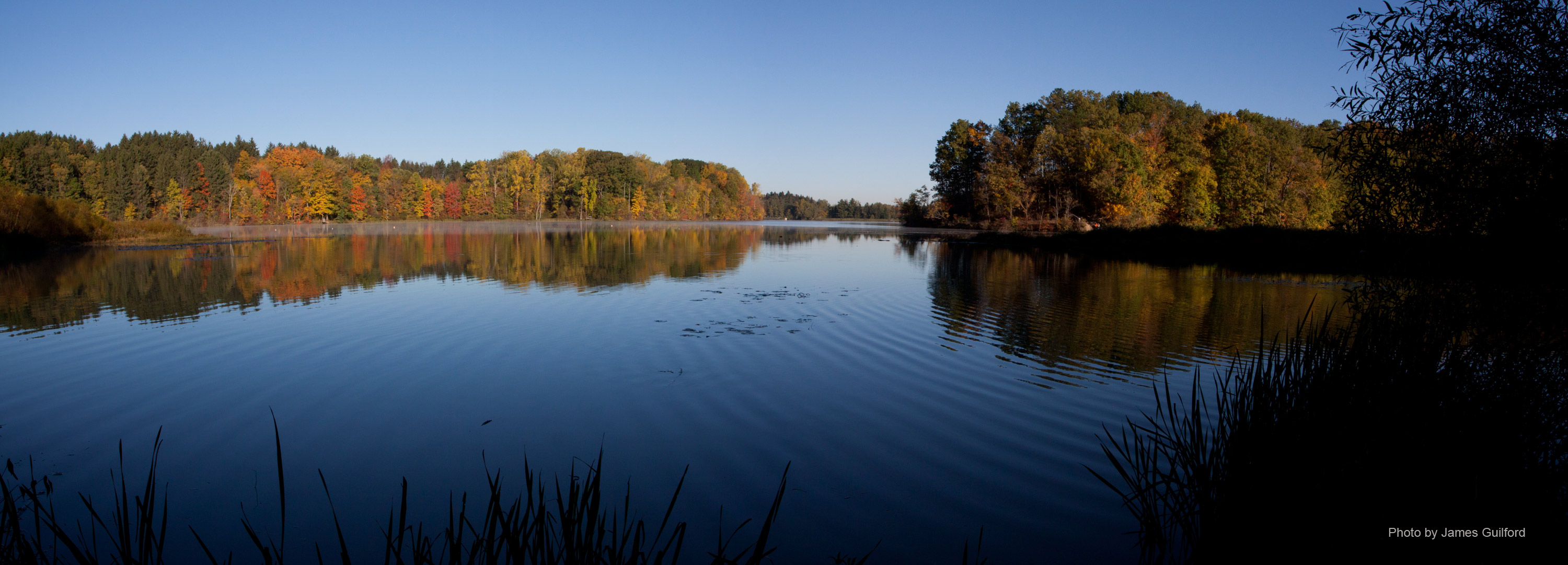
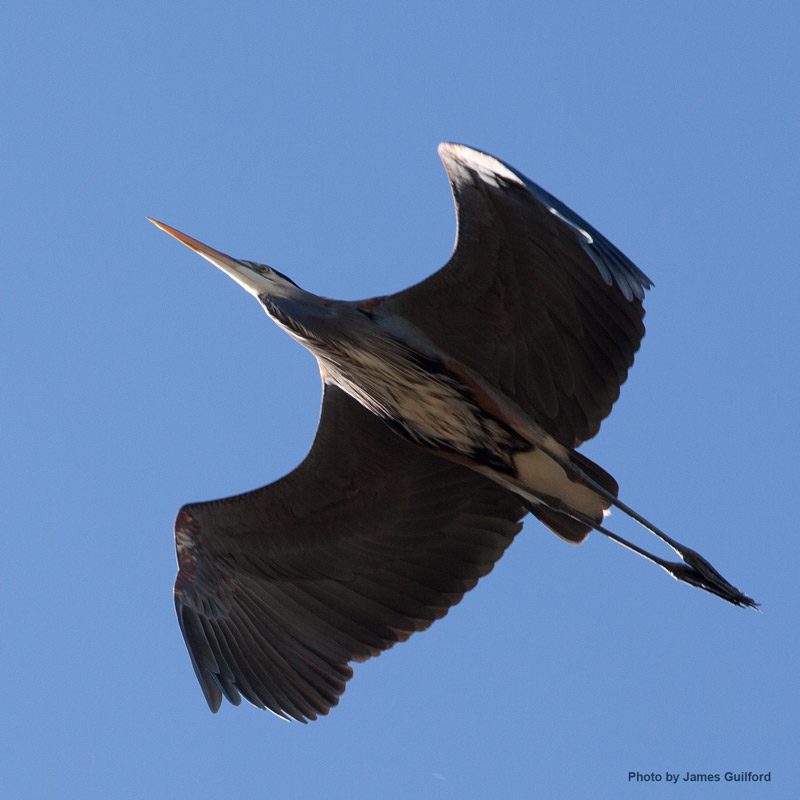
Too beautiful a day to spend indoors yet not motivated enough to ride our bicycles, we took a trip by car instead. This time we traveled to the Sheldon Marsh wildlife area, just west of Huron, Ohio. It’s a spit of land that juts out into Lake Erie and, as such, is a seasonal way station for migrating birds making north-south lake transits. We saw few birds today but the few we saw offered a big surprise. I was pretty sure the large wading birds native to this area –Great Egrets and Great Blue Herons– had headed south; I’d seen none in weeks. Today we were rewarded with sightings and photo-ops involving likely three Great Blues and two Great Egrets all within a short walk of the roadway. I was a bit disappointed that the majority of my “grab shots” of herons in flight were in poor focus; they looked so good in the viewfinder. A couple of images, however, nearly made up for the bad ones. Many other nature scenes from Sheldon Marsh and nearby Old Woman Creek were also very beautiful. The ODNR’s visitor center at Old Woman Creek, by the way, is quite impressive. Photography aside, simply seeing great Lake Erie again and being out in the fresh air and sunshine of a fine autumn day were wonderful rewards in themselves.
Archives
All posts by Photonstopper
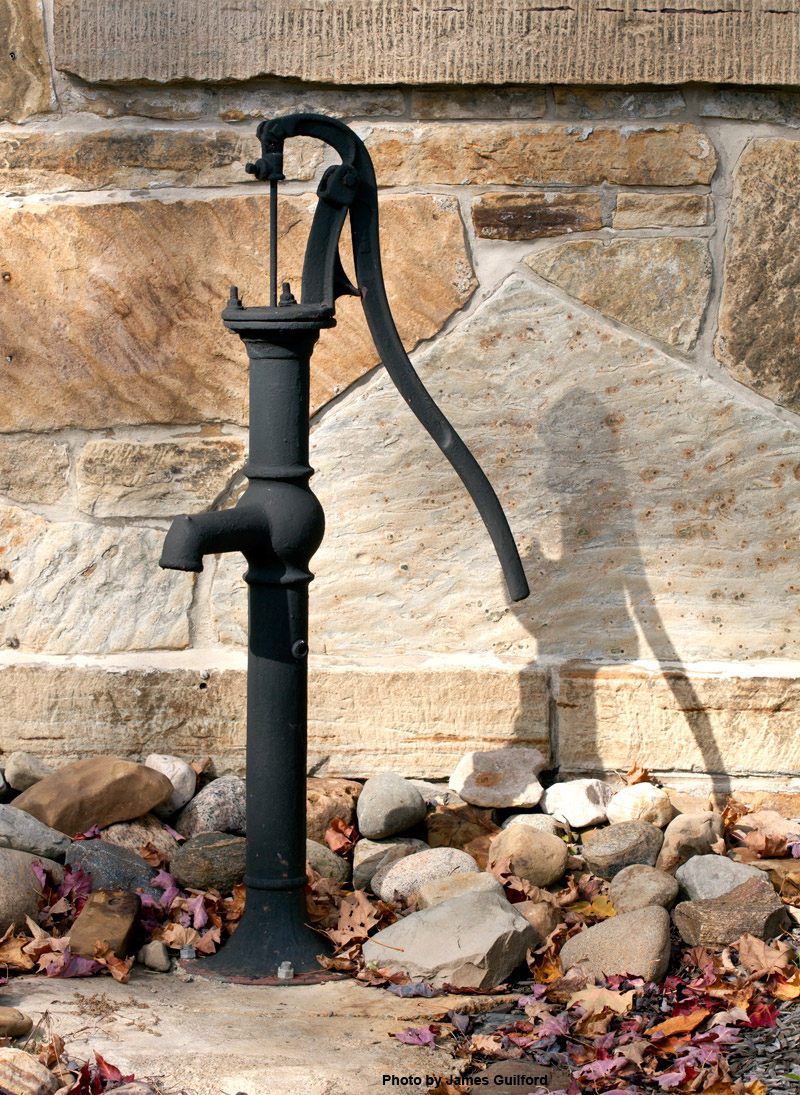
We saw a news item about the Thursday dedication of a new area within the Lake Metroparks: Chair Factory Falls. Today was a beautiful day for a trip there so, after quick shopping for the week’s groceries, we headed out. The Falls turned out to be probably the most beautiful natural water feature I’ve seen in the Northeastern Ohio area and were a short walk from a convenient parking lot. We encountered a couple of people who warned us that the hike back out of the gorge was tough but worth the effort. They underestimated our vigor for while the path out was steep, it was an easy climb for the two of us and more than worth the effort. Of course the cameras came with us and we shot many photos but I’ll show only two here. The parking lot was adjacent to the Metroparks’ Old Stone School landmark. Stone walls, fallen leaves, and an antique water pump made for a rustic scene.
Setting up for last night’s observatory Open Night, I noticed what appeared to be a dead leaf stuck to the wall under the sconce by the front door. Looking a bit closer I realized it wasn’t a leaf after all but a little moth in clever disguise! I took a few moments to photograph the little guy before returning to work. Now to identify it… anybody know what type of moth I’ve spotted here?
Open night went well, by the way, with 28 visitors over the course of two hours, which is about average. We were treated to excellent views of Jupiter, the Andromeda Galaxy, and the Perseus Double Cluster. I hate to say, Comet Bentley 2 eluded me… despite its proximity to the Double Cluster, I could not find it to save my life! Jupiter, however, was a crowd pleaser.
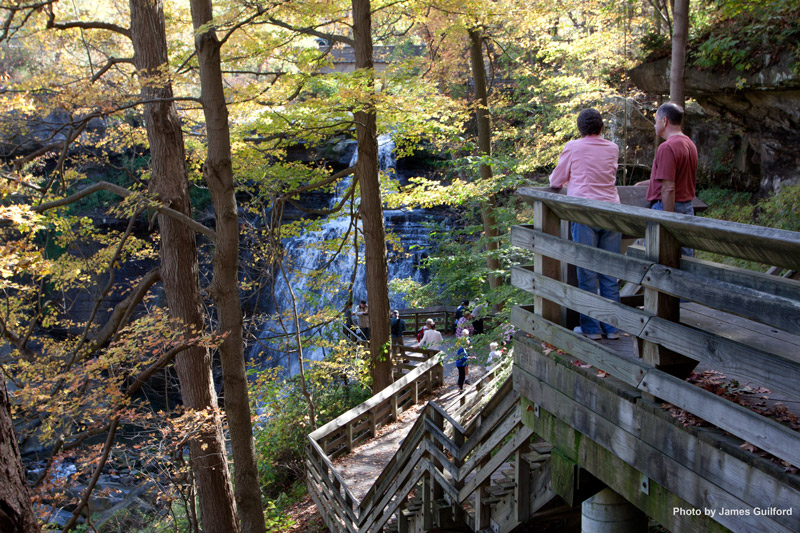
Today She Who Must Be Obeyed and I went on a minor grocery shopping trip. She said that, when we returned home, she would get some work done around the place… like cleaning out her car. Exposure to the glorious fall day, however, changed Her mind. She suggested a hike in the Brandywine Falls park, near Peninsula, Ohio.
Brandywine is a beautiful place where a natural waterfall flows over a stone bed, carving and smoothing the rock. A deep gorge extends downstream of the falls, shallow and safe for hiking, surrounded by woodland.
We spent a good long time in the woodland downstream of the falls, hiking the hilly earthen trails, and stopping frequently to take photos. There’s a lot to see if you slow down and look around.
Yes, She was seduced as I had been a day earlier. Her noble and ambitious plans were put aside for enjoyment of the day. Nothing done, again. Ha-ha!
Then again, as a philosopher* once said, “Life moves pretty fast. If you don’t stop and look around once in a while, you could miss it.”
*Ferris Bueller, Ferris Bueller’s Day Off, 1986.
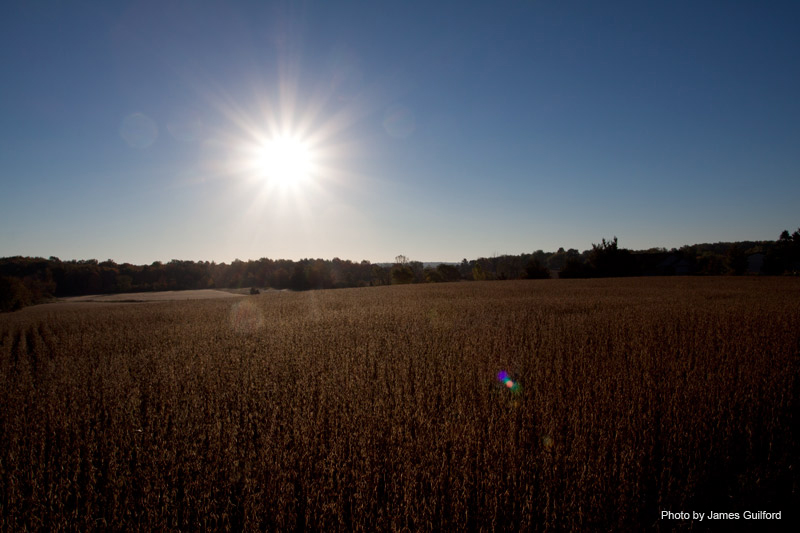
- The Sun rises over a field of ripening soy on a beautiful autumn day in Northeastern Ohio.
I’ll blame She Who Must Be Obeyed. I innocently remarked that it was an absolutely beautiful morning. She replied, “Yes, a perfect morning to go to Hinckley Lake.” I had the day off (having worked last Sunday) but I had other activities in mind for the day. I headed to Hinckley anyway. Along the way I noticed how the low sun was setting the ripening soy fields aglow.
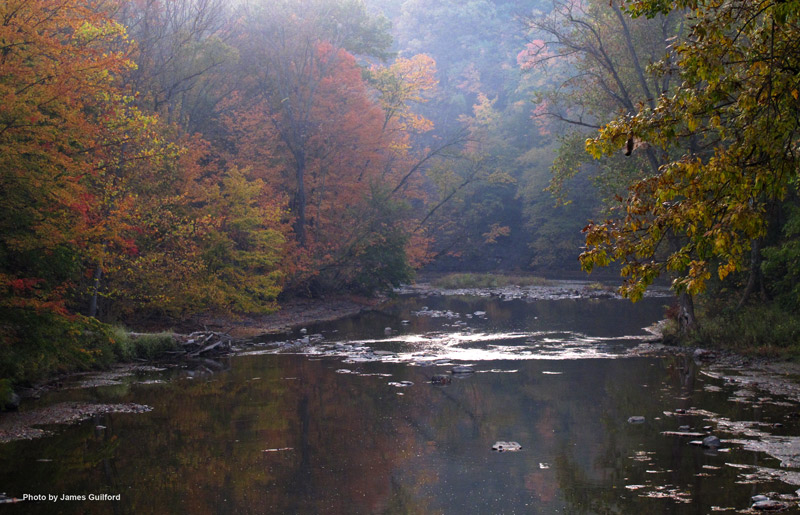
All of the seed-producing plants are finishing their job for the season. That includes the wild grasses that grow along the roads and streams. I found one grass seed head beautifully isolated against the plain background of a stream.
Hinckley Lake was a wonderland of light and color. Many trees wore yellows and reds. Many a leaf has already fallen to the ground. No large birds (other than buzzards) were to be seen. The greatest wildlife activity was from numerous chipmunks and squirrels scampering about the forest floor, apparently gathering seeds as food.
Too many sights. Too many photographs. Too brief was the magical light present.
Of course I got nothing done I had planned for the day.
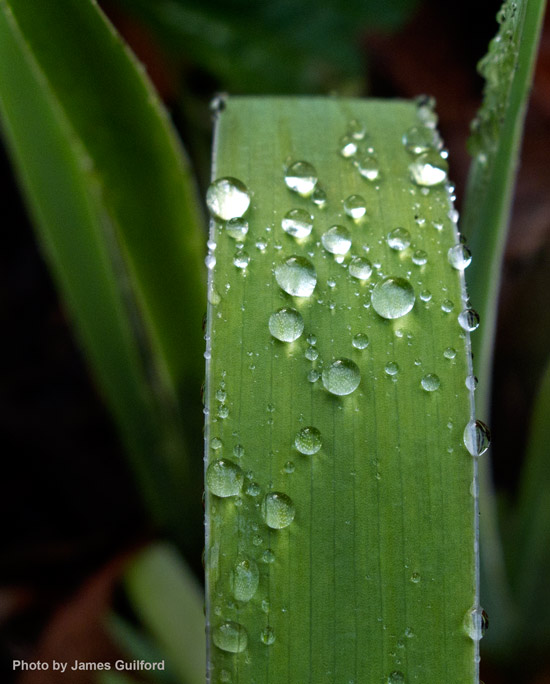
It has been cold, and wet, and dark. Sometimes, between rains, the heavy dew, and the rain, and the subdued light bring a beauty of their own to the world. This morning, between showers, I stepped outside to see what diamonds there were to be discovered.
As guests of the Toledo Astronomical Association and the University of Toledo’s Astronomy Department, She and I received a grand tour of the Ritter and Brooks Observatories the afternoon of October 1. Grand it was! First we saw the century-old six-inch “Brashear” telescope of the Brooks Observatory. It is perched high atop a building on campus and serves as the centerpiece of the Department’s public outreach effort. The fine old scope is in an unfortunately cramped dome that makes use difficult. Nonetheless hundreds view through it every year.
The big –and I do mean big— surprise came when we visited the Ritter Observatory. A white stone multi-story building is capped by a large white dome. Inside that dome resides the largest telescope in Ohio, the centerpiece of the University’s Ritter Astrophysical Research Center. Built in 1967 by Cleveland’s Warner and Swasey Company the Ritchey-Chretien reflecting telescope is equipped with a 1.06-meter mirror made by Owens-Illinois glass. Despite being under Toledo’s “light dome” and located on a busy city street, the big instrument is employed nightly in research projects that are largely unaffected by the light pollution: spectrographic work involving “long-term monitoring of variable stars that have winds, circumstellar disks, or active envelopes”. It was surprising and exciting to see a telescope of that class close-up and to learn it is actively used in astronomical research. Also fascinating is how the instrument has been integrated into the building itself, occupying more than one floor with fiber-optic and electronic conductors leading to other floors for data gathering, analysis, and telescope control. Quite fascinating. A grand tour, indeed.