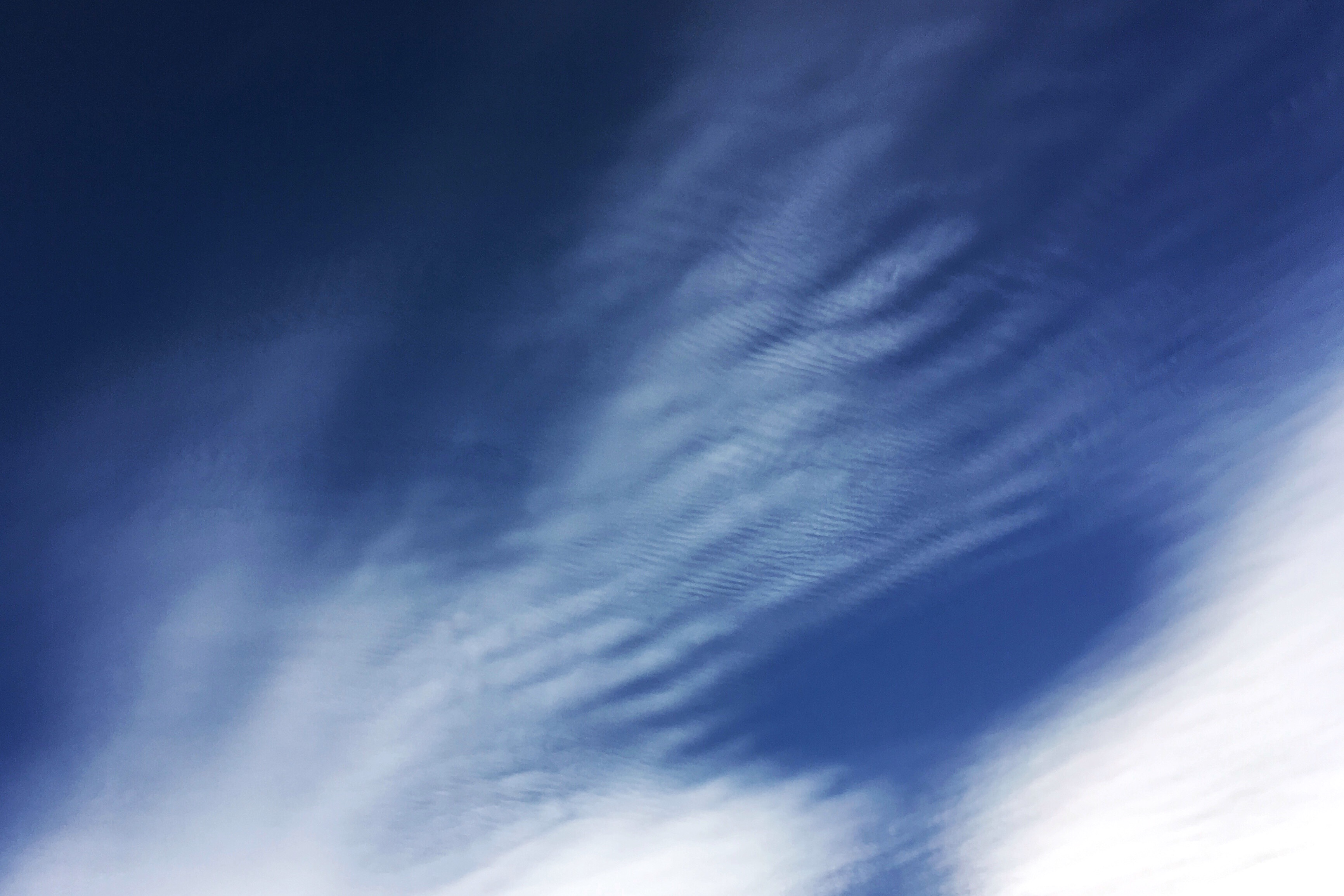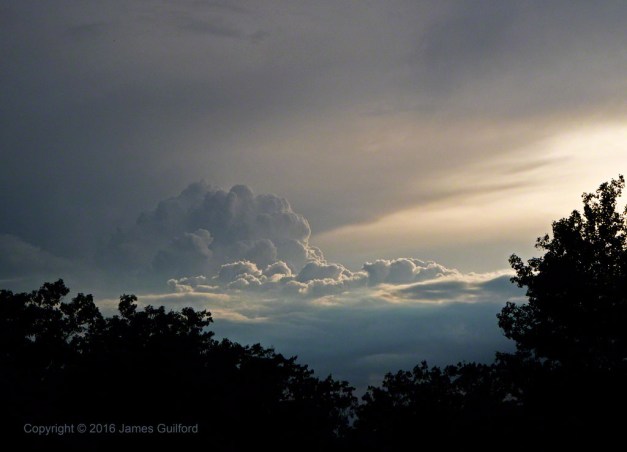
The skies were doing amazing, wondrous things this morning, icy high-altitude plates and waves, crosshatched ripples and streams, and shiny iridescent colors. In the afternoon varieties of cirrus took over, feathery strokes of white paint on blue. Yes, a show of wonder. #ohwx #clouds #cloudporn
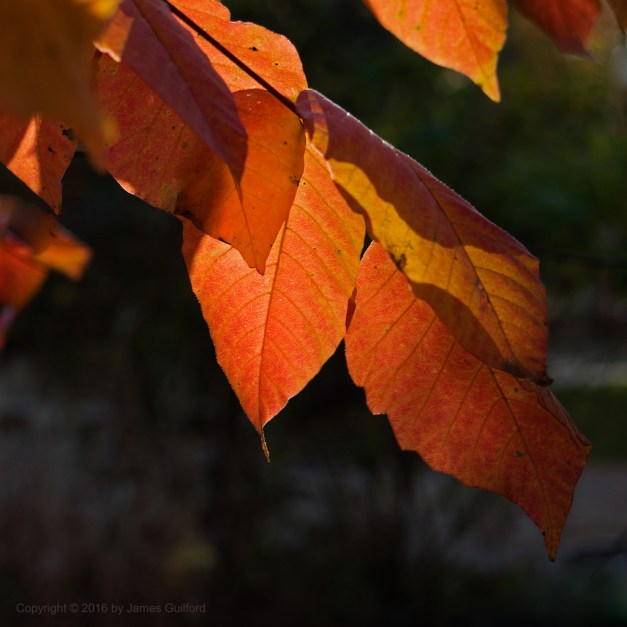
We took a short walk to get out on an amazing autumn day. The warm afternoon air gently stirred leaves primarily of yellow and brown. Many tree branches look barren. The last brilliance of autumn is here.

November: Looking East. This is a view of the sky from our back yard. That little smudge just below and left of center is the Pleiades star cluster.
After months of searching and work (a story unto itself) we located and purchased an older ranch-style house on a large lot in Medina, Ohio. We had been living in the house for one week and I decided it was high time I take a look at the night sky! The weather was clear and cold Friday night — about 40 degrees when I ventured outdoors — so I had a look around.
The house is situated one mile from the old town square of this small city on a street lit by two orange, low-pressure sodium lights. A big-box shopping district is located about two miles north of the house with a neighboring city beyond. There’s plenty of light pollution and, to the unaided eye, the clear night sky is gray. I could make out the brightest stars of some constellations, however, and easily spotted the Pleiades star cluster rising in the east. I believe I also made out a wisp of Milky Way, as well! I set up my camera on its tripod and did some test shots to assess the photographic sky.
As you can see by the photos here, the camera easily detects stars we can’t visually pull out of the urban nighttime glow. As expected, more stars can be seen overhead — through less atmosphere and less illumination — than near the horizons. While this isn’t a very good spot for astronomy, it’s not impossible. And while the nighttime conditions may not support stargazing, they do offer some artistic potential.

Firetree. Light-polluted night sky, a neighbor’s bonfire, and a small pond combine to make a pretty scene with a touch of mystery. You work with what you’ve got! Photo by James Guilford.
In any event, you work with what you’ve got!
UPDATE: A small giclée canvas print of this image was contributed to the annual “In the Pink” show and raffle hosted by Hudson Fine Art & Framing Company in Hudson, Ohio. Proceeds from the sale benefit The Gathering Place, a local organization; their mission is to support, educate, and empower individuals and families touched by cancers through programs and services provided free of charge. I am pleased to have been a part of the show and fundraising effort! For more information on The Gathering Place please visit www.TouchedByCancer.org.
This started out to be an excellent year for photography. In addition to my still work, I was preparing to make my first nature film. Then we decided to buy a house and move. I look back at this blog now and fully realize how fully I dropped my artistic efforts. Finding, buying, and preparing a poorly-maintained house took the balance of summer and, now, the best of autumn. I hope it will be worth it. I do want to share here a photo I have come to love: it is both realistic and dreamlike; it is my remembrance of the seasons passed.
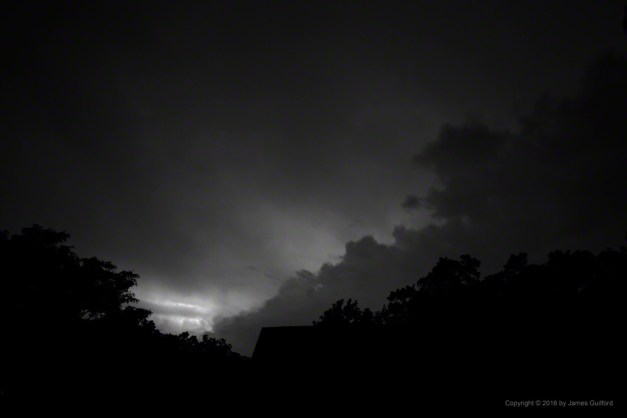
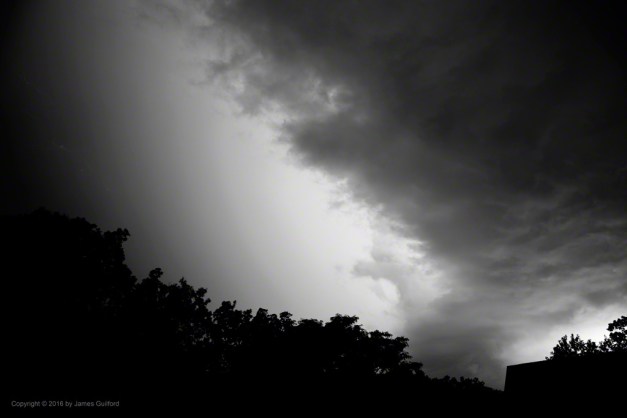
I enjoy photographing lightning. Most of the storms that visit this part of the country arrive with wind, rain, and then lightning and are too “wet” for me to shoot. Those storms that arrive “dry,” with lightning first, seem rare. We had two of those dry, photo-op storms recently. The first, on July 8, I documented here earlier. The second, the night of July 13, didn’t give me much time between its approach and the arrival of rain but did give me an excellent image. Appearances can be deceiving but the spectacular lightning bolt shown here may be the most powerful I’ve ever photographed. Before you say anything: yes, I am careful and shoot only from protected locations!
The night of July 8 started out with my wanting to photograph the Moon and Jupiter together in the western sky. There they were, hanging in the dark with a wisp of cloud lending mystery to the scene. It was lovely.
Then clouds began to obscure Luna’s bright crescent. Thicker and thicker came the clouds and then, above the horizon, clouds lit up with flashes and thunder rumbled… a thunderstorm was coming! I was expecting storms to arrive later but there I was, all set up and ready to record the show!
I looked to the south and not yet reached by the approaching weather was the beautiful sight of brilliant planet Mars and the stars of constellation Scorpius. Lovely to see but about to be upstaged!
I made a lot of exposures, mostly showing clouds illuminated by hidden lightning though after the fact I discovered there had been faint streaks in the open all along. Sometimes the whole sky seemed to light up.
As the storm grew closer, the lightning grew more intense until nicely-placed lightning bolts appeared and I got my best shot of the night. Only moments after that final good exposure the wind grew and rain began to fall, forcing me indoors.
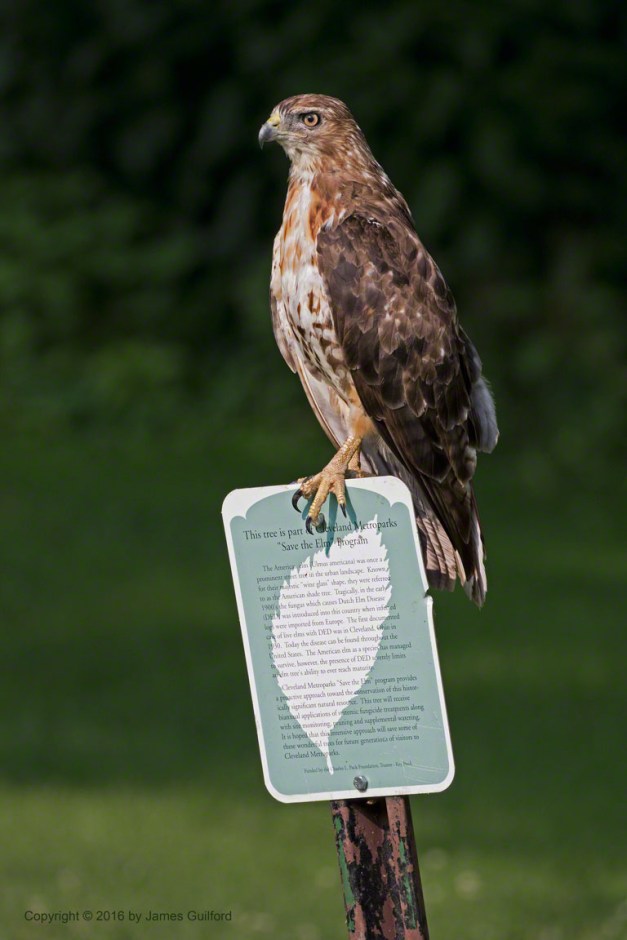
Walking in the Hinckley Reservation of Cleveland Metroparks today, the first day of summer, I spotted a group of visitors looking at something along the path ahead. As I drew closer I discovered they were watching and photographing a hawk! The bird was perched upon a signpost and did not appear to be bothered by the attention of nearby humans. Carrying my DSLR fitted with a 400mm telephoto lens, I was able to capture especially close-up images of the beautiful raptor at it watched for people and potential prey.
At one point a cicada flew within a couple of feet of the hawk and the bird turned to watch. Fortunately for the insect, it was just a bit out of reach for the hawk and, for its part, the bird seemed to think pursuit wasn’t worth the bother.
I left after several minutes of photography, moving around and a bit closer to my subject. Not wishing to spook it into flight, I left the hawk still on its perch from which it could see and be seen.
UPDATE: “CLEVELAND (AP) – A 9-year-old giraffe at the Cleveland Metroparks Zoo has died from an acute and untreatable urinary condition. Officials say the giraffe named Travis died at the zoo on Friday. [June 24]”
The Cleveland Metroparks Zoo has added an animal encounter that has proved popular amongst visitors: the opportunity to feed the giraffes. Under supervision and from an elevated platform, visitors may feed the long-necked beasts from a near (giraffe) eye-level position. Feeding the animals looked like fun but watching visitors do it was more interesting to me.
A quick house hunting trip to Vermilion produced no new home June 6; it did, however, produce the opportunity to photograph a storm moving in across Lake Erie. I love the beautiful scenes the lake produces and that is, primarily, why living near the coast is something I think I’d like. Sun, clouds, and water are constantly changing and when a storm is involved those changes happen rapidly.
I (stupidly) didn’t have my DSLR gear with me but was carrying my trusty iPhone 6SE with its tiny but mighty internal camera. As winds rose, I was able to make a panorama of the lake scene (above) and a nice portrait of the Vermilion Lighthouse brightly popping against the darkening sky.
I’ll try and remember to bring the “big guns” with me from now on as we seek a new home out there, somewhere….

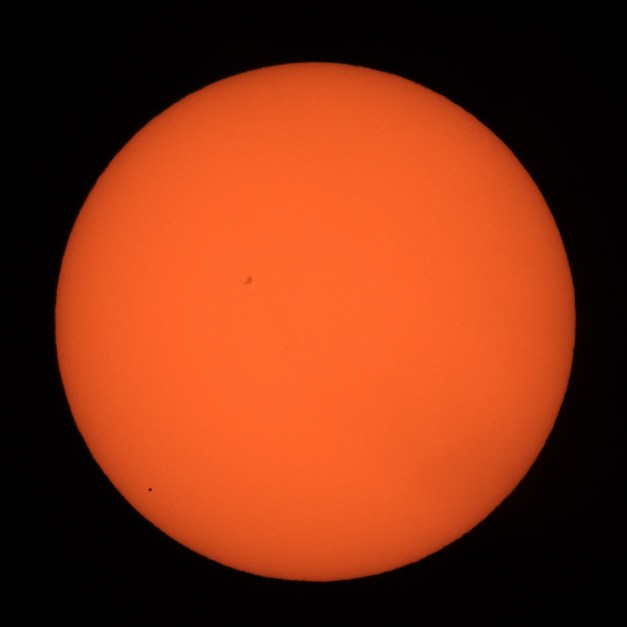
Mercury’s Transit in Progress: Mercury is the tiny dot at the lower-left. Smudge near the center is a group of sunspots. Photo by James Guilford.
Our Solar System doesn’t care about your local weather. When something rare and interesting like today’s transit of Mercury across the solar disk takes place, it happens and there are no “rain checks.” And so it was this morning when the day dawned clear to partly-cloudy allowing us to glimpse the beginning of Mercury’s trek only to have the show stopped by rapidly encroaching clouds progressing to solid overcast!
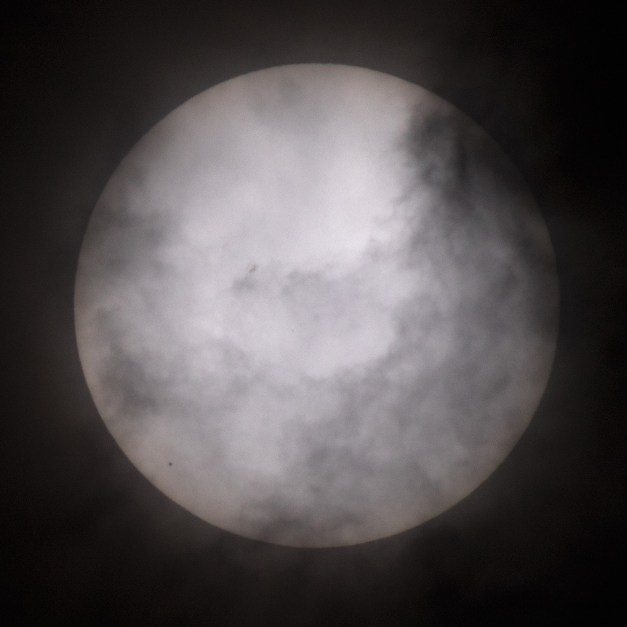
At the predicted hour Mercury appeared as a tiny dot, silhouetted in the lower left-hand quadrant of the Sun’s bright disk. Using special protective filters, observers on the ground watched as the small dot slowly moved inward from Sol’s limb. Here in Northern Ohio, transit watchers were treated to the beginning of the show. Much of the nation missed out entirely, cloud cover already in place at dawn!
NASA’s Solar Dynamics Observatory, a spacecraft, is unaffected by Earth’s pesky atmospherics and its technology produces some very dramatic images. One of my favorites shows Mercury about to cross between the satellite (us) and the Sun’s glowing photosphere; the planet has the active solar atmosphere as backdrop. Planet Mercury is 3,030 miles in diameter, not much bigger than Earth’s Moon, and looked every bit as tiny as it is compared with our nearest star!
Today’s transit of Mercury took place over several hours. For us in Northern Ohio, the transit began at about 7:12 AM Eastern Daylight Time with the Sun barely up. Midpoint of Mercury’s passage was at 10:57 AM, and the transit ended at 2:42 PM. Because of the orbital inclinations of the inner planets, the alignment needed to produce a transit of Mercury happens only about 13 times per century making even a glimpse of the event something special. After today’s, the next transits of Mercury will take place in November 2019, November 2032, and November 2049.
At least we won’t have to wait for so long as we must for the next transit of Venus — that happens in December 2117.