
but the hushed
wingbeats
of
the multitude
overhead.

Winter has been very cold, lately, with enduring snow cover. In these conditions we enjoy helping out the local birds. In the last couple of years we’ve seen a growing year ’round presence of Eastern Bluebirds both at our feeders and around the property. Today four to five of the little beauties showed up at the tray feeder — by coloration, all boys — enjoying the spread. As they busily picked away at the seeds the view was often blue bird butts. Sill in all, a welcome break from February’s shades of gray.

I glanced out the window this morning and spied this male Eastern Bluebird (Sialia sialis) looking all…. broken. The bird was perched atop the shepherd’s hook hanger for the bird feeder six feet off the ground, head cocked to one side, wings disheveled, and totally still. Sick? Injured? A little birdie weirdo? I don’t know! After what seemed a long time, he righted himself, shook himself back into shape, preened a bit, then briefly repeated the pose before flying off. Mrs. Bluebird paid a brief visit shortly after the mister left and she behaved normally. Thank goodness Mr. Bluebird stayed in place just long enough for me to capture a few frames through the window.
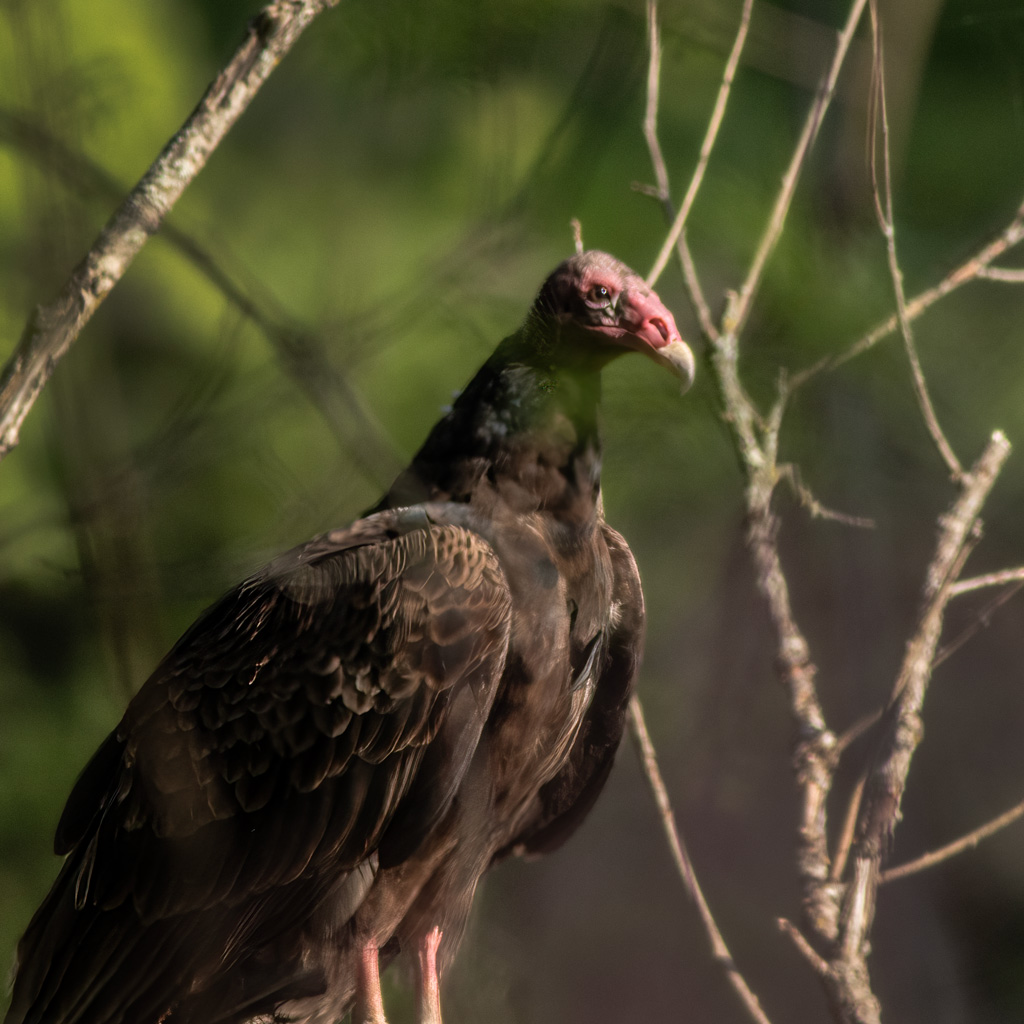
We had visitors this morning! A Turkey Vulture was spotted first on a tree limb low above the pond. When I went to investigate, I spied second bird higher in the same tree. A second Turkey Vulture? No, it turned out to be a Black Vulture! I watched them both for some time before first, the Turkey Vulture, and then the Black Vulture, took off in different directions. It’s increasingly common to see Black Vultures in this area of Northern Ohio. It seems Turkey Vultures are quite adept at locating meals — usually carrion — which is something the Black Vultures aren’t so good at. The more aggressive Black Vultures are more skilled at opening thick-skinned carcasses. The complimentary abilities lead to the two types of bird being sighted together. The more common Turkey Vulture is annually celebrated in the neighboring town of Hinckley with springtime Vulture Days.

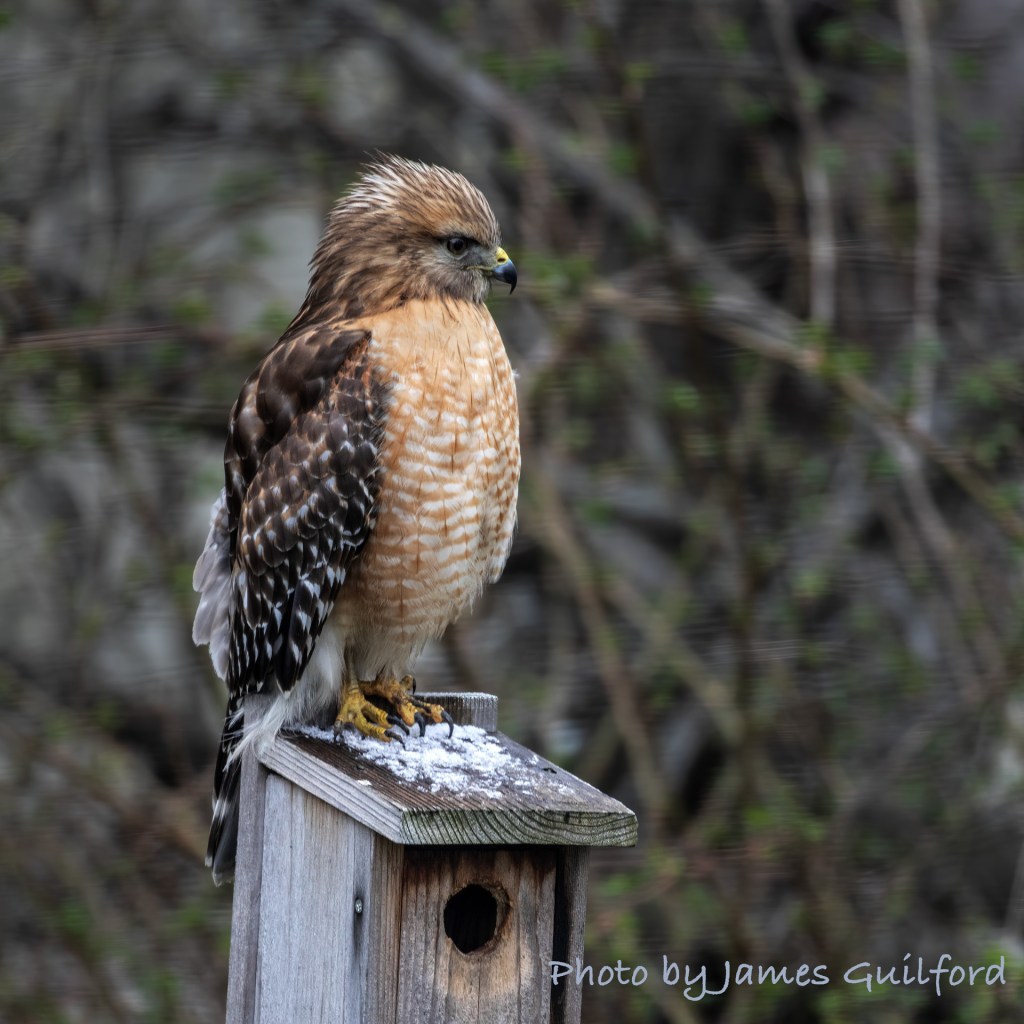
We had some excitement today as a pair of red-shouldered hawks paid repeated visits to our backyard! One of the birds is pictured here, puffed up against the cold. At one point the two raptors were perched side-by-side on a tree branch. Later, one of them — maybe this bird — bagged a small animal and devoured it on the ground. Are they mates? Will they / are they nesting nearby? We shall see (I hope).
Looking Around
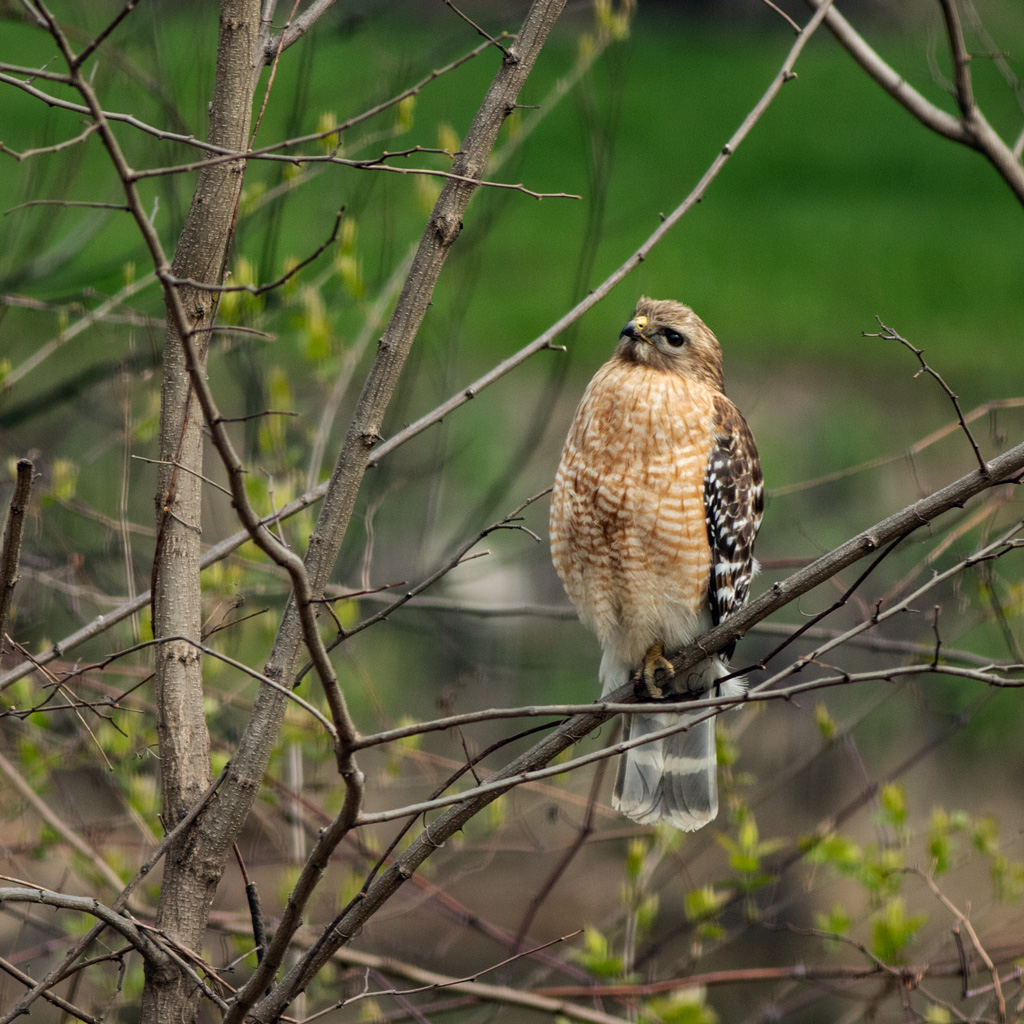
Our local Red-Shouldered Hawk alighted on a tree near our pond Sunday as it has been doing of late. The raptor — this one or a lookalike — has regularly rocketed across our front yard, staked out our bird feeder, bagged itself a Mourning Dove, dined on a bullfrog, easily earning the Murder Bird reference.
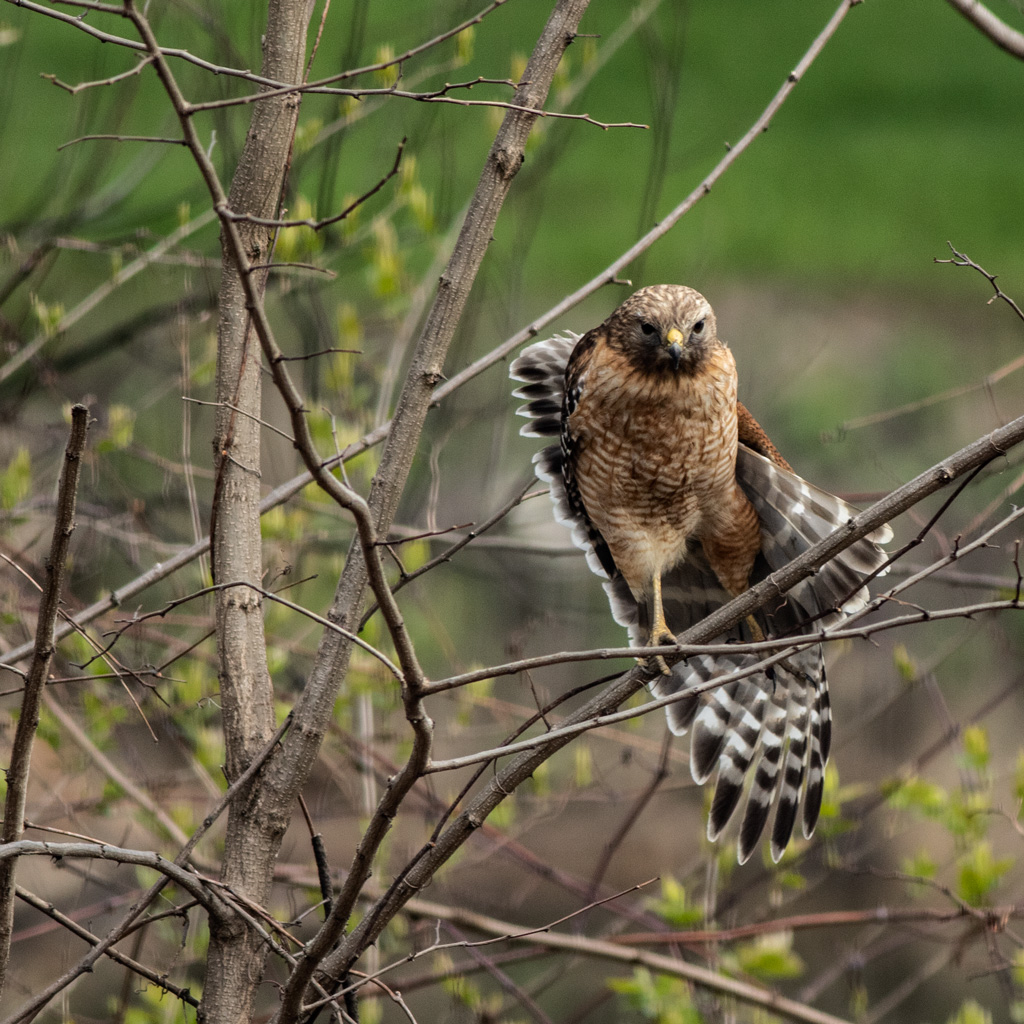
Pre-Flight Stretch
Deadly though it may be, this bird is beautiful and interesting to watch. It stayed for a long time on the tree branch, looking around, probably hunting from its perch. I’ve shot some photos of the hawk as it perched in other spots but never got shots of it in flight — they’re just so fast! Patiently waiting helps but this time I had a good vantage point with some space and, therefore, time to react when the bird launched. Murder Bird stretched its tail, stretched each wing, scratched itself, and faced the wind.

Taking Flight
Off it went! I was able to shoot only a few frames and most were not very clear as I pushed to catch up with the hawk’s fast-accelerating movement; one shot, the one above, was decent enough to show. Our Murder Bird is a vicious predator but absolutely gorgeous and thrilling to watch.
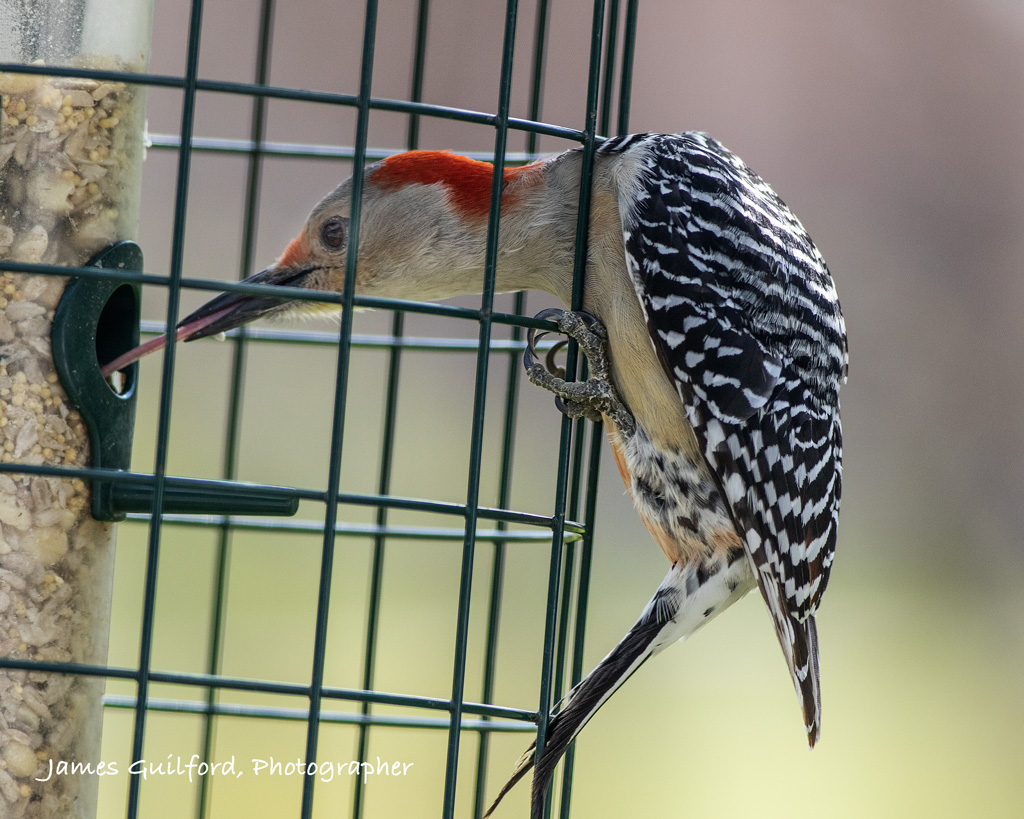
Our Red-Bellied Woodpecker using what he’s got to pick up lunch.
We’re near, rather beyond the time when I withdraw my bird feeder from use leaving the birds to fend for themselves over the warmer months.
The bird feeder has been busy. I have not been busy. So I shot a good number of photos of birds at or near the bird feeder, only a few feet from my office window.
Several larger birds have escaped me because they cannot fit inside the wire fence cylinder that protects the feeder from squirrels and deer. The bigger birds show up and quickly leave, seeking treats elsewhere; they include Bluejays and a Red Bellied Woodpecker. The woodpecker has landed on the cage occasionally and used its pointed beak and long tongue to retrieve a morsel or two but he’s usually here and gone before I can grab my camera.

Waiting His Turn. Male American Goldfinch waits for a feeding station to open so that he can have a meal.

Oops! Male House Finch drops a morsel of food and yes, he did watch it drop and went down after it!
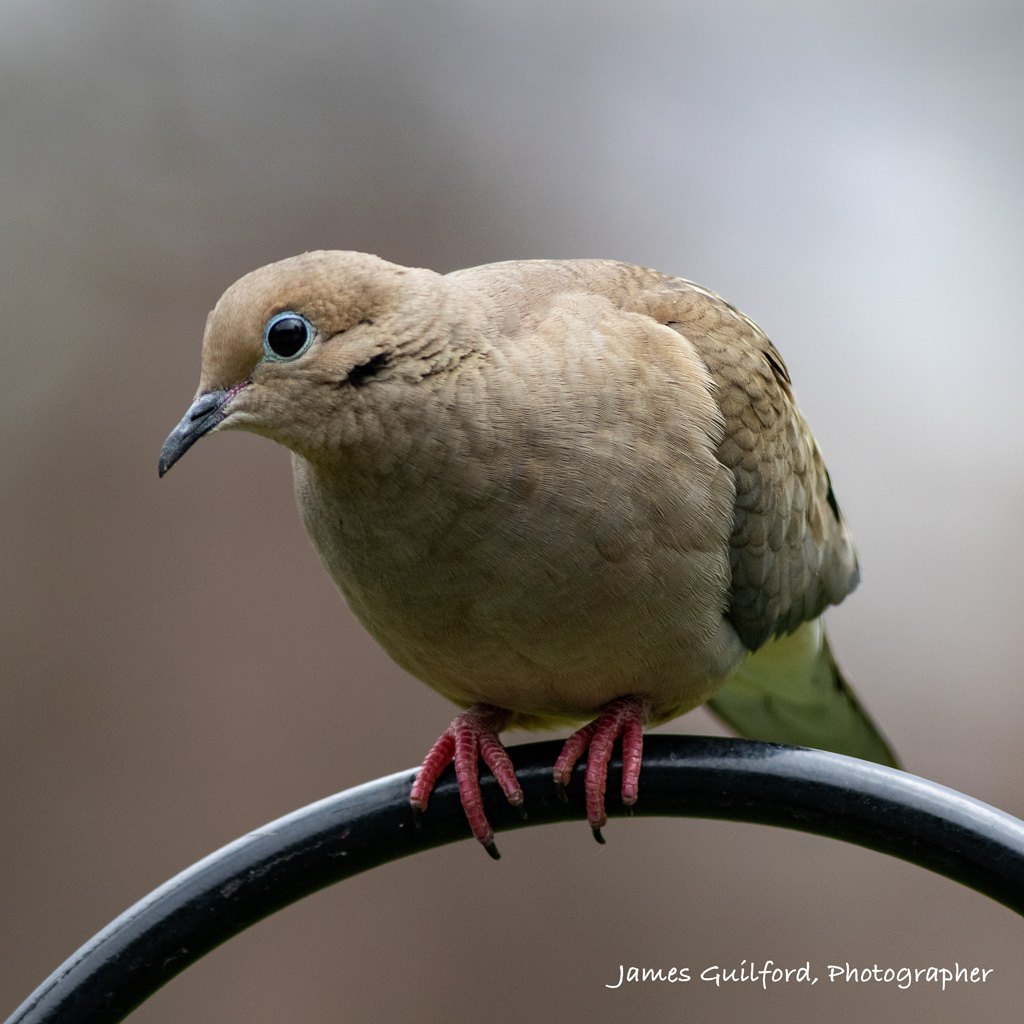
Feed Me? Mourning Dove is perched looking for spilled seed to scavenge. The green coloration is light reflected from lawn grass below.
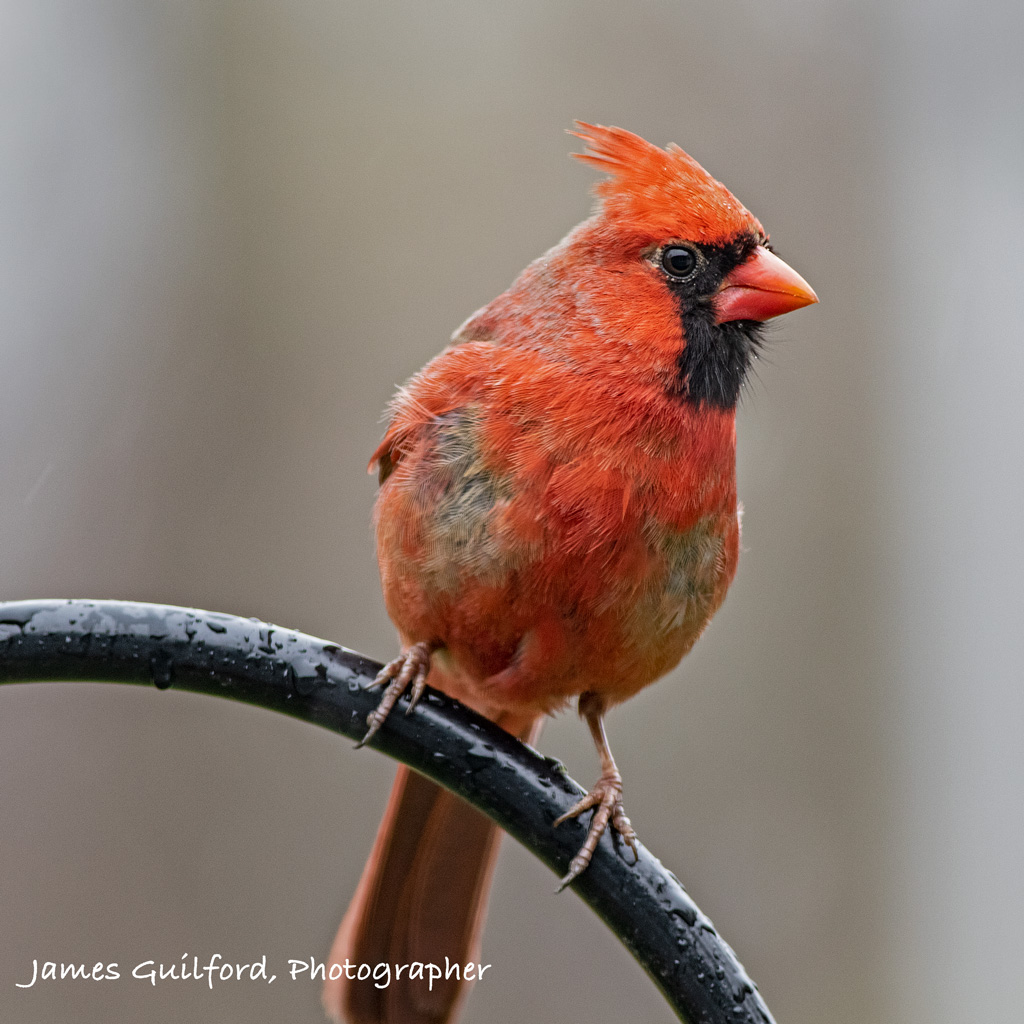
Mr. Cardinal — Northern Cardinal looks for snacks.

Tailfeathers. I don’t like to admit how often happens.

Among the first Bluebirds to show up at my feeder, this one arrived after freezing rain enshrouded the feeder’s rain shield in icicles.
I’ve never seen them. I’ve never, ever seen Bluebirds in my yard or at my feeders. Until this month.
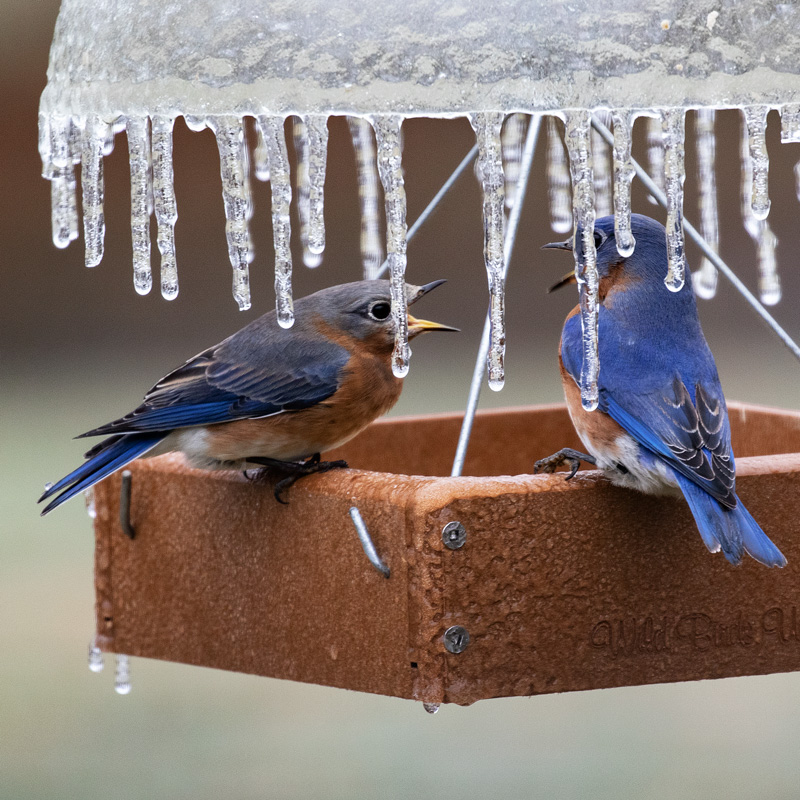
Wherever two or more are gathered, there’s an argument. Eastern Bluebirds on an icy birdfeeder.
First I saw a couple of Eastern Bluebirds (Sialia sialis) show up just after I restocked my feeders for the morning. They returned the next day and then there were three. Skip forward a few days and yesterday, February 12, I counted eight — eight! — of the beauties around the feeders, in neighboring trees, and on the ground!
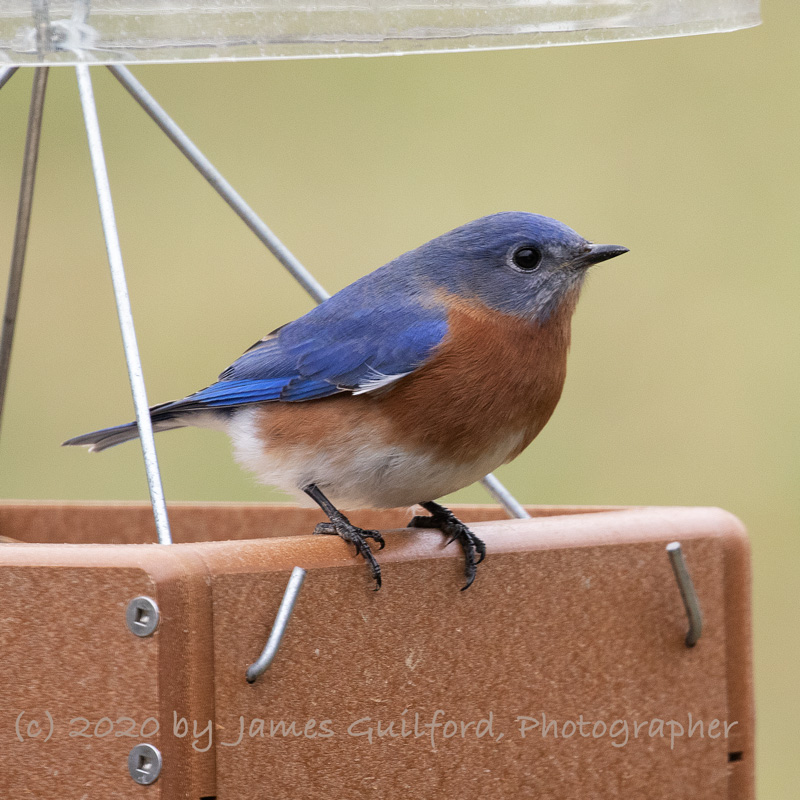
One of the eight Eastern Bluebirds that appeared in my Northern Ohio front yard February 12.
I don’t know why this year is different but at a time when I could use some cheering up, the Bluebirds flock to the view from my window. And they do, indeed, bring happiness.
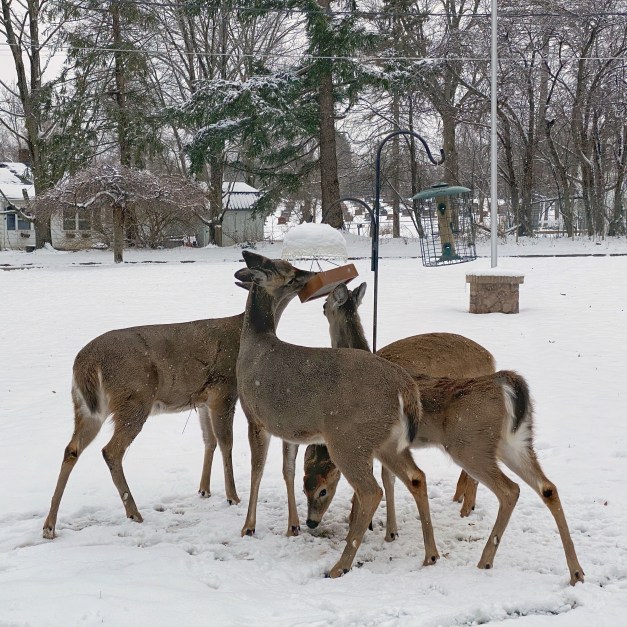
NOT Bluebirds but they can certainly eat a lot of bird seed!
 PhotonStopper