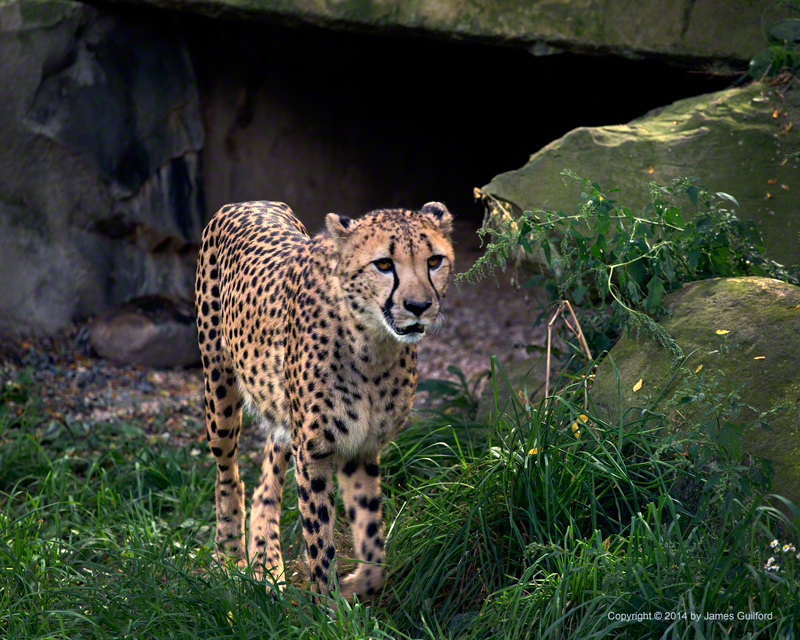
A recent visit to the Cleveland Metroparks Zoo gave us some unusual photo opportunities. The day was partly cloudy and cool and, because we arrived early, the park was lightly-attended. A surprising variety of animals from warmer climates were allowed outdoors and into the cool air. Big cats, Lorikeets, and elephants were enjoying the fresh air. Cooler weather also seemed to make the Cheetah pair friskier than they would be on a warm summer day. The beautiful, long-legged African speedsters were chasing each other around their large enclosure when we arrived. They broke off the chase and one of them performed a beautiful leap into a tree where the cat stood and watched the people watching him. We have seen the Cheetahs tracking human visitors (especially children) from their lair during previous visits and the animal stationed in the tree did just that. The animals gave us plenty of poses and my resulting images generated more “pluses” on Google+ than any of mine have enjoyed before! Pluses are signs of approval from other Google+ users who have viewed an image, similar to “likes” on Facebook. As we left the zoo in the early afternoon, new visitors were streaming in; a fine day for a visit.
nature
All posts tagged nature
I really ought to know better but the early signs were positive! I rented a Sigma 150-500mm telephoto zoom lens to try out before making a possible purchase. That model lens has been marked down in price, presumably because Sigma is introducing a 150-600mm lens in the near future. At just under $1,000 the rental lens features APO lens elements and optical image stabilization — quite a bargain, if it works well! So, my pre-purchase trial was to include a nature shoot and, contingent upon a pre-event test, photos of the October 8 total lunar eclipse!
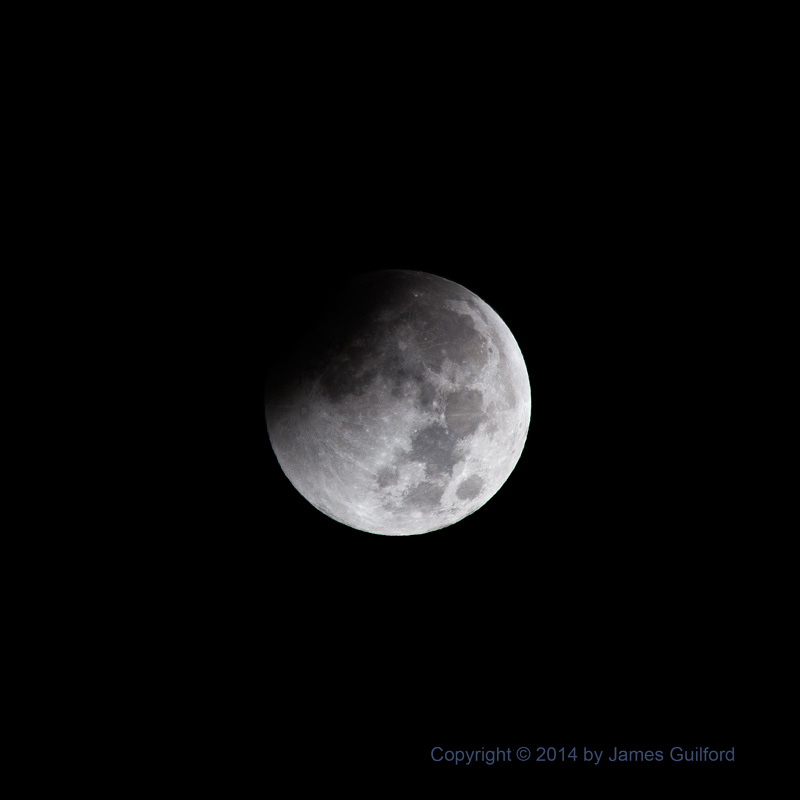
I did some test shots of the Full Moon the night of October 7 and they looked quite good. There was, on close inspection, a light gray “halo” around a portion of the lunar disk but that mostly disappeared in processing. Despite the very bright Moon, there was no color fringing and that’s a good sign of optical quality. The image was acceptably sharp and contrasty. It looked like I’d be set for the next morning’s eclipse!
I rose from bed at 4:45 AM the morning of the eclipse, about a half-hour before the Moon was to enter the central portion of Earth’s shadow, the umbra. The penumbral phase of the eclipse sees the Full Moon dim, imperceptibly to most casual observers, and uninteresting to me. Walking in the moonlight to my car, I noticed the subdued light and by the time I reached my observation point I could see a chunk of the Moon falling into deep shadow — it had begun!
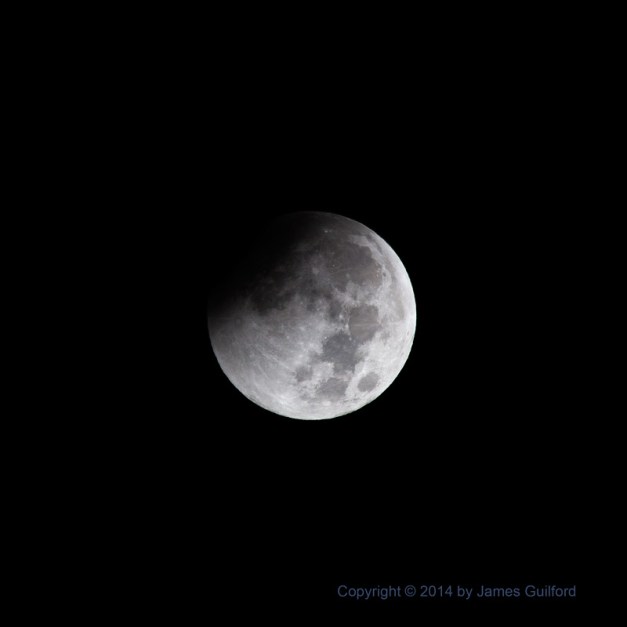
I quickly set up the camera and rented lens on my tripod, focused on the still-bright Moon, and began a long series of photographs, adjusting exposure as the eclipse progressed. Earth’s shadow, with its soft leading edge, crawled across the lunar surface. I shot image after image, checking exposures in the camera’s LCD panel. It looked like I had some excellent shots.
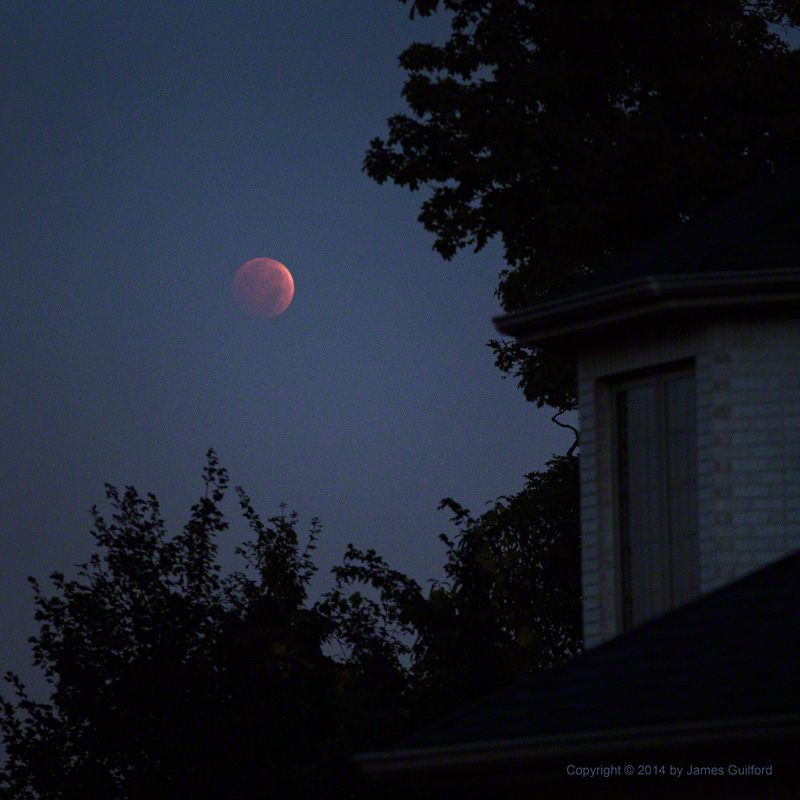
Totality in a lunar eclipse sees the Moon diminished to a dim ruddy coppery-red orb, requiring longish exposure and/or high ISO numbers to record. I could tell I had images but, critically, I could not tell just how good they were. I opted for shorter exposure times and higher ISOs which accounts for the “grainy” appearance of the images; I should have used a slightly lower ISO setting.
As totality continued and the sky began to show signs of pre-dawn twilight, I moved to a secondary location. I wanted to show the Moon as part of a landscape with city lights, trees, homes, something in the foreground or under the still-reddish eclipsed Luna. I switched lenses to my favorite, the Canon 70-200mm f/4 zoom telephoto — best glass I have ever owned. I shot the scenes until the Moon dipped into the morning mists of the western horizon and was washed out by approaching sunrise.
The eclipse itself was a great experience and something I haven’t seen one since 2008. Despite the chill air, light breeze, and cold-aching fingers, I was enthralled. The Sigma photos were another matter. Later, as I examined the images on my computer, I was very disappointed. The shots of the partially-obscured Moon were barely acceptable and images of the eclipsed Moon were a mess … kind of pretty and interesting, but a mess. I’m not sure the exact cause of the soft focus but it was the lens that was at fault.
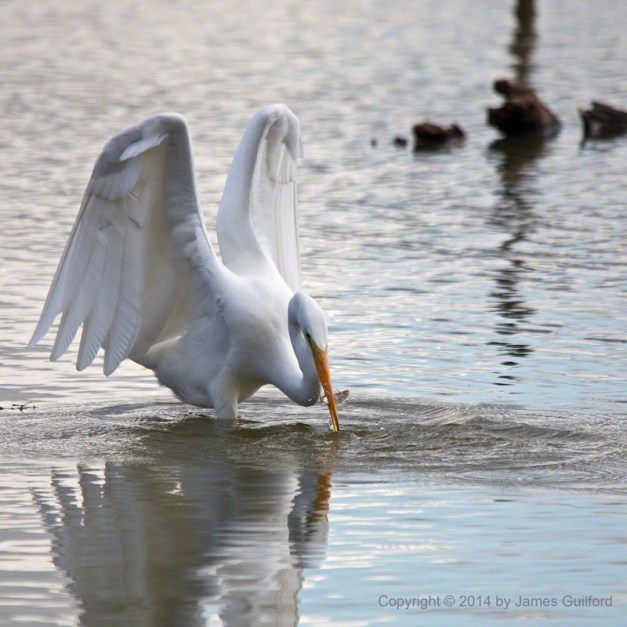
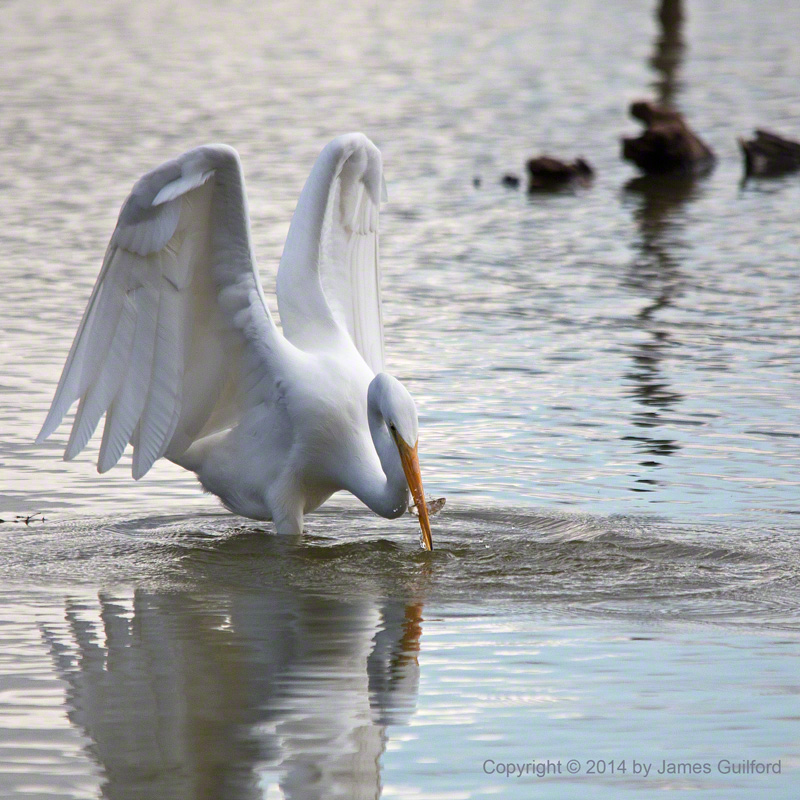
That afternoon the wildlife shoot went well and the Sigma produced very good (though not excellent) images. Possibly the best shot of the afternoon was a Great Egret catching a small fish at the Sandy Ridge Reservation of Lorain County Metro Parks. The zoom lens extends when reaching its 500mm extent and, unfortunately, the mechanism is too “loose,” sliding outward when the camera is pointed downward. When being carried, the zoom lock did not work. When zoomed from one focal length to another, the lens did not appear to hold focus. The zoom slipping may have been the cause of loss of focus and my lunar imaging woes. I wondered what corners may have been cut to keep the massive Sigma optic price so low … I think I discovered some of them!
I won’t be purchasing that lens.
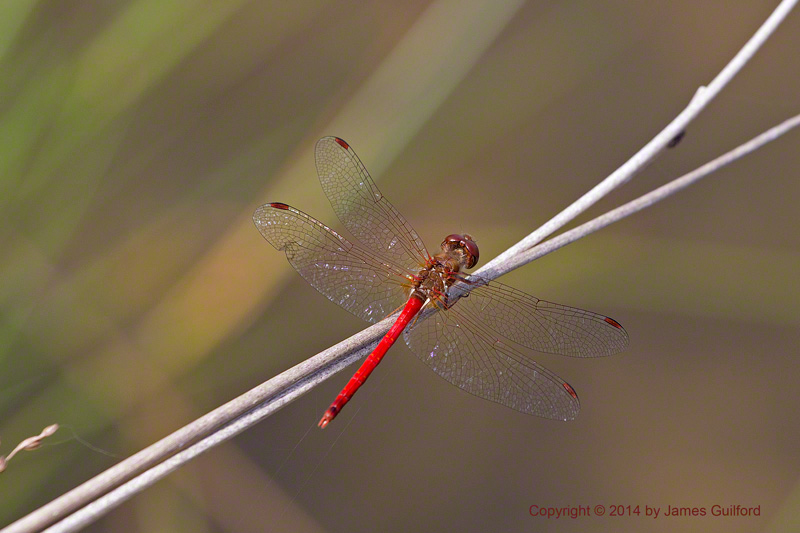
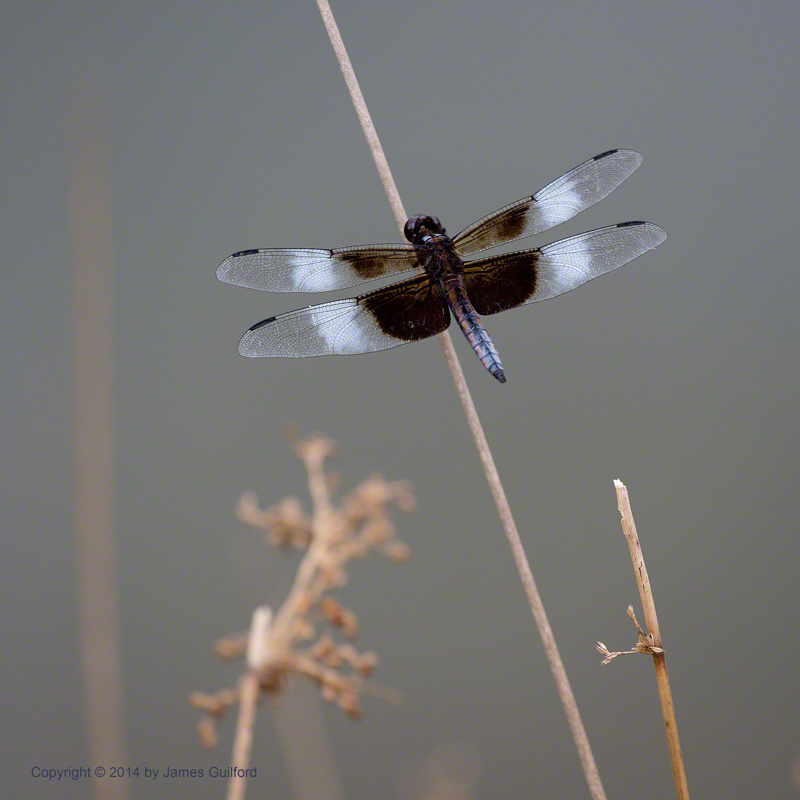
Revisiting the Mugrage Park of Medina County Park System, we spent a pleasant Labor Day afternoon photographing dragonflies. She Who Must Be Obeyed wanted her own chance at shooting a Calico Pennant and I was only too happy to return to the pond. Today I also bagged a beautiful Yellow-Legged Meadowhawk (Sympetrum vicinum) — predominantly red, despite the name! This little beauty, however, posed for a few shots. I also got some very nice shots of a cooperative Widow Skimmer (Libellula luctuosa) — a good-sized, bluish beauty with gorgeous wing markings. Among the challenges was a refreshing breeze: nice for a hot afternoon but causing dragonfly perches to sway! There were plenty to choose from and a few very impressive specimens got away! That includes a beautiful, impressively-large, Common Green Darner … always on the move, always a bit too far away. But that’s the way it goes when you’re shooting dragons!
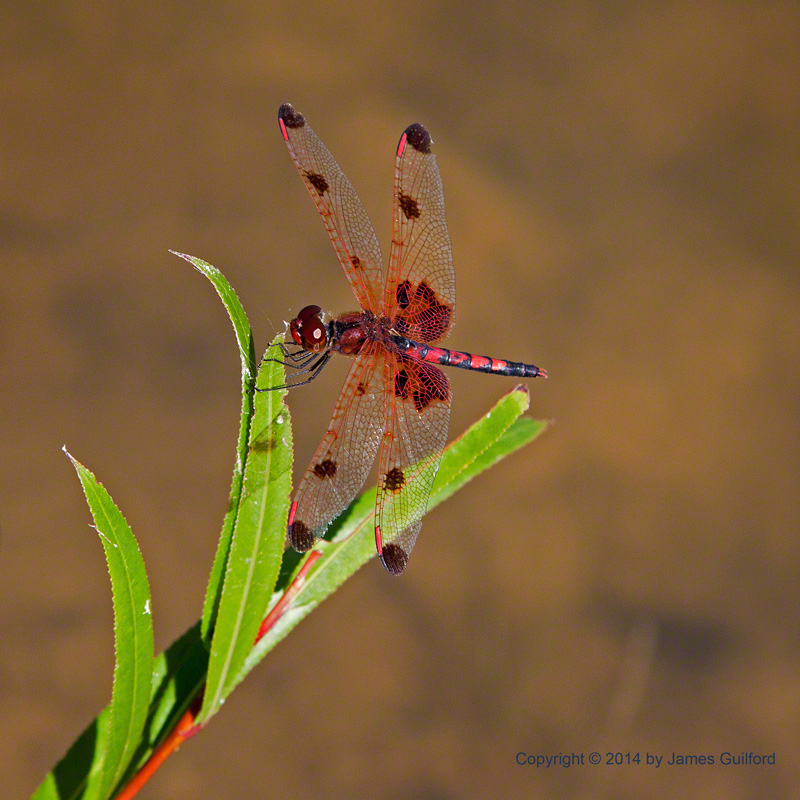
Checking out one of Medina County’s newest public spaces, Carolyn Ludwig Mugrage Park, this afternoon, we came across this beauty. The Calico Pennant (Celithemis elisa) is a small but very beautiful dragonfly. This male was very cooperative, posing for me several times. Eventually, however, he latched on to a mate and we watched their tandem flight and water-dipping dives; the pair was tapping the surface of their pond, depositing eggs! Happily for them, they escaped a large fish that was about to lunge for lunch.
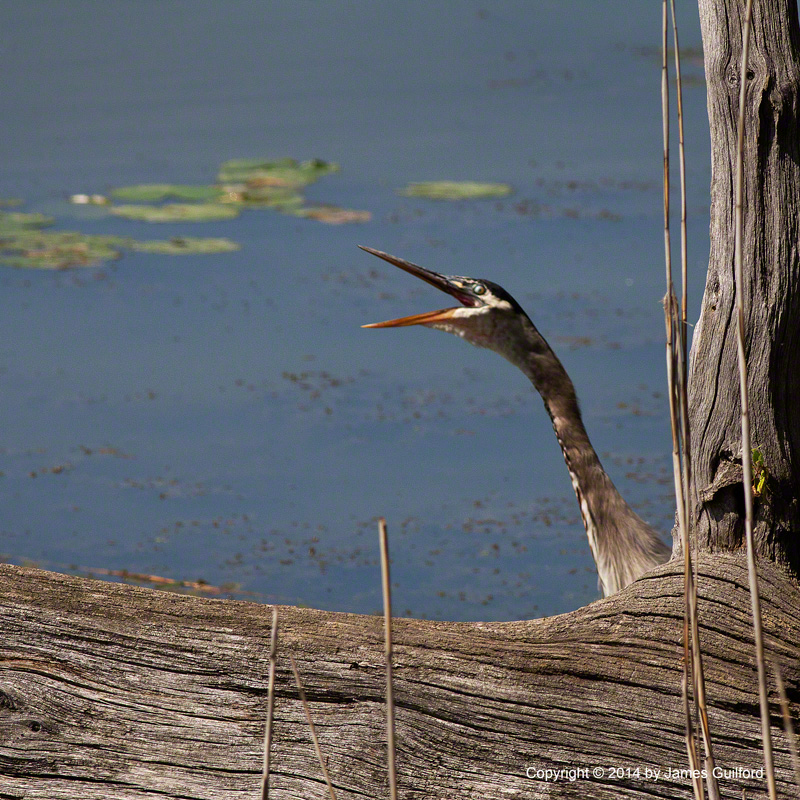
Today we revisited a couple of places favored by birders: Sheldon Marsh Nature Preserve, and Old Woman Creek Nature Preserve, both near Huron, Ohio. Sheldon Marsh was quiet, with Northern Cardinals peeping about, and a Great Blue Heron, nearly invisible as it stalked through tall reeds. The place was lovely to visit and gave us pleasant, green, shady wooded walking, but a bit too quiet. Later, we visited Old Woman Creek and a wonderful vantage point over a wide, open wetland. After some patient waiting, Great Blue Herons and a Great Egret provided some photo ops. Of course there are always the “ones that got away.” Still, I got a couple of “keepers.”
According to the Ohio Department of Natural Resources website, “Old Woman Creek is one of the state’s few remaining examples of a natural estuary. As a transition zone between land and water, the site contains a variety of habitats including marshes and swamps, upland forests, open water, tributary streams, barrier beach and near shore Lake Erie. The Reserve supports a diverse assemblage of native plants and animals representative of freshwater estuaries. Old Woman Creek Reserve is managed as a cooperative partnership between NOAA and the Ohio Department of Natural Resources, Division of Wildlife. Old Woman Creek is also an Ohio State Nature Preserve.”
Too quick for me was a Kingfisher’s dive into the open water to emerge and shoot into flight with a good sized fish in its beak. I got a couple of shots of the little guy speeding off with his lunch but nothing good enough to show here. The heron shown above also managed to make good its escape without my properly documenting it. Dang! Must… go… back! Will do so in another month or so.
A visit to the Summit Metro Parks’ Nature Realm helped lift me from my dark mood today; sometimes getting out into a serene natural area can help. Rains last night had wet the woodlands of the park area, subdued light, and absence of park visitors — along the earthen trail — made for a soothing environment. Birds sang their songs in the canopy of trees whilst, in the understory, chipmunks and squirrels scurried about. The warm damp provided perfect conditions for varieties of fungi to grow on fallen tree trunks. The peace and beauty of the place crept inside, imparting some relief from the disappointments humanity has dished out over the past few days in national and world news.
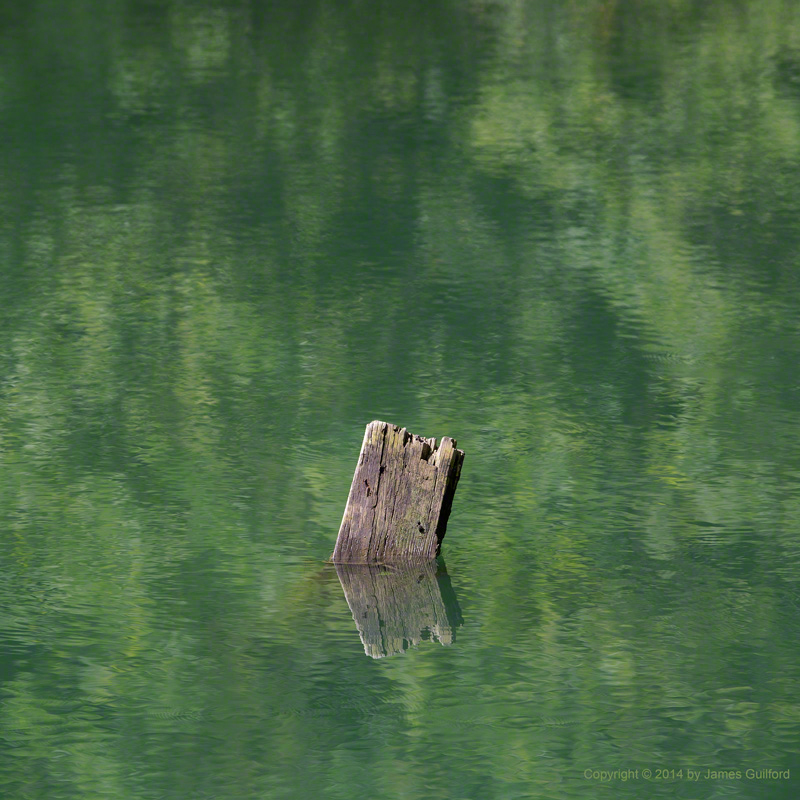
In the dark woods I tried some experiments employing my camera’s high ISO capability. My image of a Harvestman (“Daddy Longlegs”) on a shelf fungus was shot, handheld, at ISO 8,000 at 1/125 second! Viewed at 100 percent, grain is easily visible in the photo but smooth and subtle enough to make for a good photo at smaller sizes. The “Green Wood” picture took advantage of pond water that was already a seemingly unnatural green reflecting the green of shore plants around a submerged chunk of wood — a picture I’m very happy with. That was at a more conservative ISO of 250.
Water Wheel: It wasn’t supposed to be there — that discarded and rusty piece-of-junk automobile wheel — in the middle of a shallow, quiet-running stream. Still, there the thing was, and it turned out to be beautiful from a pictorial viewpoint, at least. In fact, the “water wheel” was my shot of the day! Prints of this image are available at: http://www.guilfordphoto.com
I do love photographing dragonflies. Because they are relatively small, live by the water, and are very quick fliers, dragonfly photography can be frustrating. This past weekend I was fortunate enough to be exploring a hotbed of dragonfly activity and, for the first time, got some images of a beautiful indigo-colored flier: a male Slaty Skimmer. In flight, the Slaty is so dark it appears black. When resting on a plant stem or flower head, the male’s deep blue body shows its true color. Clear wings make the Slaty, and some other dragonflies, hard to photograph unless against a featureless background such as the pond in this photo. I plan to get out a few more times, specifically for “dragon hunting” this season and maybe even shoot some video.
While it’s often possible to shoot closeup photos of insects such as dragonflies, it’s not always necessary or even the best approach. I spent an enjoyable time this afternoon along the edge of a pond seeking one of my favorite subjects: dragonflies! I had some very good luck and even got some very nice shots of a Slaty Skimmer — a big, indigo blue dragon I don’t believe I’ve captured before. As I walked along beside the pond I looked out across the quiet waters and saw a tiny Eastern Amberwing perched on the top of a sunken tree trunk protruding from the surface. The weathered wood was dark and in silhouette, its form reflected on the water, but the little dragonfly glowed in sunlight. I shot image after image ’til finally the Amberwing flitted away. It wasn’t one of those highly-detailed, super-macro insect photos we often wonder at; I think I actually like it better. ‘Turns out, it was my favorite picture of the day! A closeup isn’t everything!