Dragonflies are creatures of two worlds. Both phases were on display at the Alderfer-Oenslager Wildlife Sanctuary in the Medina County Park System today. Dragonflies hatch from eggs and live the first portion of their lives as nymphs –aquatic creatures– six legs of predator seeking prey underwater. When, in the fullness of time, they reach maturity, dragonflies haul their alien-like bodies out into the air and grab hold of a leaf or twig. Then the nymph body is split open from the inside and the next phase of life begins … life as a creature of flight. In the air dragonflies seek prey and mates. The females dip their abdomens into still waters of ponds and marshes, lay their fertilized eggs there, and the cycle continues. No, that dry husk isn’t a dead insect … it has simply moved on.
northeastern ohio
All posts tagged northeastern ohio
It was a fine early summer day! A weather front came through the region last night and pushed away 90+ degree heat and high humidity. Sunshine, fresh breezes, puffy clouds, and comfortable warmth ruled! With the day off I decided to pay a visit to the Medina County Parks’ Wolf Creek Environmental Center and go hunting for dragonflies. I bagged something more than expected.
As I wandered the grounds I enjoyed viewing the small ponds dotted with blooms of water lilies and buzzing with dragonflies. Red-Winged Blackbirds scolded each other and me from their treetop perches. I made my way towards the extensive boardwalk that extends into the area’s largest pond when a bird shot into the sky and made its way into more distant trees. At first I thought it was an unfamiliar type of duck but no, its beak was long and sharp. Once it perched, I studied it as best I could through my camera’s 200mm telephoto lens and wished I’d have brought the 400mm! Is that a duck? A Kingfisher? No… A Green Heron?! The bird let out a shrill cry and took off into the woods. I thought I’d seen the last of it. More enjoyable dragonfly hunting followed with lily flower photography thrown in for good measure. I wandered back to a smaller pond but heard that odd call in the trees ahead — the mystery bird had returned! So as I continued my stroll I paid attention to the infrequent screeches and when I saw that same feathered friend dart down towards the board walk, I knew that I, too, would go there again.
I crept down the path and on to the wooden walkway, all the while watching the shallows for my quarry. Seeing nothing I continued until I spotted it and froze where I was. The bird, smaller than I’d expected, was also strolling along on the boardwalk ahead of me and around the bend! Suddenly it struck into the water just off the deck and, thrashing, bounded back up with a sunfish in its beak. That bird was using the boardwalk to extend its fishing range!
I followed the little guy for a while, being very quiet and slow in my movements. By now I knew it was, in fact, a Green Heron — smallest of the herons and renowned for its intelligence. I squeezed the shutter release regularly and the bird seemed to grow accustomed to my presence. I’d never photographed a Green Heron before and I wanted to get the best images I could. The skittish little smarty would, however, only allow me to get just so close. When I was satisfied I’d gotten the best shots I could from where I was, I tried moving even closer — the heron walked farther away. Rather than spook the bird and spoil its hunt, I turned heel and headed off the boardwalk.
Sometimes I spy something special during my long commute to work. A morning fog was veiling the West Branch of the Columbia River so, after crossing the bridge, I swung my car into a pull-off. As I headed on foot back to the bridge to try and capture the image I’d seen in my mind’s eye, I noticed something else. Just off the path was the remnant of a fallen tree, well on its way to returning to the soil that once nourished it. The deep colors of the rotting wood were marvelous and, as it turned out, my river pictures were not.
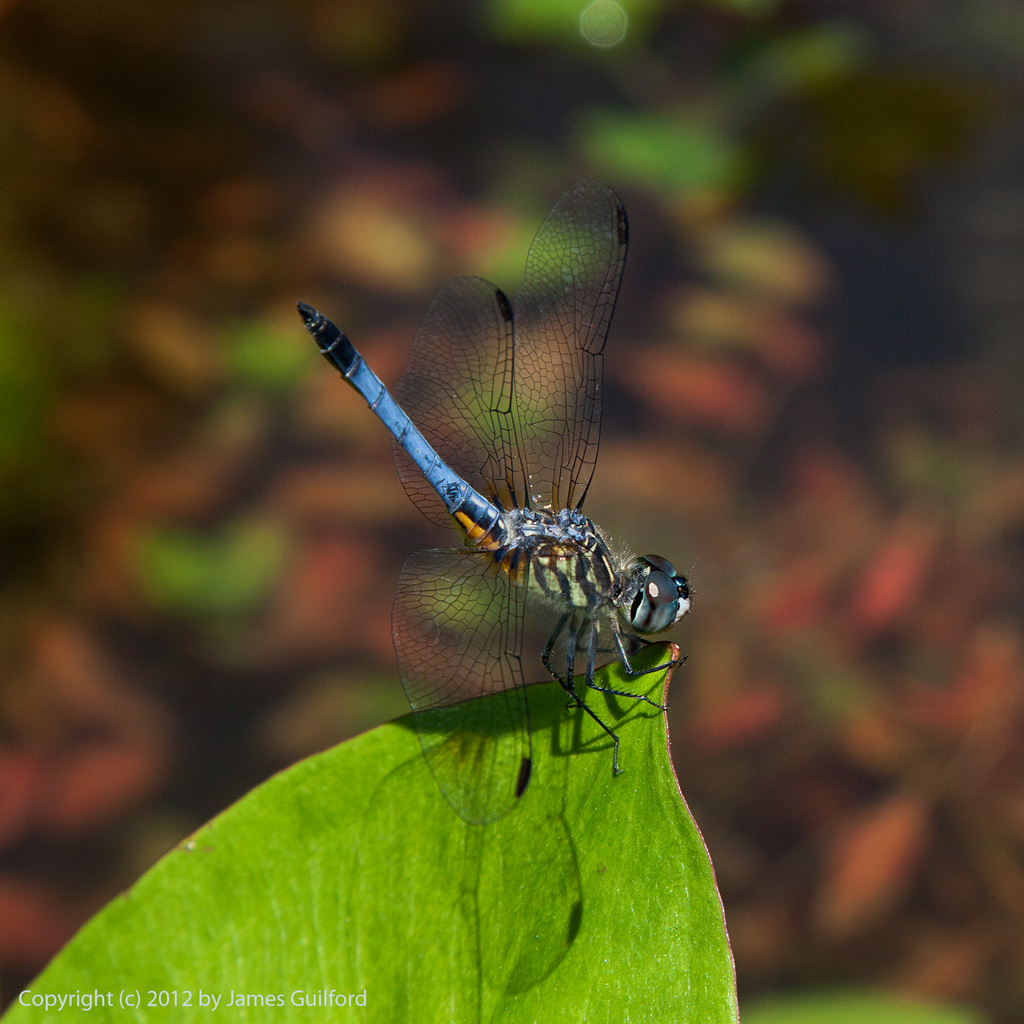
During our visit to Schoepfle Garden I was able to continue my pursuit of dragonfly photographs. One beauty was (I believe) a Little Blue Dragonlet (Erythrodiplax minuscula) who alighted on a leaf not far from me on that very warm Sunday. I shot several photos in a series, hoping to draw closer and refine my focus. As I watched, he slowly raised his abdomen (tail) higher into the air, pointing towards the sky. I’d seen that behavior before though I don’t think I’ve ever photographed that pose. I thought the insect was advertising for a mate. Apparently it is understood that dragonflies take their “obelisking” posture in order to reduce their exposure to the sun in very hot weather. So it seems that, while a dragonfly may look sexy, it takes hot weather and not hot mates to inspire a Little Blue Dragonlet’s obelisking.
A leisurely road trip to Schoepfle Garden Metro Park in Birmingham, Ohio was rewarding both in its journey and its destination. We enjoyed the long, relatively slow drive on state and county roads through green countryside, windows down to admit the warm late-spring air. Schoepfle Garden was its usual beautiful self — a mix of woodlands, naturalized and formal gardens — and presented us both with many gorgeous subjects for photography. It’s late now, so I’ll post only one image, through I am sure you will soon see several more from this little trip. Until then, see “Shadow Lightning” as I saw it!

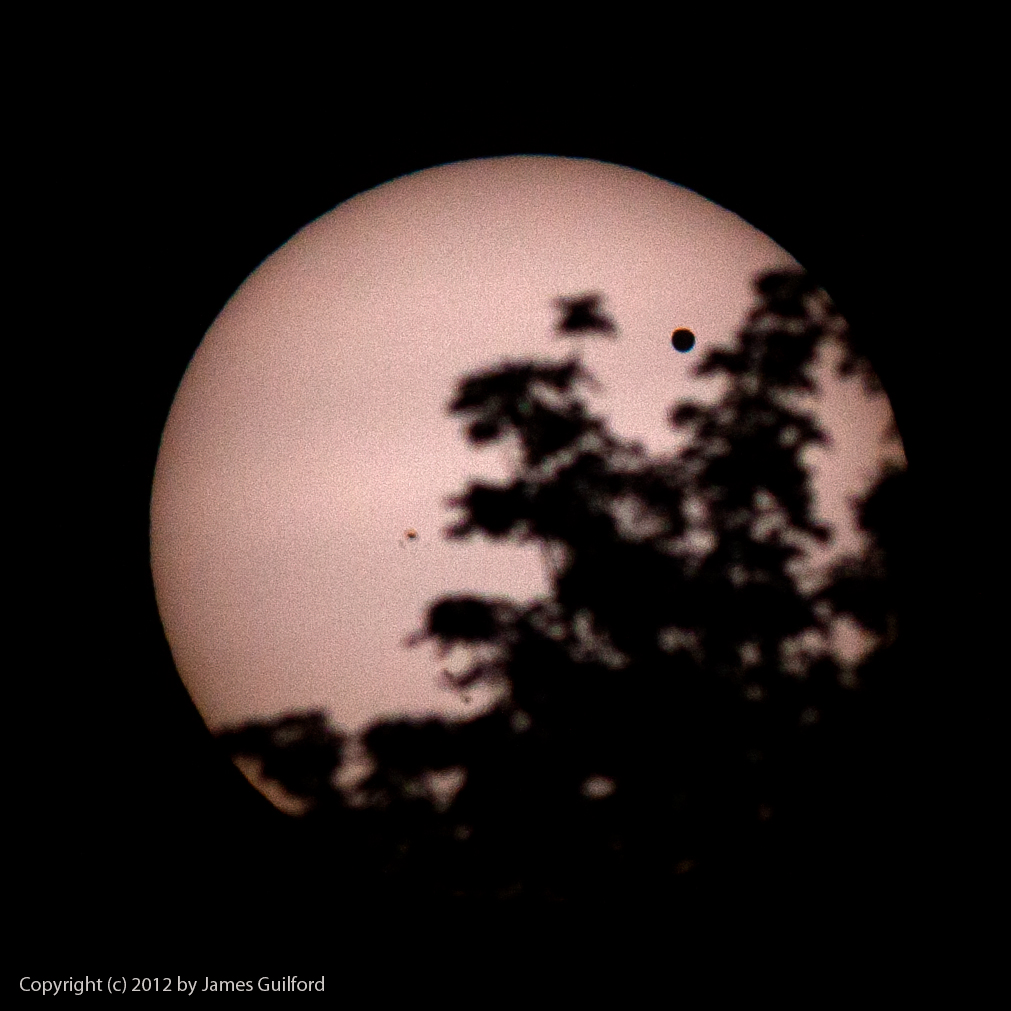
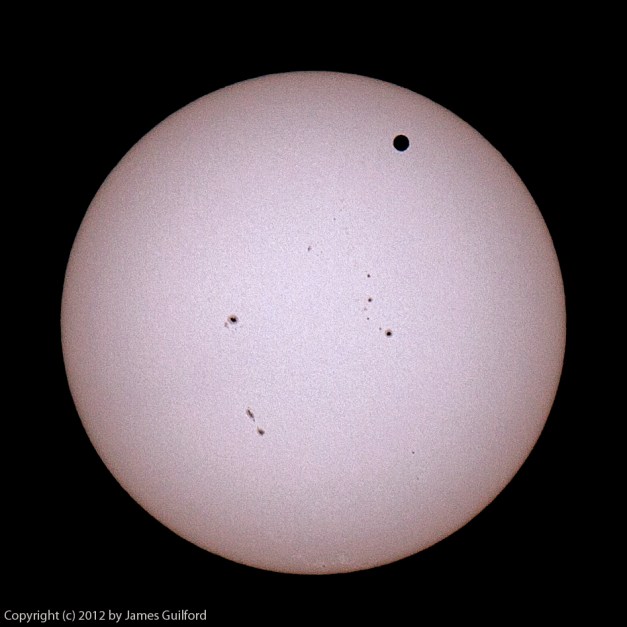
In this photo we see Venus (dark disk at the top), several sunspots and sunspot groups, and granulation of the photosphere – the boiling surface of the sun!
More than 105 people ranging in age from kindergartner to senior citizen took a look at the transit of Venus through telescopes I set up at the former site of the Hiram Elementary School near the Hiram College campus. The once-in-a-lifetime experience was nearly a washout as drizzle and overcast loomed over the area. I set up the telescope mounts in a light drizzle but kept the telescopes in the car – I was discouraged, nearly in despair, and believed we would see nothing. Just a few minutes after the astronomical event began at 6:04 PM, however, the clouds began to thin, then part, and clear views were enjoyed through the rest of the event! Sunset behind a row of trees ended the occasion at about 8:20.
Because I was the person setting up and focusing the telescopes, I got first view and, while I did not see Venus at its first moment of transit, I did observe it between first and second contact. I also observed the thin aureole of Venus’s atmosphere as it bridged the solar limb!
I was gratified by the excited and appreciative audience and thanked all who attended the informal event. I had no idea the general public would be so thrilled at the sight of Venus and our Sun together!
People who looked through the three telescopes I set up were treated to different views of the same scene: through a Baader Herschel Wedge (green tint), through a Thousand Oaks orange filter, and through a Lunt solar telescope. In every telescope viewers could see the solid black disk of Venus floating starkly against the Sun. A good assortment of sunspots could also be seen, including web-like detail inside some of the larger marks. In the solar telescope, tuned to what is termed “hydrogen alpha” light, attendees could see solar prominences — massive fountains of plasma towering thousands of miles above the Sun. Once people discovered that view, it became a favorite.
The photos were shot in moments between tending to the telescopes and informing viewers of what they were seeing. They were shot using a Canon 400mm lens with Baader solar film filter, and my Canon EOS 50D, at ISO 400, f/8, 1/1000 sec. What appears as photographic grain is actually patterns in the photosphere — the visible surface of the Sun.
Our friend Maya wrote a haiku about a missed appointment with Venus. Rendez-vous manqué
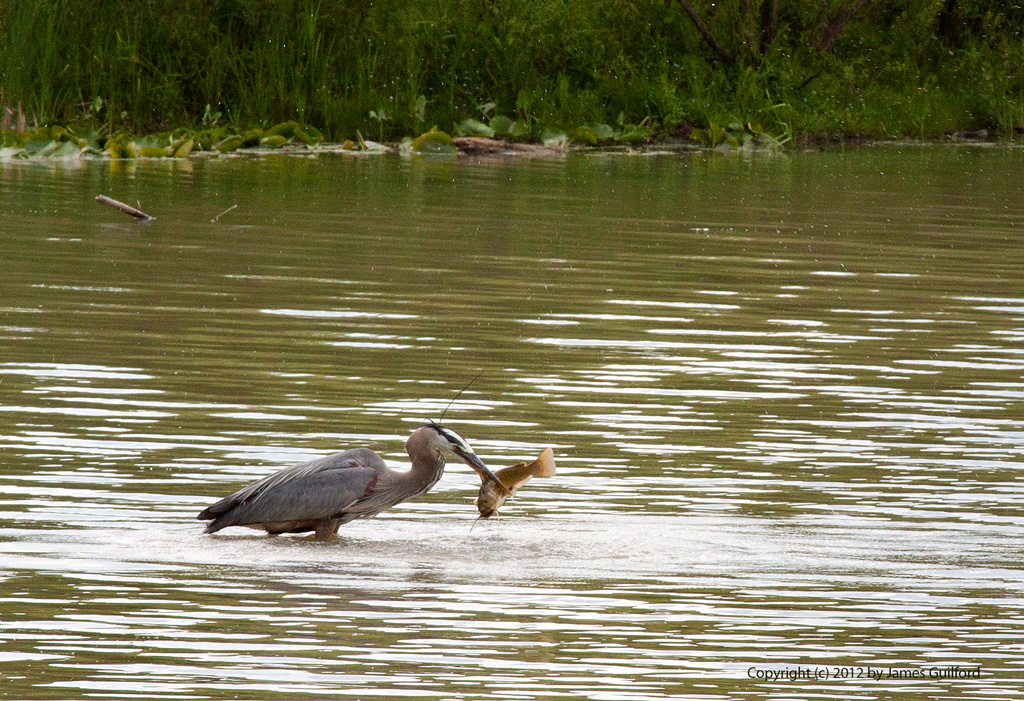
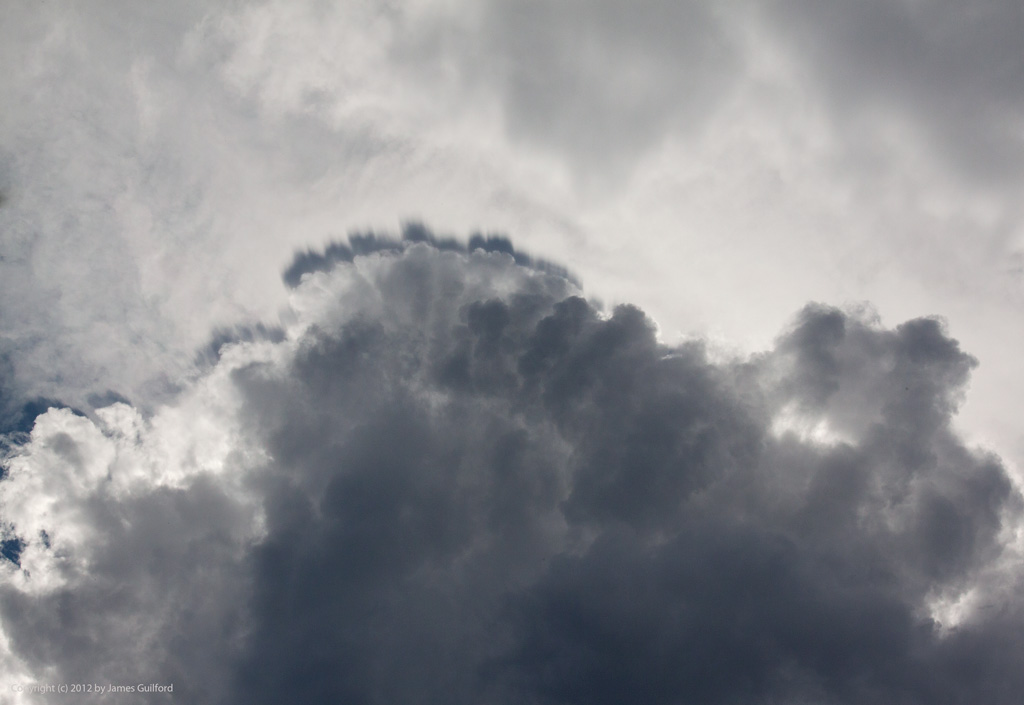
Drama is all around us. When we think of drama, however, we often think of the travails of our fellow humans. Nature, perhaps, presents the fullest range of the dramatic ranging from the life and death struggles of our fellow creatures to the world-changing activities of weather. A brief stop at Hinckley Lake lent plenty of examples for me as I walked the paths this afternoon. Showing She Who Must Be Obeyed one of my favorite spots to watch Great Blue Herons, we spied one fishing. After only a couple of minutes’ observation, the bird smartly jabbed the water, pulled up a fish, and flew off to a nearby sandbar to deal with its prey. Nearing the end of our walk, the day’s very changeable sky put on a show of light and shadow in the clouds and issued a low rumble of thunder. It was a dramatic day at the lake but most people were having picnics.
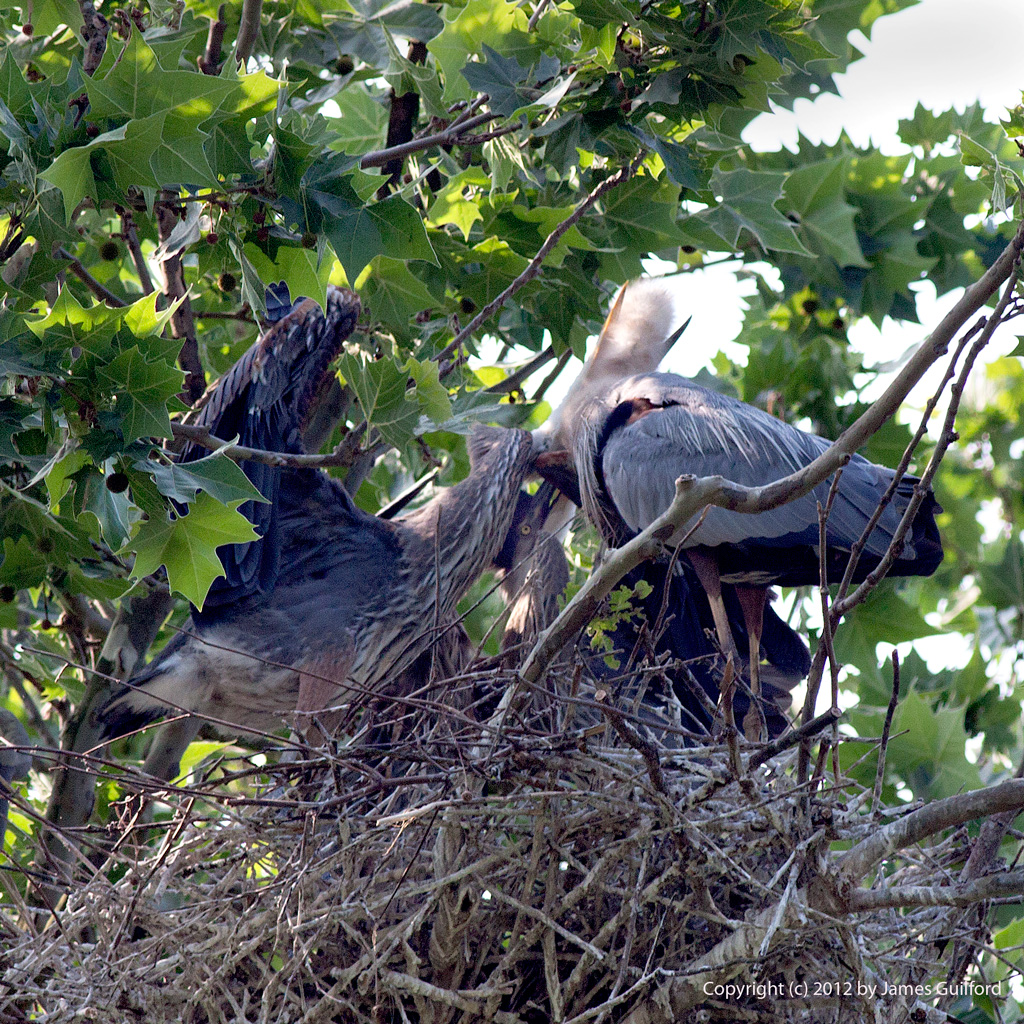
Today was a day off due to the Memorial Day holiday observance. Our little town had a solemn ceremony at a local cemetery that is home to a war memorial. We spent the morning revisiting the Bath Road heron rookery and neighboring Ira Road/Beaver Marsh nature areas in and near the Cuyahoga Valley National Park (CVNP). The rookery continued to be noisy with the chatter of the many birds occupying nests high in the trees. Once in a while a bird would leave seeking food or arrive bearing it for the burgeoning young. It’s hard to spot the birds amongst the trees but those nests that are visible harbor several large birds these days. I did manage to capture one bird feeding another — a tangle of necks and feathers — though that was even harder to see! Human families, too, dropped by to see how their avian counterparts were doing. I think in many cases the parents were more interested than their children in what the birds were up to but I was heartened to see so many people out appreciating the show.

A young Great Blue Heron quietly wades in the shallows with biting flies pestering it all the while.
The Towpath Trail, key to much of the popularity of the park, was seemingly busy as a freeway with families out riding their bicycles. Though a cyclist myself, I nearly forgot where I was and almost stepped into the path of an oncoming cyclist! Among the many visitors to these particular areas, however, were many birdwatchers. A small group of them, along with us, was surprised when a young Great Blue Heron alighted on a tree branch only about 20 feet overhead. After a quick preening, the bird glided down and landed in the shallow waters of the Ohio & Erie Canal, just south of the Ira Road Trailhead. She Who Must Be Obeyed and I quickly and quietly hiked down the trail to see what we might see. We were treated to close-up views of an apparent juvenile bird as it slowly waded in the shadows, seeking a meal. Though we were close, the heron seemed either not to care or was unaware of our presence as we took turns shooting photos from the bank of the canal. Plants and twigs blocked much of our view so when we felt we got as good photos as we could, we left the heron to its work and headed north on the trail.
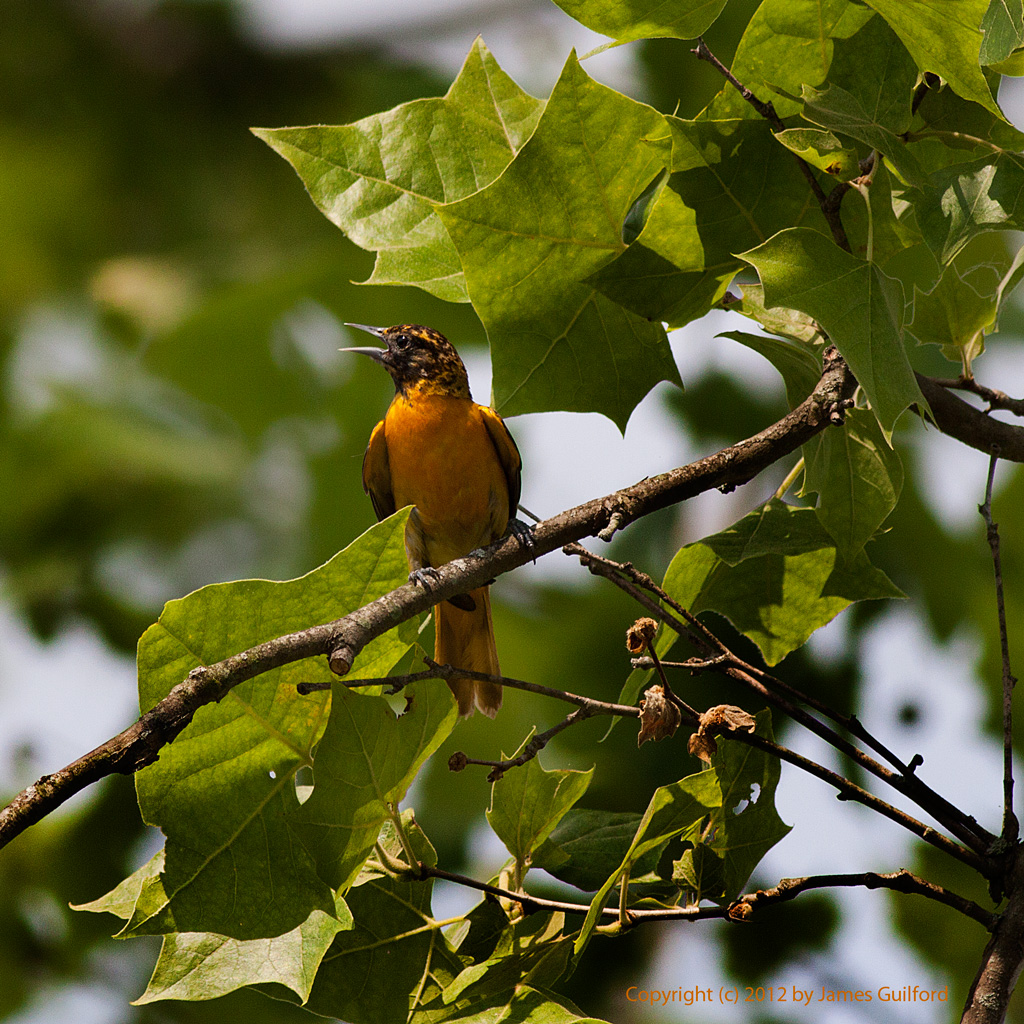
We enjoyed the short walk along the canal and up to Beaver Marsh where nature-lovers were watching Tree Swallows, Wood Ducks (and ducklings), turtles, and fish. Nature watchers happily pointed out their discoveries to each other helping us, by the way, to see a Baltimore Oriole and her nest. The day was hot and humid so we sought shade and lunch around midday. It was, however, a fine day out once again and way too soon to be thinking about work!
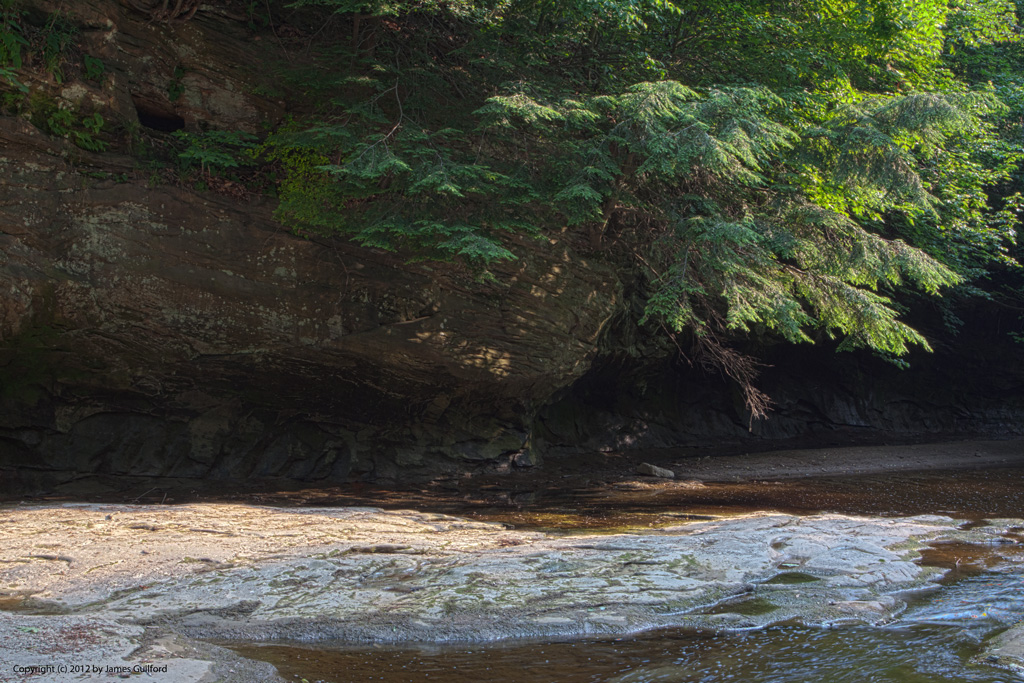
Since the weather was predicted to be “hot, hazy, and humid,” we decided to get out and take a photo-hike in the cooler, early-morning hours. One of my favorite beautiful places in the area is the rocky gorge of Chippewa Creek as it flows through the city of Brecksville, Ohio. She Who Must Be Obeyed had never visited the riverbed so we had a first destination. We enjoyed a bagel breakfast at the Bruegger’s Bagels place near the entrance to the metropark, and hiked down into the broad space. The last six feet or so are a bit of a scramble from an earthen riverbank to the washed stone floor, easily handled however. The steep walls of the passage bear the scars of millennia of erosion, weathering, and plant action; they are dark, often damp, and in places support abundant ferns and mosses.
Trees, atop the rock walls, form a canopy over much of the area as their upper branches join overhead. With little recent rain, the creek was low and the riverbed mostly dry — perfect for exploration. At least that’s what I thought. She found a slick spot on a smooth rock and tumbled forward, skinning Her knee, nearly damaging her new camera, and threatening to spoil the experience. She recovered, however, and seemed to enjoy the rest of our visit. We found various objects and scenes to photograph — it’s a dark place which can make picture-taking difficult — but I’d brought my tripod this day! After a while, we climbed back out of the valley and enjoyed a good, long, challenging hike on designated Cleveland Metroparks trails. The peace of the place remains with me.