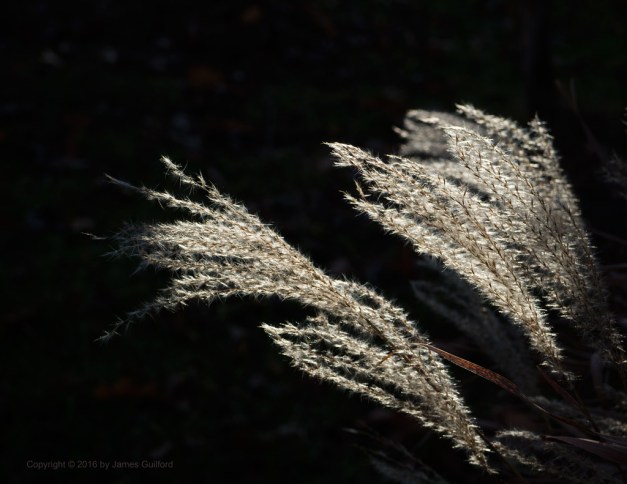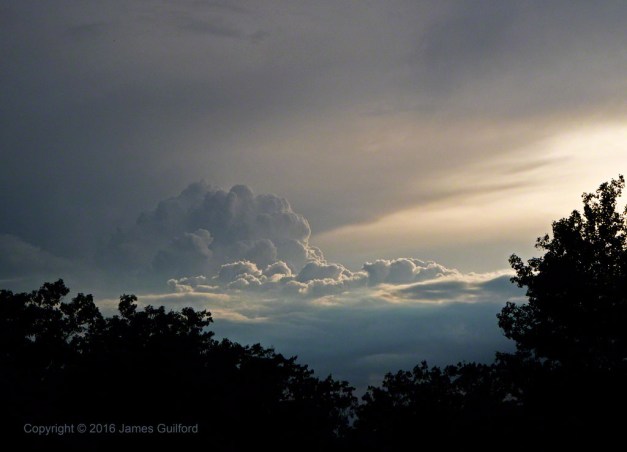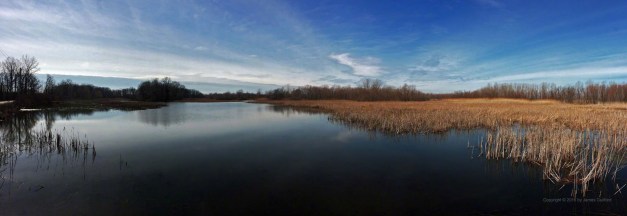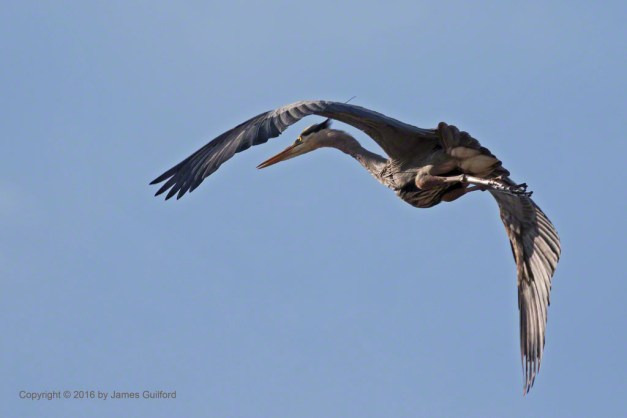
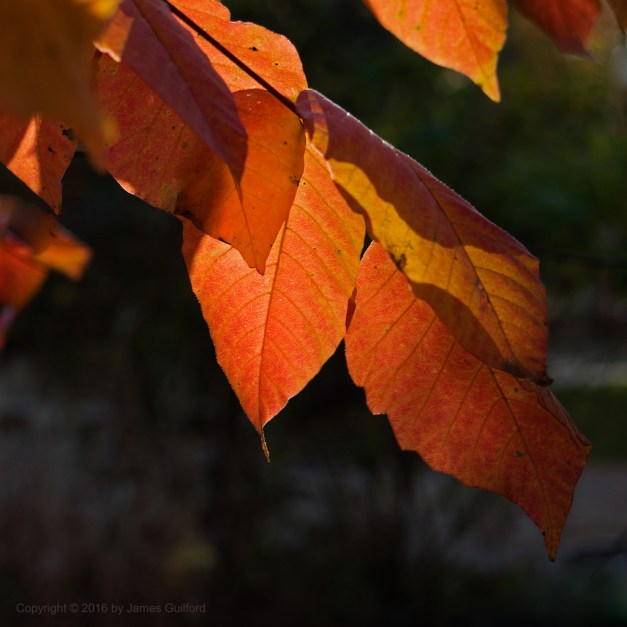
We took a short walk to get out on an amazing autumn day. The warm afternoon air gently stirred leaves primarily of yellow and brown. Many tree branches look barren. The last brilliance of autumn is here.
northeastern ohio
All posts tagged northeastern ohio

November: Looking East. This is a view of the sky from our back yard. That little smudge just below and left of center is the Pleiades star cluster.
After months of searching and work (a story unto itself) we located and purchased an older ranch-style house on a large lot in Medina, Ohio. We had been living in the house for one week and I decided it was high time I take a look at the night sky! The weather was clear and cold Friday night — about 40 degrees when I ventured outdoors — so I had a look around.
The house is situated one mile from the old town square of this small city on a street lit by two orange, low-pressure sodium lights. A big-box shopping district is located about two miles north of the house with a neighboring city beyond. There’s plenty of light pollution and, to the unaided eye, the clear night sky is gray. I could make out the brightest stars of some constellations, however, and easily spotted the Pleiades star cluster rising in the east. I believe I also made out a wisp of Milky Way, as well! I set up my camera on its tripod and did some test shots to assess the photographic sky.
As you can see by the photos here, the camera easily detects stars we can’t visually pull out of the urban nighttime glow. As expected, more stars can be seen overhead — through less atmosphere and less illumination — than near the horizons. While this isn’t a very good spot for astronomy, it’s not impossible. And while the nighttime conditions may not support stargazing, they do offer some artistic potential.

Firetree. Light-polluted night sky, a neighbor’s bonfire, and a small pond combine to make a pretty scene with a touch of mystery. You work with what you’ve got! Photo by James Guilford.
In any event, you work with what you’ve got!
UPDATE: A small giclée canvas print of this image was contributed to the annual “In the Pink” show and raffle hosted by Hudson Fine Art & Framing Company in Hudson, Ohio. Proceeds from the sale benefit The Gathering Place, a local organization; their mission is to support, educate, and empower individuals and families touched by cancers through programs and services provided free of charge. I am pleased to have been a part of the show and fundraising effort! For more information on The Gathering Place please visit www.TouchedByCancer.org.
This started out to be an excellent year for photography. In addition to my still work, I was preparing to make my first nature film. Then we decided to buy a house and move. I look back at this blog now and fully realize how fully I dropped my artistic efforts. Finding, buying, and preparing a poorly-maintained house took the balance of summer and, now, the best of autumn. I hope it will be worth it. I do want to share here a photo I have come to love: it is both realistic and dreamlike; it is my remembrance of the seasons passed.
UPDATE: The original version of this post mis-identified the location of the Tree Swallow photograph. While there was much activity at Sandy Ridge Reservation, the nest box bird portrait was actually made at the Old Woman Creek National Estuarine Research Reserve, Huron, Ohio.
On Monday we ventured to Lorain Metro Parks’ Sandy Ridge Reservation for a walk and to see how wildlife activity was going. In short, the protected wetland is becoming busier all the time. We saw Canada Geese sitting on their mounded nests, some just a step off the trail, and we spotted the first goslings of the season … all ready! A flock of Coots floated in one area, and four widely-separated Great Egrets waded, looking for prey. Tree swallows zoomed over the waters, between hollows in trees. We even spied a water snake catching some rays, that unusually warm afternoon!
We also visited the Old Woman Creek National Estuarine Research Reserve in Huron, Ohio. Tree Swallow activity was very high there, and finding a bird that would stay perched for more than a minute was pretty rare. One swallow, however, stayed put — perched on a nest box — for several minutes, providing a great photo op! Among the numerous shots I made of the little bird was the one shown here: my best ever of a Tree Swallow, showing off its beautiful iridescent head and back. Although I have other good shots, the one of a little bird looking into the sky is my pick of the day!
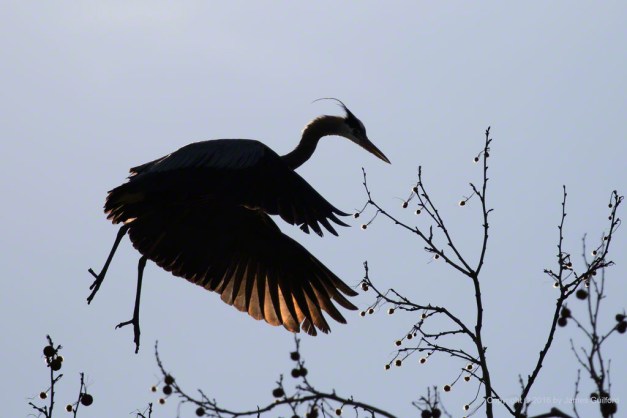
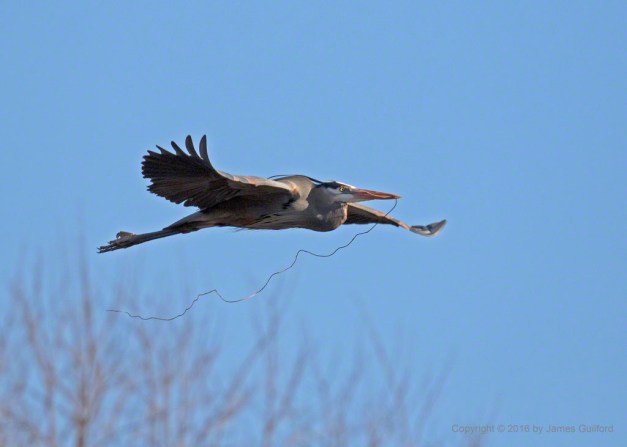
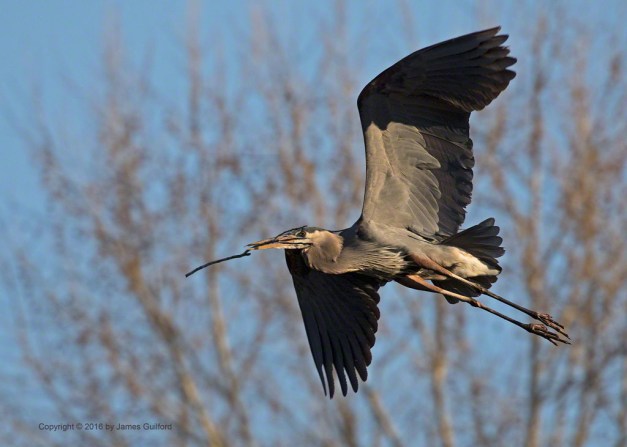
March 29 was a beautiful day and inspired me to pay a visit to a very active heron rookery in the Summit Metro Parks system, immediately adjacent to the Cuyahoga Valley National Park (CVNP) at the north end of Akron. I was pleased to discover that the resident Great Blue Herons were still working on their nests, providing me with plenty of “photo ops” for catching them in flight.
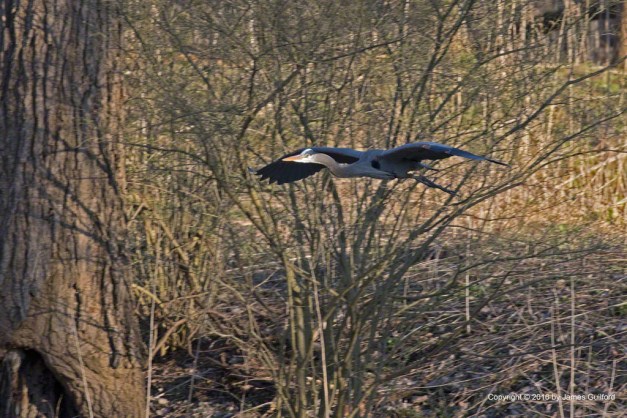
The trees that support the heron nests are part of an open wooded area, affording the birds access to fallen twigs and other materials with which to build and maintain their nests. Every so often a bird launched from a treetop, glide away, and circle down to the ground. Strolling around for a while, the heron would find just the right stick needed and, grasping it in its stiletto-like beak, lift from the brush. High into the air, the bird would soar, circling around for the right approach, and ever so gently alight near its nest. Mates, if on the nest, exchange greetings and the stick may be handed off.
Because the woods are full of herons, smaller birds and animals, raptors are also present. I had been told about hawks and eagles being around and occasionally spooking the Great Blues but I hadn’t seen them. This evening, however, was different. First one motorist, then another visitor flagged me and described where a Bald Eagle was perched. The first site was distant, in the shade, with strong backlighting — none-too-photogenic. The second site, however, put the eagle in a fairly decent position for photography: well-lit with the sky behind.
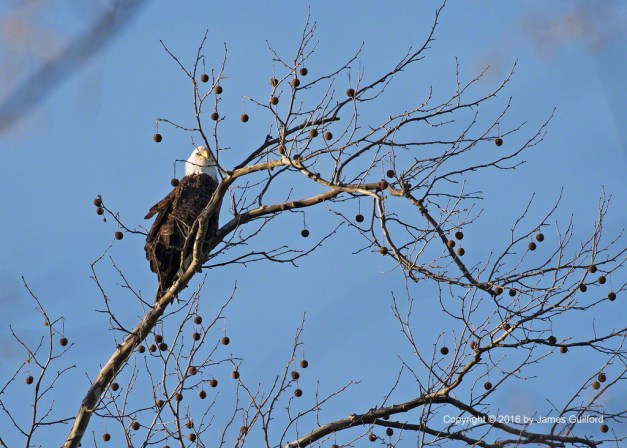
Up til now, the only Bald Eagles I had seen in the wild were either perched far away or flying away from me but not this bird! Apparently a young adult (four to five years old), the eagle watched the rookery from across a road! The eagle’s tree-top spot allowed it to see the main rookery, a secondary nesting area, and an open field; an excellent location for passive hunting. I got some decent shots, even if partly obscured by tree branches!
Sunset was approaching and I wanted to check out a nearby portion of the CVNP called Beaver Marsh, so I packed up and headed down the road. The wetland offered open waters and open sky to the west and the possibility of some nice evening views. A few visitors were on the boardwalk watching native beavers go about their business. Robins and other birds were singing their evening songs. And Canada Geese were noisily settling in for the night.
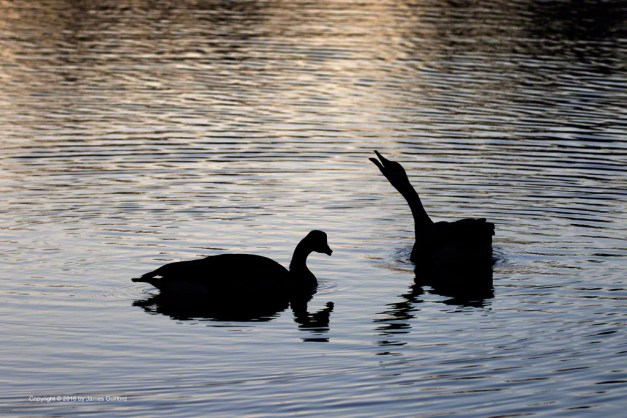
As I watched, a small group of geese began to fly over the spot where a pair had set up for the night. One of the floating birds looked up and squawked loudly as if to say, “Go! This is ours!” The birds overhead kept flying, leaving those below swimming on rippled waters lit by setting sun.
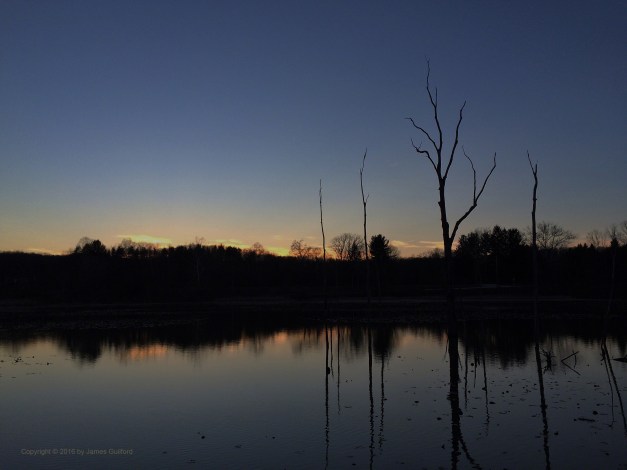
I really didn’t want to leave — the sky, the water, and the sounds were so beautiful — but it was getting cold, and I was expected home. I do plan, hopefully one day soon, to return “after hours” to enjoy evening’s wings.
A favorite place of ours and of many actual birders is Sheldon Marsh, a spit of land that extends from the south shore of Lake Erie in Huron, Ohio. A paved pathway runs from the parking lot nearly to the beach – a protected natural area. The preserved environment serves as a place for migrating birds to rest and refuel, and as permanent residence for others. With little breeze Sunday, the open water areas were mirror-smooth. It was pleasant to once again hear the sounds of birds from the still-bare trees. Canada Geese occasionally had raucous disagreements and small flights of Mallard Ducks could be heard “squeaking” overhead. Heard from surrounding brush were Red Winged Blackbirds with their raspy and warbling calls. Downy and Red-Bellied Woodpeckers could also be seen and heard. Now the wetlands just south of the lake are relatively still, though the population and activity will steadily rise as spring and its birds return.
Taking advantage of a pleasant morning following a very rainy day and preceding more clouds, we paid a visit to the heron rookery of the Summit County Metro Parks. The rookery, where the big birds make their nests, is situated along the Cuyahoga River at the north end of Akron, Ohio. Every year flocks of Great Blue Herons (and bird watchers) descent upon the site. Parking areas along the busy road bordering the nature preserve allow easy access, though utility poles and wires along the road often interfere with watching and photography.
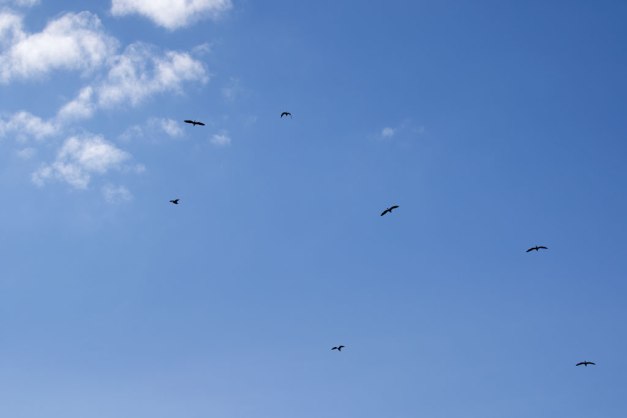
This year, for the first time, we saw the entire population of herons abruptly rise into the air and circle high above their nests. Apparently, the birds were spooked by the appearance of a Bald Eagle and/or hawk near their nests. The huge herons probably stand a better chance against raptors as a group and in the air than when standing on their nests.
The weather this week is expected to be cloudy with rain chances every day but we hope to return soon for further developments during this year’s nesting.
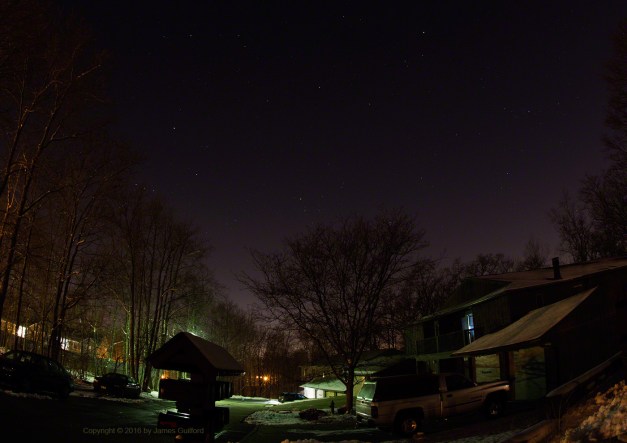
Clear skies have been rare this winter so when a cloudless sky presented itself this night, I had try a little sky shooting. The air was still and that was a very good thing … it was +19F degrees out there. I wanted to try out the new fisheye lens a bit more, even under our heavily light-polluted suburban skies. To my eye, I could make out the brighter stars and planet Jupiter; the celestial objects floated on a field of gray, due to the aforementioned light pollution. To my surprise and delight an eight-second camera exposure revealed numerous stars though, unsurprisingly, missing the clouds of the Milky Way. The photo above is my favorite among the few shot tonight. I’m excited to take that camera and lens to the country and darker skies and see what may be seen from there!
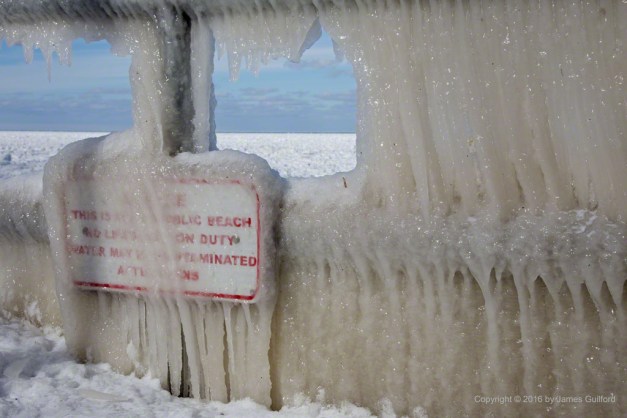
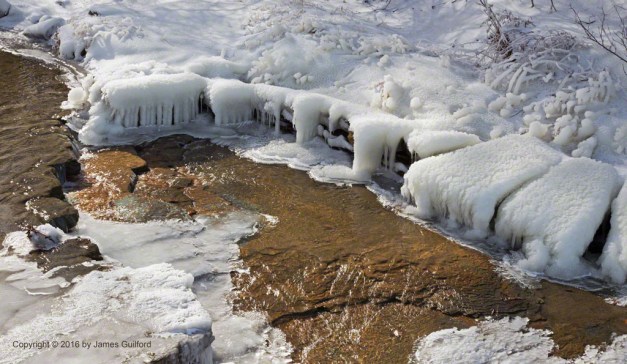
Taking advantage of a cold but sunny Sunday afternoon, we made a quick trip to the shore of Lake Erie. The shoreline was piled with snow-covered ice, in wave-shaped mounds parallel to the coast. Ice that formed on a guard rail made glistening caramel-colored curtains, even walls, joining the steel tubes of the framework to each other and to the ground. And a stream flowed beneath a bright, snowy ice layer, visible sometimes, down a rocky fall and, under cover ice once again, to the lake. Nice to see the lake again.
We paid a mid-winter visit to Lorain Metro Parks’ wonderful Sandy Ridge Reservation on Saturday, February 6. Usually, when we visit the wetland area, we are treated to an abundance of waterfowl and other birds. Indeed, we saw plenty of Canada Geese, Mallard Ducks, and even a rather clumsy Red Tail Hawk (more on this one soon).
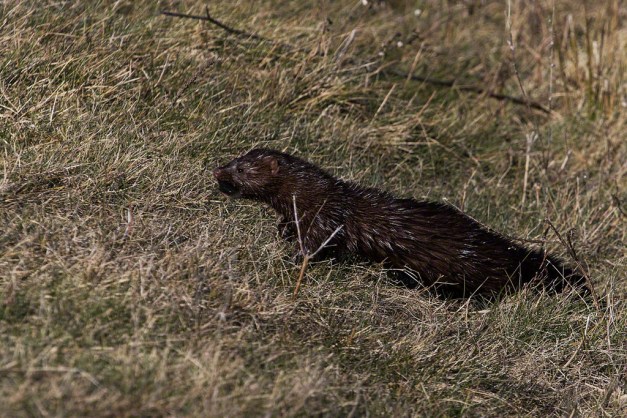
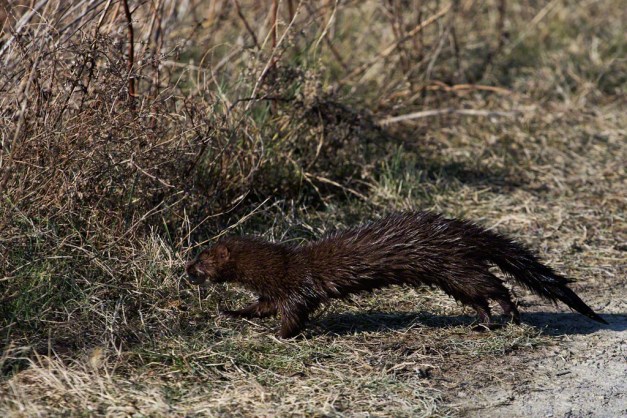
The only resident mammals we generally see at Sandy Ridge are Gray Squirrels and assorted Chipmunks, though we certainly have seen some signs of Beaver activity! This day was different. We stopped on the path out of courtesy to a fellow photographer who was staring at the grass at the edge of the path. We watched to see what he was looking for and suddenly there was a stirring in the brush.
Out popped a long, dark brown, very wet critter who quickly loped on to and across the sandy path, then into the grass on the opposite side! It was carrying something … a fish! And that was it. Gathering some groceries was a Mink, I think!