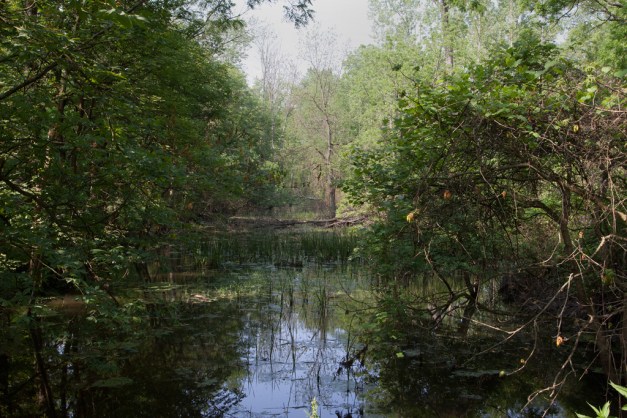
How nature claimed the human-made Ohio & Erie Canal
The Cuyahoga Valley National Park was developed around the Ohio & Erie Canal which shadows the Cuyahoga River within its great valley. There remain relics of the great canal project of the first half of the 1800s. The one relic still in daily use is the towpath — where mules provided the “horsepower” tugging canal boats loaded with cargo and passengers north and south between the Ohio River and Lake Erie. Today the towpath is a popular trail used by runners, hikers, and cyclists for recreation. The canal, for the most part, has become a series of longitudinal ponds or slow-moving creeks dug by men but claimed now by nature.
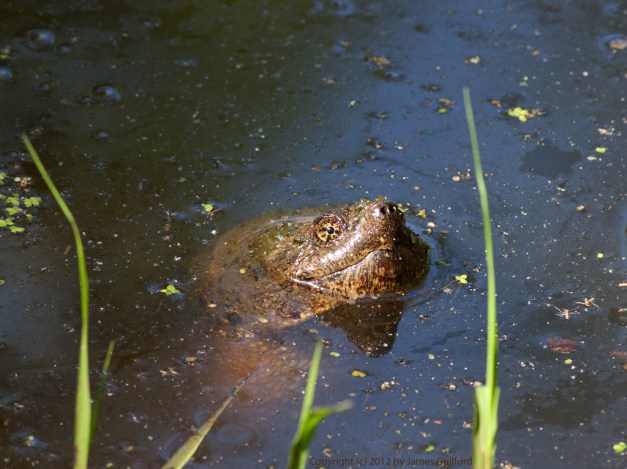
Thar be monsters here! A snapping turtle lies in wait.
When I first arrived at the Ira Road Trailhead and walked the short path from parking lot to towpath, I looked to the side and at the still water in the canal. Near the bank was something… a submerged stick? a frog’s head? a turtle’s head? No. Oh, but yes! That thick stump was the head of a snapping turtle, doubtless waiting for some careless animal to stray within reach! I shot a couple of photos before the monster >>blup<< pulled its head beneath the surface and dove for the bottom.
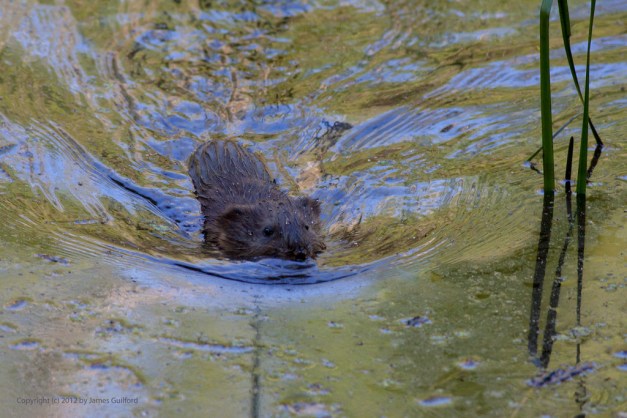
A young muskrat swims quickly in shadowed, still waters.
A little farther on I heard a rustling in the reeds, looked and spotted a young (by size) muskrat energetically swimming around in the canal finding and nibbling on, well, something or other. The rodent seemed unafraid of my presence though I don’t think it had learned to look up much. It swam this way and that, stopping for a nibble, then out and around again, and, like the turtle, <<blup<< underwater.
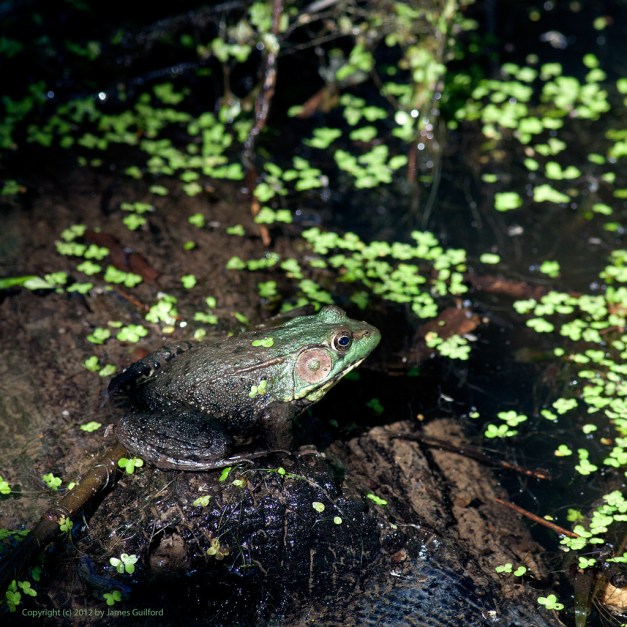
Green frog on a log.
Of course, no naturalized pond would be complete without frogs and turtles and there were plenty to be seen and heard… one could hear the frogs, anyway.
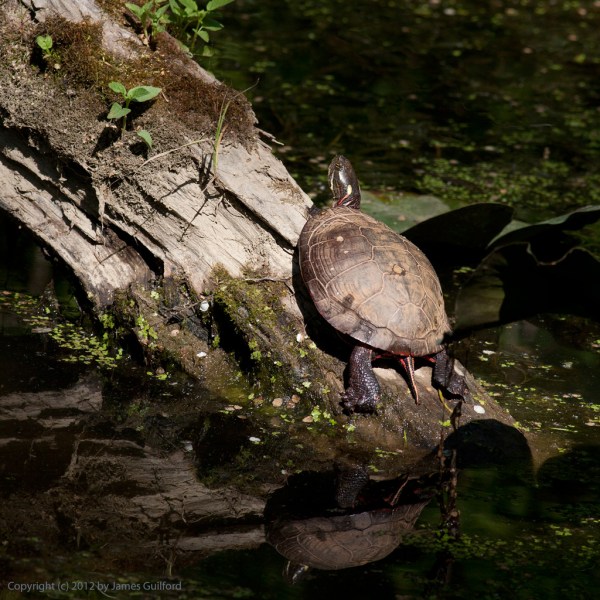
Pond turtle catching a spot of sun on a fallen tree in the canal
North from the trailhead is the Beaver Marsh area. The canalway apparently either skirted or opened into that wet area. The expanse is now densely packed with aquatic plants and tall reeds and home to all manner of life. The reeds teem with Redwinged Blackbirds, Great Blue Herons (if they brave attacks from the Redwings) come there to fish, and swallows fill the air apparently scooping multitudes of insects to feed themselves and their young families.
Long ago “canal life” probably best referred to the lives and livelihoods affected by the big canal system project. That transportation system carried freight traffic from 1827 to 1861 when the railroads made it obsolete. Now, more than 150 years later, canal life means something more like life supported by the canal — the plants and animals that depend upon that construction for their lives. I can’t think of a better end for such a thing.



 PhotonStopper