
Cloudy Waters – July 18
Near sunset at Spencer Lake, Ohio, the clouds reflected strongly in the dark, still waters, like cream swirling in coffee. Except for the calls of a few insects and birds, all was quiet.
Cloudy Waters – July 18
Near sunset at Spencer Lake, Ohio, the clouds reflected strongly in the dark, still waters, like cream swirling in coffee. Except for the calls of a few insects and birds, all was quiet.

Trophy Shot – Approaching Storm
I watched weather radar for several hours yesterday as a line of storms approached our area; it looked interesting. The line had a strong arc to it offering the possibility of photogenic afternoon storm clouds. So I headed to the Lake Erie shoreline and a view off Bay Village, Ohio. The drive was an adventure in itself as I encountered strong winds and heavy rains. I worried the cold front had arrived early and I might be out of luck but, I remembered, there was an intense, crescent-shaped storm out ahead of the line — driving through I should encounter dryer weather and a shot at the “real deal.” And so it was! As I approached the lake, I saw curved lines in the clouds overhead … lines that corresponded to shapes I could see on weather radar. I couldn’t stop to photograph those and so continued to my observation post. Hurrying down to waters’ edge, I saw an expansive arc of clouds stretching from the southwest to the northeast and out over the lake. Not a sharply-defined line as I might have hoped for but dramatic, nonetheless. I had time for a few single shots and a couple of groupings to be assembled into a panorama and had to run again … I could see a curtain of rain moving in! As I drove home through sheets of rain I smiled; timing and luck were with me today and I had my trophy shot of the day! P.S. – That’s not a tornado!

The Long Stormy Arc
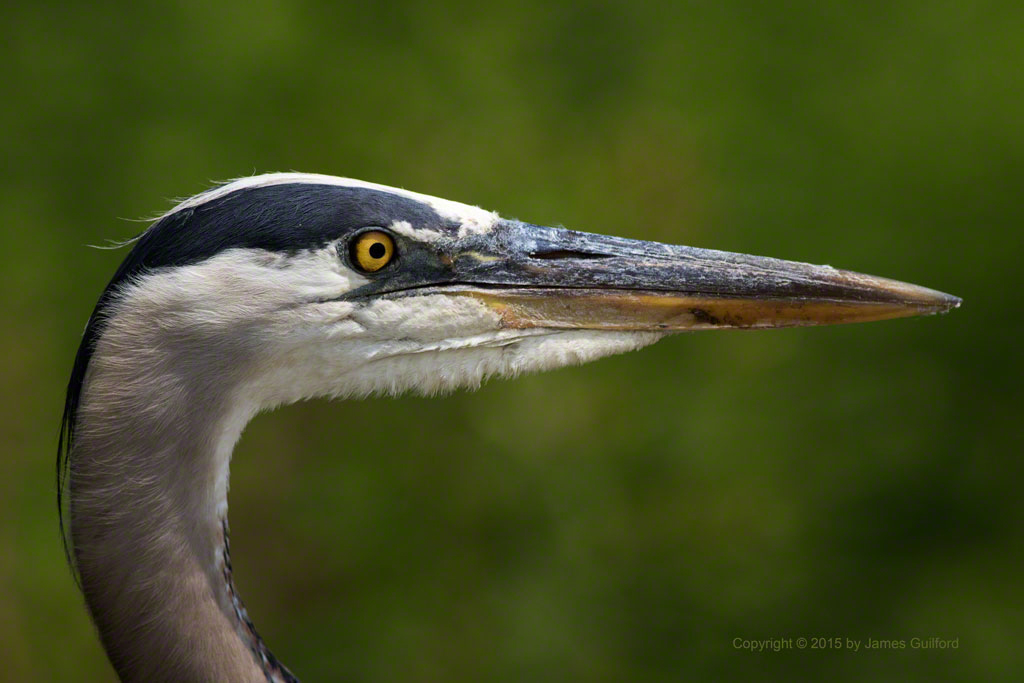
Great Blue Heron Up Close
Today was a very active day in the wetlands of the Sandy Ridge Reservation, Lorain County Metro Parks. There was a large number of Great Egrets present, sometimes chasing each other, squabbling over fishing rights or something. The big white birds perched and waded everywhere providing photo-ops galore! I spotted a little Kingfisher but, sadly, did not get a useable photograph. A Whitetail doe and her fawn crossed our path in the woods. Tree swallows were everywhere, as were dragonflies. A few Great Blue Herons were also present and one, in particular, behaved in a very unusual way; the tall wader seemed to prefer walking on the crushed gravel pathway provided for human hikers. What is more, the heron allowed me to get closer than I ever have to such a bird… so close I felt like I could have grabbed it! Instead, I used my big 400mm (~600mm sensor equiv.) telephoto lens to capture a “heron headshot” such as I’ve never gotten. The photo shown above is uncropped! Yeah, an active day alright!
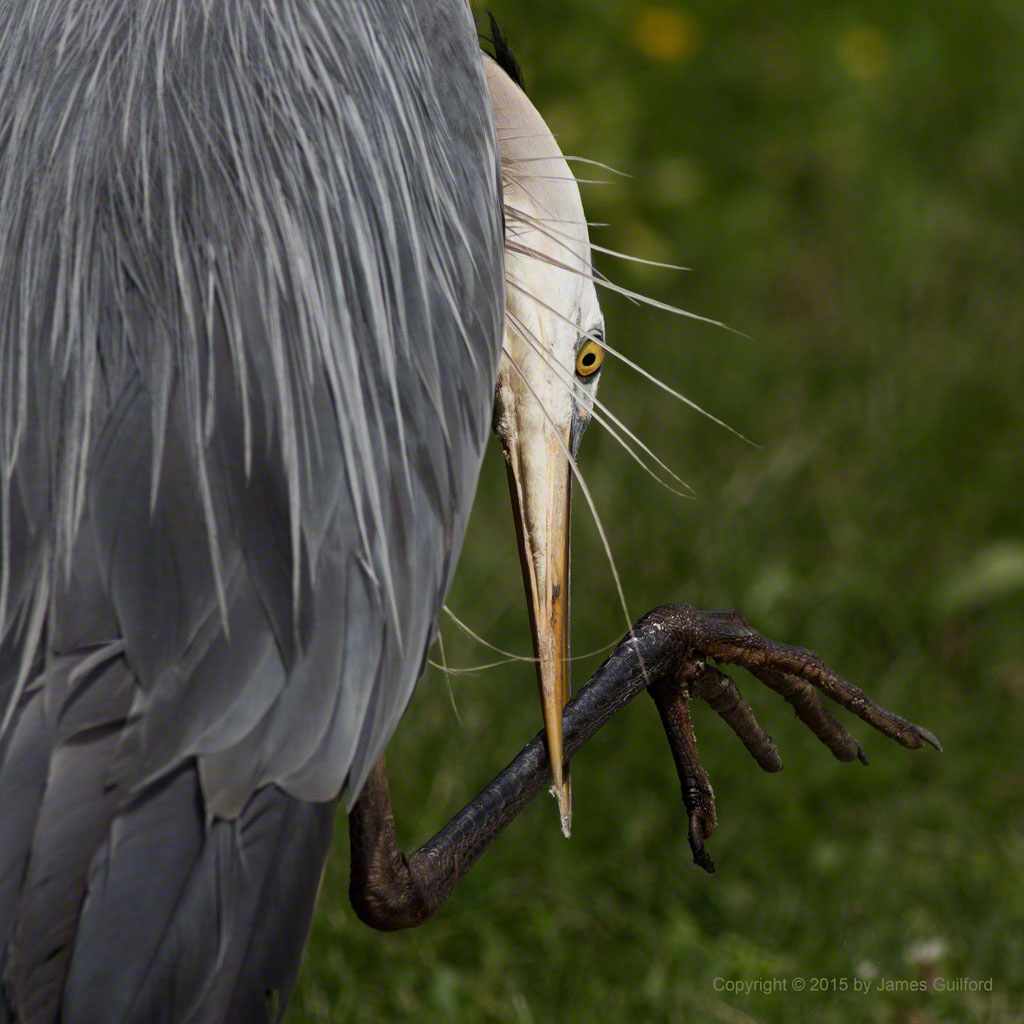
A Little Cleanup
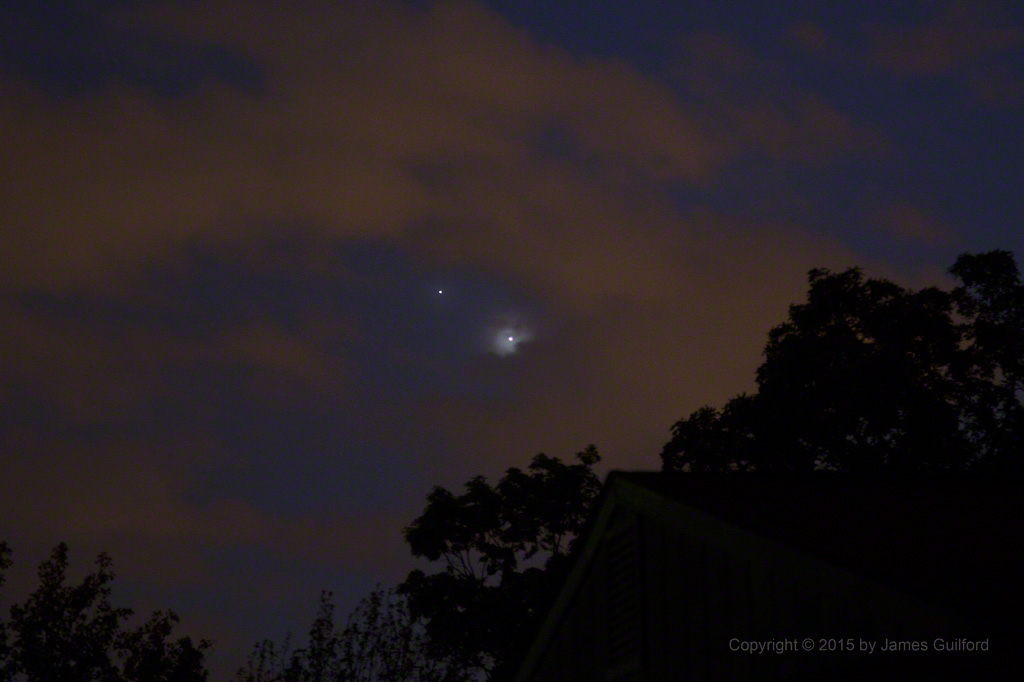
Progressing Conjunction of Jupiter (L) and Venus (R) Amidst Thin Clouds
We have been watching planets Jupiter and Venus drawing closer and closer together in our evening skies. Tomorrow, June 30, the pair should be 1/3-degree apart — close enough to look like a brilliant double star! Chances are we won’t see the event due to expected clouds, typical of this season. So last night, with thin broken clouds interrupting the view, I set up my camera to catch what I could. I was pleased to see a bit of drama as brightly-shining Venus created its own nebula in Earth’s clouds.

Last Light
A storm moves in as the last spot of sunlight shines upon the bean fields of Northwestern Ohio.

Morning’s Cup
Wednesday morning dawned beautifully with clear skies and dew-covered plants. It was a fine time for a little walk and I was rewarded with sun and shadow scenes such as this.

M13 – The Great Globular Cluster in Hercules
Saturday night, the Cuyahoga Astronomical Association (CAA) held their first Public Star Party for 2015. The event took place at the club’s observatory situated on the grounds of the Medina County Park System’s Letha House Park in Spencer, Ohio. As a member I was in attendance with my massive Meade 6-inch refractor, one of many members there to share telescopic views with public visitors. Attendance was light, though folks were generally enthusiastic excitedly moving between telescopes. The sky was beautifully clear and allowed high-quality views of the Moon, Jupiter, Saturn, Venus, the Hercules Star Cluster (M13), and other amazing things.
Things quieted down early and after a while, visitors disappeared. I’d brought my DSLR camera hoping to try some through-the-telescope astrophotography. As other club members began packing their gear, I attached my camera, focussed on the Moon, and began a quick photo run of several interesting objects.

Our Moon – Waxing Gibbous – May 23
I shot the Moon, M13, M4, Jupiter + moons, M57 – the Ring Nebula, and M81/M82 – aka Bode’s Nebulae. The Moon shot and M13 (above) were pretty good considering how little time I was able to spend on them. The Bode Galaxies (as they are sometimes now known) were literally a shot in the dark; I couldn’t see them in the camera viewfinder due to their faintness so I let the telescope system aim and I triggered a couple of brief exposures. Even at that, when excessively brightened, the digital image begins to show the spiral pattern of M81 extending far beyond the bright core seen below. The elongated, split appearance of M82 is also quite visible in my blitz-image. Seeing the galaxy pair in the same telescopic field of view is one of my fond memories of visually exploring the sky; seeing it mimicked in one of my photographs is pretty cool.

Galaxies M81 & M82 put in Faint Appearances Here
To end my night at Letha House Park, I took flashlight in hand and, with camera now mounted to a tripod and camera lens installed, hiked down to the edge of the park’s lake. Reflected in the still waters was brilliant Venus, close to the horizon, about to set; the stars of Gemini floating above the Goddess of Beauty. I made several hurried exposures of the lake scene and returned to my telescope.
Looking at the camera’s preview window, I had some idea of how well things were going but I’d have to wait til I got home to see the real results.
I arrived home at 1:00 AM and moved my gear into the house, then downloaded the camera’s image files to my desktop computer. I was delighted with what I saw. The telescope had located each of the several objects without my needing to look through the viewfinder — some were too dim to see there — and tracked those objects well enough to prevent most movement during the several seconds of each exposure.

Venus in constellation Gemini Setting, May 23, 2015
There, on the screen, was a beautiful gathering of stars — the M13 star cluster — and the best deep sky image I’d ever made. The dim and distant Ring Nebula (M57) also registered, even displaying some color. A bit less impressive was my image of the M4 star cluster in Scorpius, though it registered well enough to be readily identified.
By today’s amateur astronomy standards, mine are primitive beginner’s efforts. Still, I’m pretty happy and very excited with what I got during my photographic blitz session as promising indication of what is to come as I continue to image the sky.
Photo Notes: The camera was attached to the telescope, in essence, using the telescope as a 1,200mm telephoto lens; this is called the “prime focus” approach. The large, bright star cluster M13 in constellation Hercules is made up of about 300,000 stars and is located 22,000 light-years away. Venus, seen through the telescope, is noticeably not a “circle” but in a partially-lit phase. It was so brilliant that it was difficult to observe through telescopes. The Moon was in waxing Gibbous phase, 5.9 days old, and 396,748 km (246,528 miles) distant.

Moon and Venus amongst the Stars of Gemini
Though I was tired tonight the sight, in fading twilight, of the crescent Moon and Venus glowing amongst the stars of Gemini was simply too much. I grabbed my camera and tripod and headed outdoors for a little sky shooting. The original image (not compressed for use on the ‘net) shows many stars and even, in the upper left-hand corner, The Beehive star cluster! I hope the image shows well here but, even if it doesn’t, it pleases me!
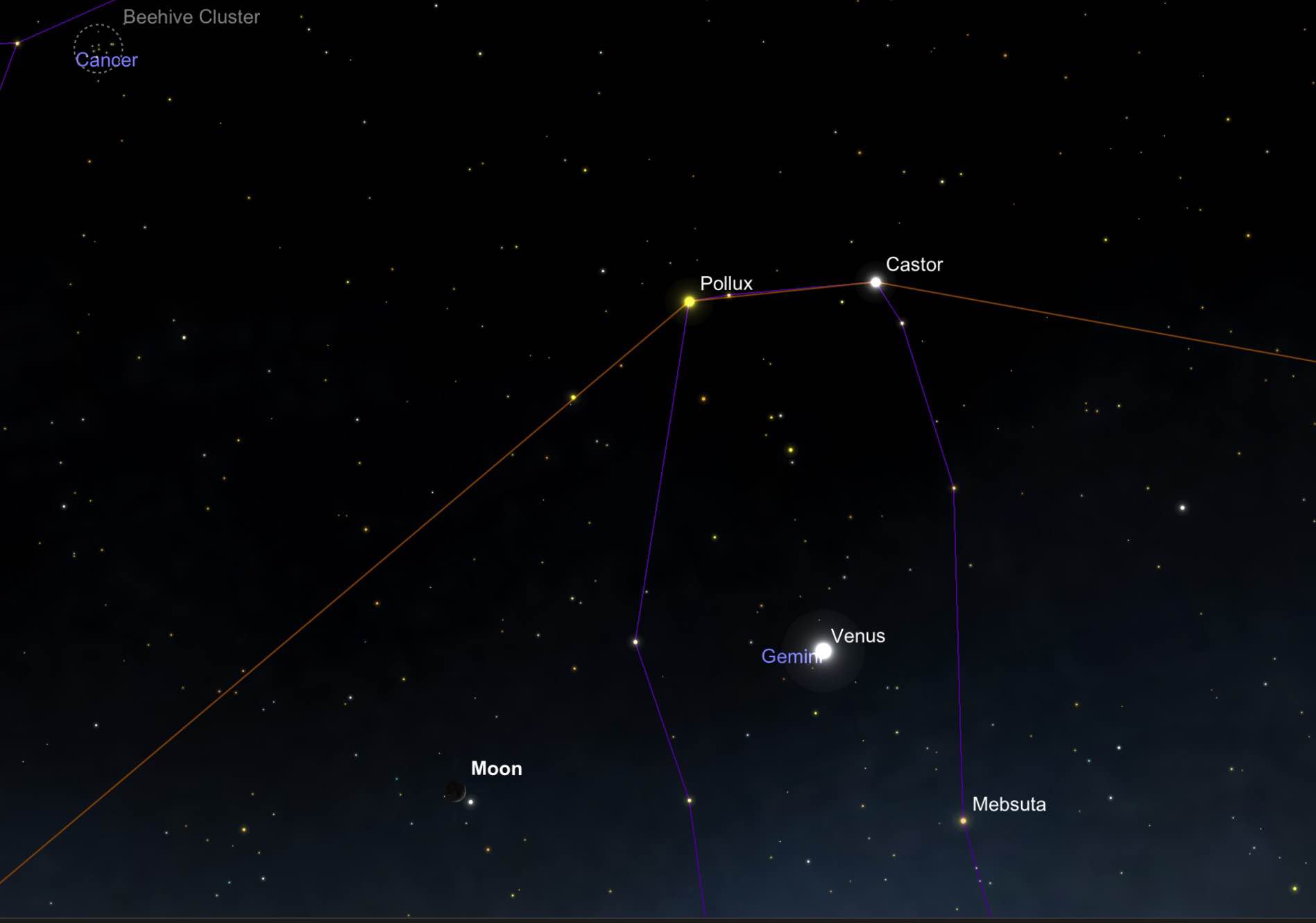
Chart Identifying Objects from Photo Above.

A Great Egret (Ardea alba) Takes Flight
I enjoyed a quick visit to Hinckley Lake this morning and followed a Great Egret as it moved from one fishing spot to another. Happily, I was able to capture a flight sequence that included this shot. Cloudy skies helped by softening the light … the Great Egrets are brilliant white in direct sunlight and, with a dark background, can be difficult to image. Also seen at the lake this day was one Great Blue Heron and, to my surprise, a Bald Eagle. The eagle, already high in the sky, was circling ever higher as I watched. I grabbed a few shots while the bird with still within reach of my lens and even at that, had to crop tightly to achieve the image seen below. It was a good morning.
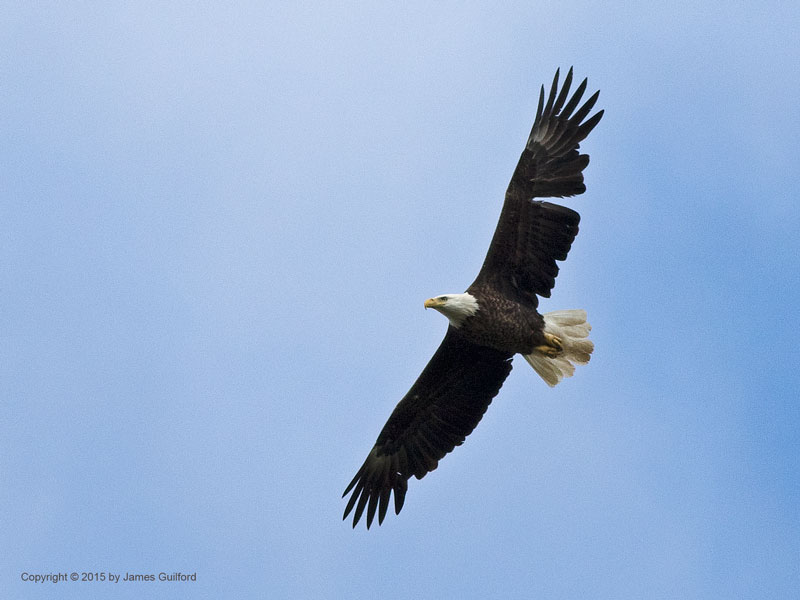
Bald Eagle High Overhead
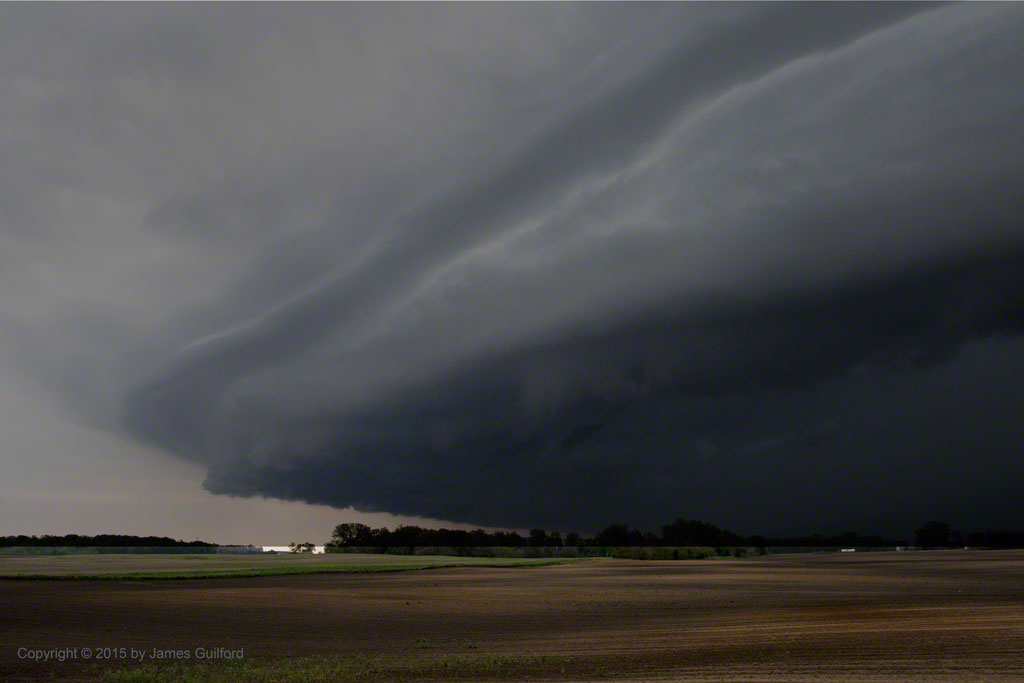
Thunderstorm Bearing Down, Sunday Evening
In the Wauseon, Ohio area this evening I sighted a large thunderstorm heading my way as I drove through farm countryside. The long stretches of road with no traffic and the openness of the fields gave me excellent opportunities to watch the storm as I tried to stay ahead of it! Alas, the storm was moving diagonally to my path and overtook me, pelting the car with wind and rain. It wasn’t me storm-chasing, the storm chased me!
 PhotonStopper