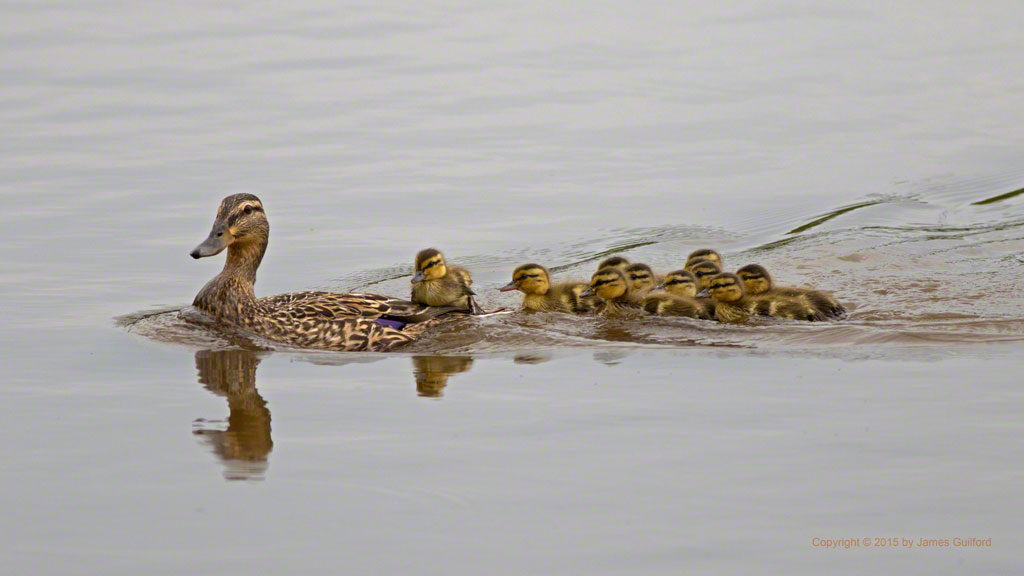
Female Mallard Duck with Her Offspring
Female Mallard Duck with Her Offspring
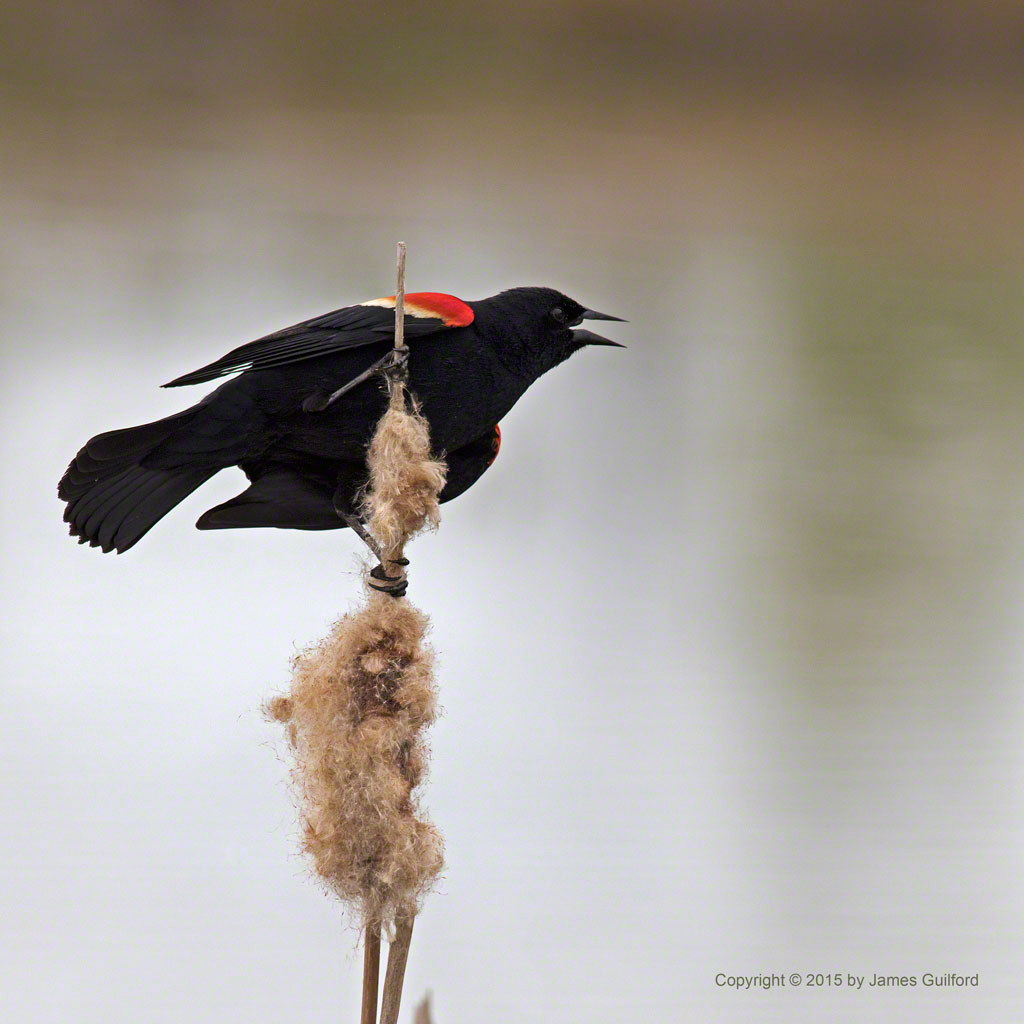
Male Red-winged Blackbird – Agelaius phoeniceus
It’s nesting time and the Red-winged Blackbirds raucously declare the boundaries of their territories! Whether perched upon a tree, a reed, or chasing trespassers, red-wings are an aggressive and busy lot. This one was spotted at the Sandy Ridge Reservation of Lorain Metroparks, North Ridgeville, Ohio.

Waxing Gibbous Moon – One Day from Full
Tonight’s Not-Quite-Full Moon. The Moon will reach its full phase in a little over 24 hours but that doesn’t mean it wasn’t big, bright, and beautiful tonight (May 2, 2015)! Phase in this photo is Waxing Gibbous with about 99% illumination … notice the shadowy edge along the bottom-left.

Kayak Couple
Spring is really just taking hold around here so at Hinckley Lake, in the Cleveland Metroparks, things were fairly quiet on this warm day. I did a walk around the lake shore as more to get out in the fresh air and sunshine as anything. Along the way I enjoyed views of fresh greenery popping up from the leaf litter in the woods, the calls of many birds, and regular encounters with the many people who were also out to enjoy the day. Puffy clouds floated across the sky, casting spotlights upon trees flushed with colorful buds and new leaves, and highlighting them against shadowed wooded backgrounds.
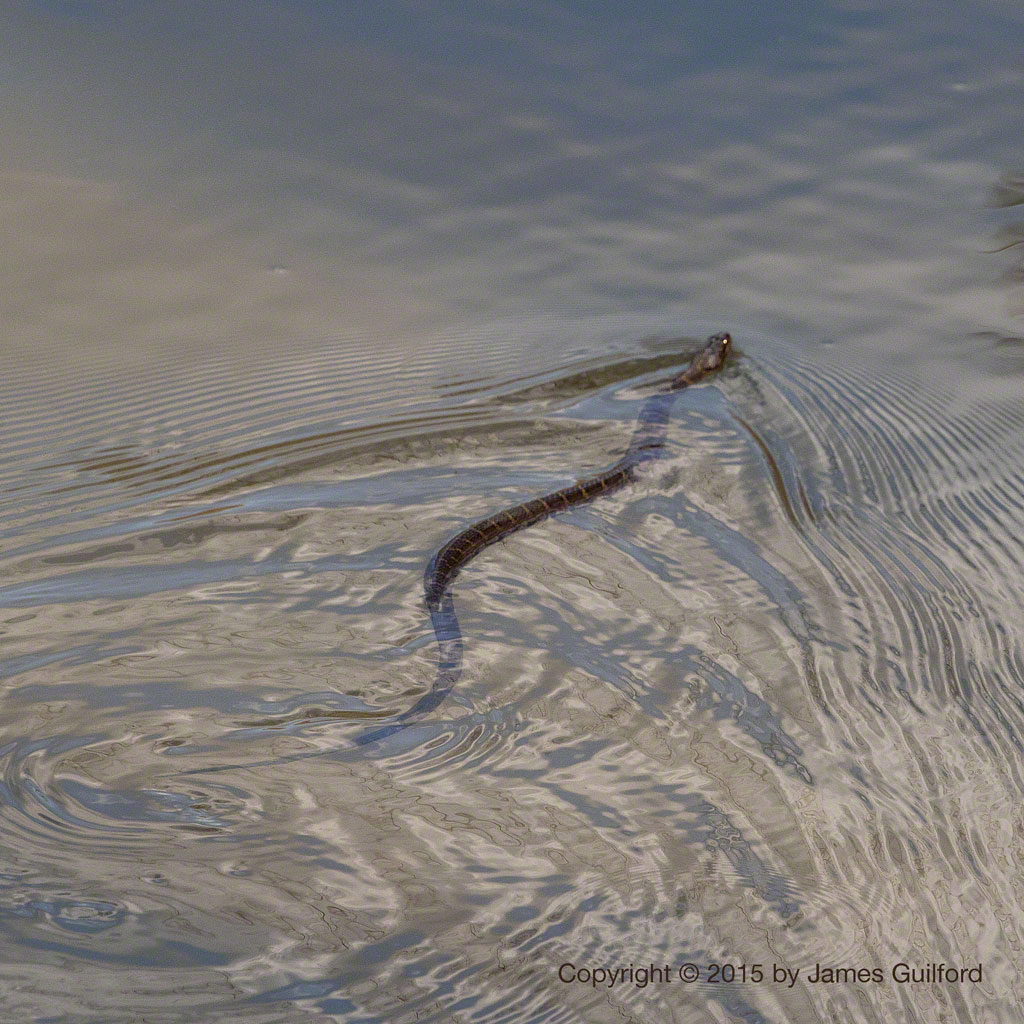
Common Water Snake
The natural surroundings may have been quiet but if examined close enough, there were things other than plants to catch one’s eye. I stopped for a while and watched the single Great Blue Heron on Hinckley Lake as it fished; from the distance I saw it catch a couple, too! I watched a Common Water Snake swimming in a wetland adjacent to the lake.

Spiny Softshell Turtle
I spied a Spiny Softshell Turtle (Apalone spinifera), my first in the wild, when it made a little move in shallow water. I shot a couple of photos of the turtle as it watched me, only its head above water. The softshells grow to be among the largest turtles in North America though this one looked to be more medium-sized.

Blue-Gray Gnatcatcher
On the walk back to the parking lot a beautiful little blue bird flitted from branch to branch in the trees and shrubs lining the path. I’d seen this bird (or another of its kind) in the general area before but hadn’t gotten a photo of it. Today I was a little quicker or the bird was a little slower, anyway I captured a few images of the little guy, one of which was good. Looks to be a Blue-Gray Gnatcatcher (Polioptila caerulea). Delighted to have met! Back at the parking lot a man, just arriving, stopped and asked me if I got any good photos, saw any birds? I mentioned the heron but forgot the delightful gnatcatcher. Then again, it might have sounded a little too “birdwatcher-y.”
Yes, a fine day to get out and hike with a 20-pound camera pack on your back! It was really about the walk. Really!
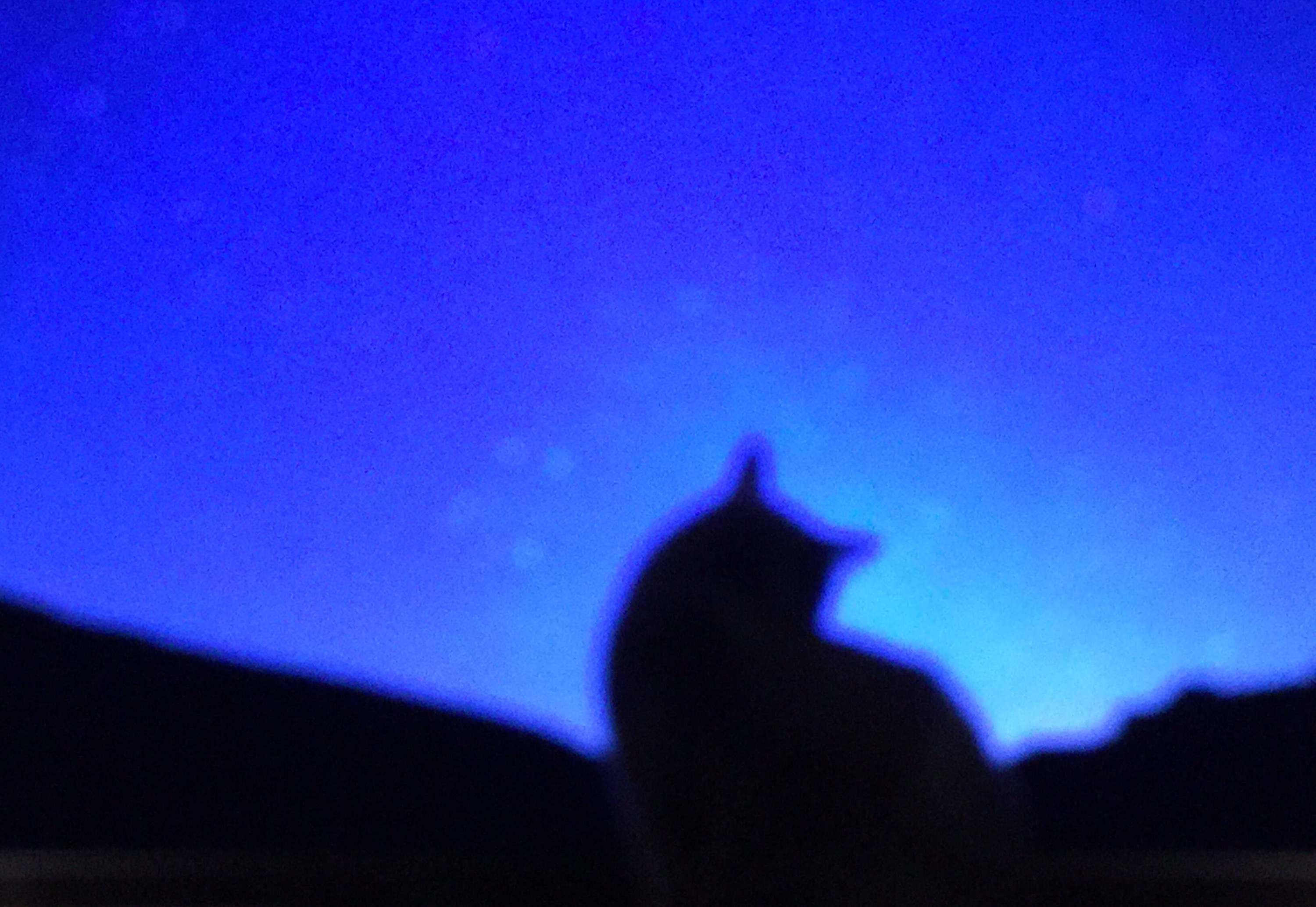
Sometimes being a bit out of focus can be a good thing… I was watching Wonders of the Solar System when Annie the cat jumped up on the entertainment center; she likes to sit right in front of the TV and watch the action. In this case, Annie was watching program host Prof. Brian Cox. I was amused by the sight of the cat staring up into the professor’s face and tried an iPad photo of the scene. The iPad had a bit of trouble focussing, the scene changed, and I got a mystic, unworldly, artsy shot instead of a funny picture!
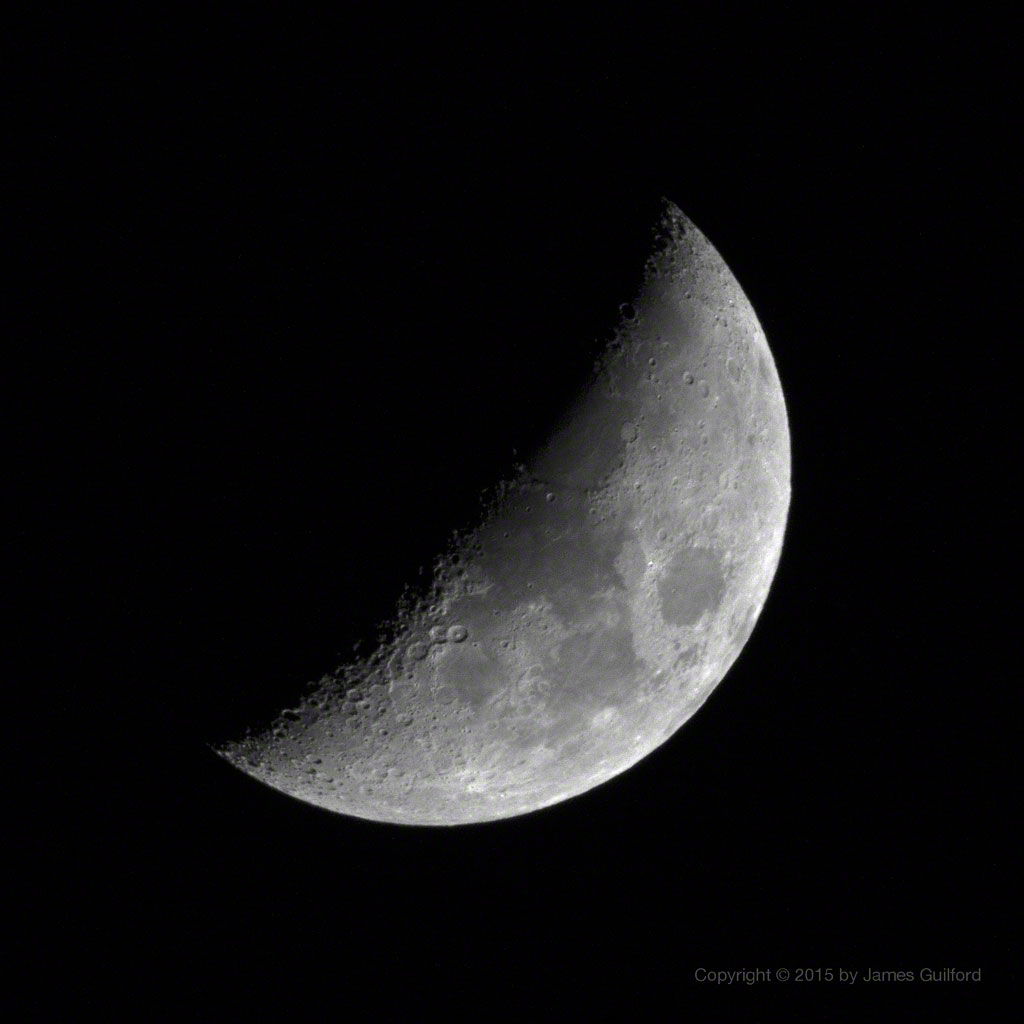
The Waxing Gibbous Moon
The sky was beautiful tonight with the Moon, planets, and stars shining brightly. Continuing my experiments with telephoto astrophotography, tonight I attached my Canon 2X III Adapter to my 400mm lens, and EOS 7D Mark II body; the combination gives approximately 1,200mm of telephoto goodness! At that focal length camera vibration becomes a real issue if the system isn’t attached to a very heavy tripod. My tripod isn’t heavy. But the Moon was bright and with ISO 800 and a shutter speed of 1/400 I got decent, though not vividly sharp results. Next milestone will be to mount the camera and telephoto to the telescope’s heavy tripod and motorized mount. Why not use the telescope directly? Well, that works pretty well, but the optics of my telephoto lens are actually superior in quality to those in my telescope!

American Bullfrog – Lithobates catesbeianus
Saturday, April 18 presented us with beautiful spring weather so we took off to see how the gardens, ponds, and woodlands at the Holden Arboretum were doing. Some garden paths remained closed for the season but we happily set off for higher ground and pools.

Dragonfly In Flight
Bird songs filled the air as we enjoyed early blooms and emerging animals including: a water snake warming itself on a tree branch, clusters of turtles also catching some sun, a couple of bullfrogs, and three ( 3 ) dragonflies! We will visit there again, likely in May when sustained warmth entices more life into view.

Sun Worshiping Turtles
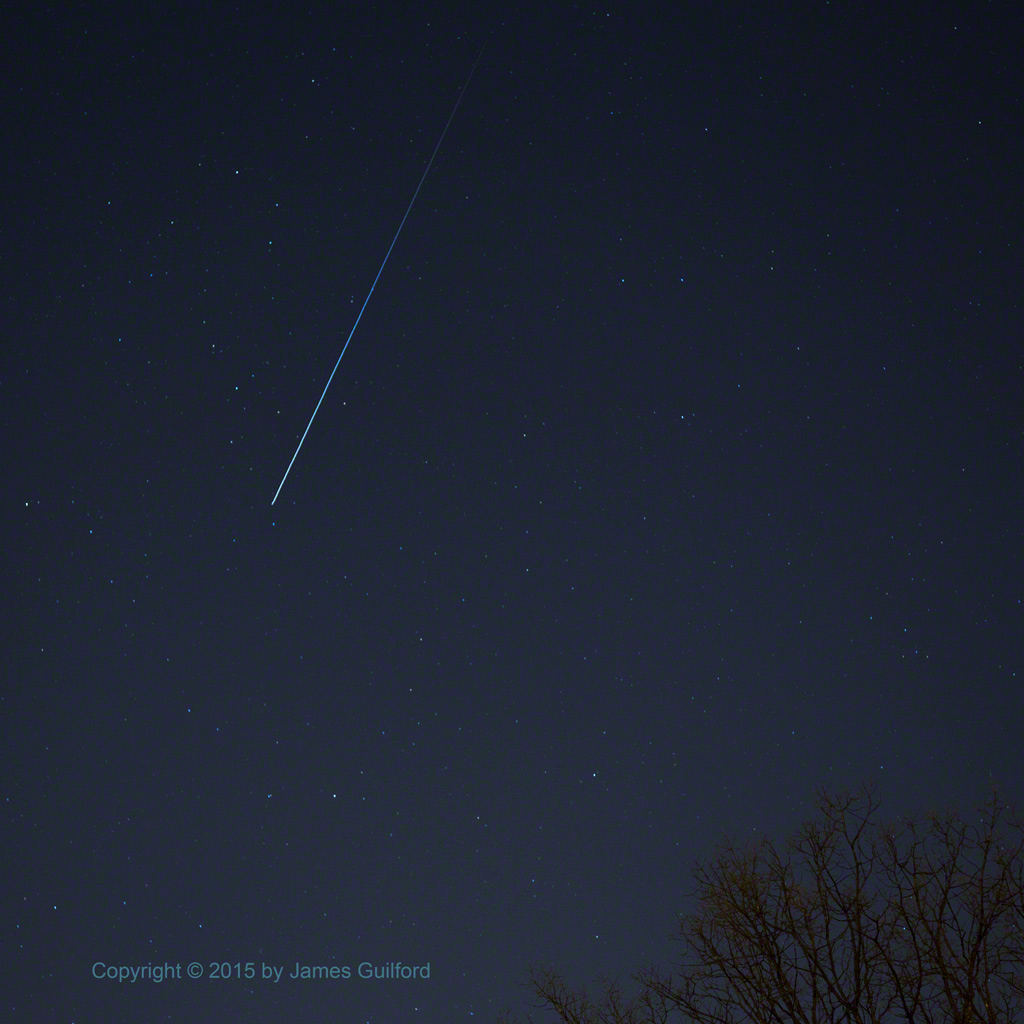
ISS: From Perseus to Darkness
That’s no meteor! It’s a partial trace of the trail the International Space Station took tonight as it traveled upward, through constellation Perseus, and faded into Earth’s shadow. The exposure, and thus the trace, was shortened to avoid overexposure due to heavy light pollution in the Cleveland (Ohio) area.
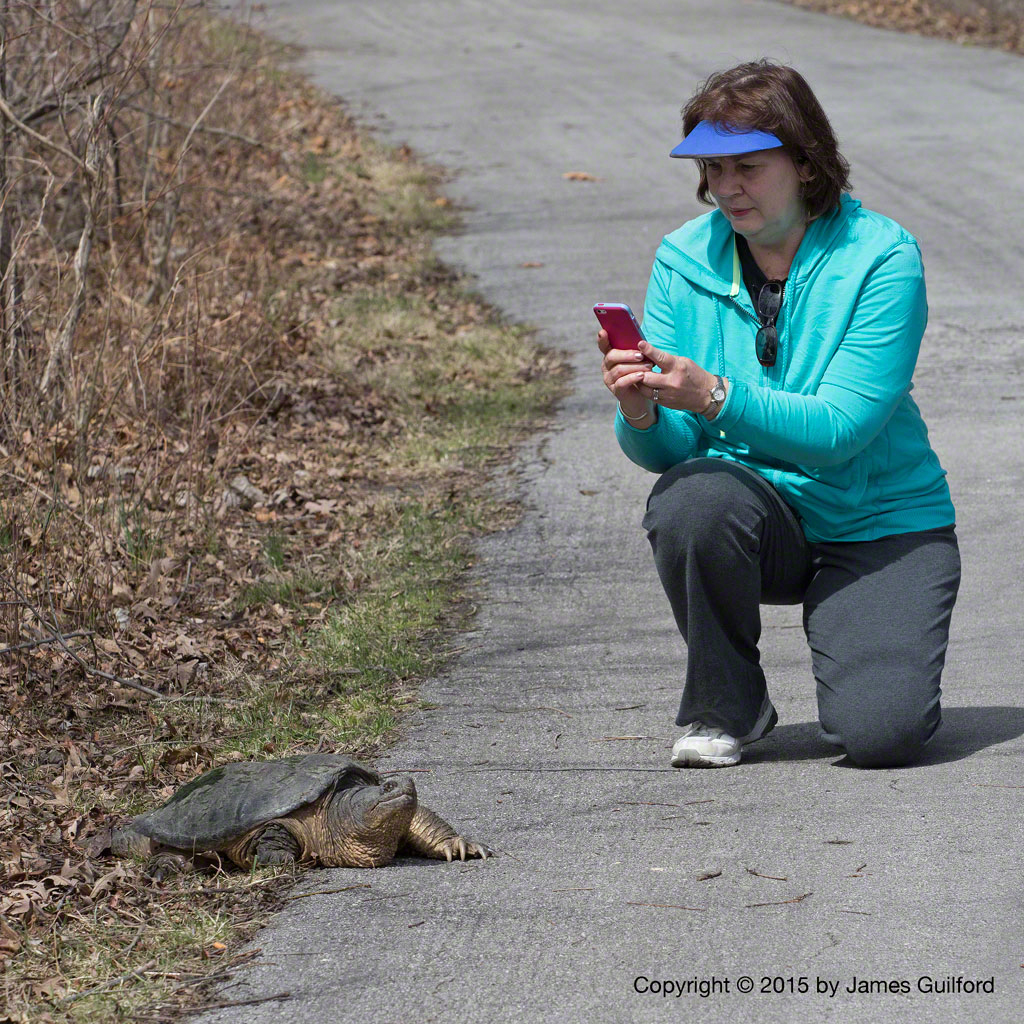
Woman Moves In for a Close-Up using her Smartphone’s Camera
Visitors were amazed as they watched a large snapping turtle slowly make its way across the paved path at the Sheldon Marsh State Nature Preserve on Lake Erie. The turtle was likely a female on an egg-laying mission. The reptile, watched by several people every step of her way, eventually made it across the path, and into some low brush before tumbling, end-over-end, into an area of shallow water below. Shown here, an unidentified woman moves in for a close-up using her smartphone’s camera. I used a 200mm lens.
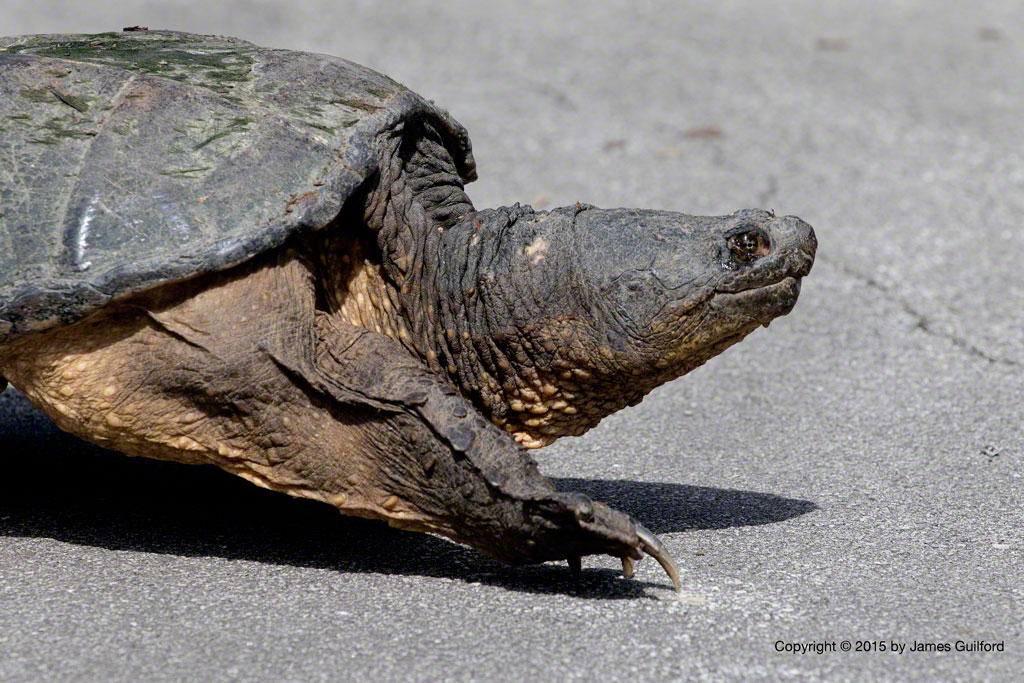
Crossing the Road

Hyades-Venus-Pleiades Together
April 11 presented a rare clear night just in time to see Venus draw very close to the Pleiades star cluster; nights lately have been cloudy and wet! Timing also put the Hyades cluster within the same camera field-of-view as Venus nightly progresses higher in the sky, relative to the stars. As the grouping sank into the trees to my west, I made several single-exposure images of the sight. This one using Canon EOS 7D Mark II: ISO 2000, f/5.6, 1.6 sec., 70mm, at 9:58 EDT.
 PhotonStopper